







Question: Startup costs need be determined before developing a new firm's first balance sheet. Purchasing used equipment, utilizing leases and hiring temporary employees are ways to
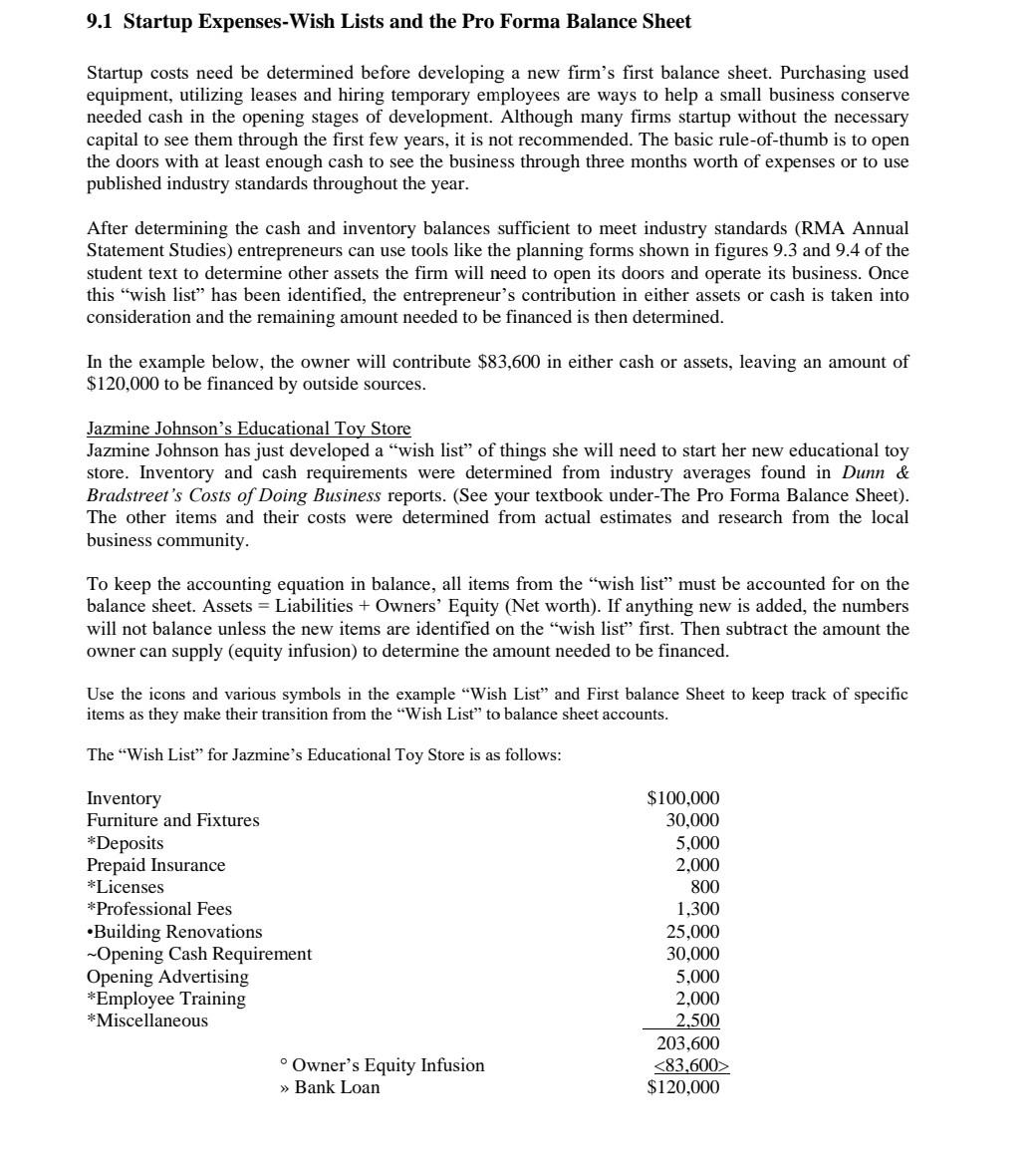
Startup costs need be determined before developing a new firm's first balance sheet. Purchasing used equipment, utilizing leases and hiring temporary employees are ways to help a small business conserve needed cash in the opening stages of development. Although many firms startup without the necessary capital to see them through the first few years, it is not recommended. The basic rule-of-thumb is to open the doors with at least enough cash to see the business through three months worth of expenses or to use published industry standards throughout the year. After determining the cash and inventory balances sufficient to meet industry standards (RMA Annual Statement Studies) entrepreneurs can use tools like the planning forms shown in figures 9.3 and 9.4 of the student text to determine other assets the firm will need to open its doors and operate its business. Once this "wish list" has been identified, the entrepreneur's contribution in either assets or cash is taken into consideration and the remaining amount needed to be financed is then determined. In the example below, the owner will contribute $83,600 in either cash or assets, leaving an amount of $120,000 to be financed by outside sources. Jazmine Johnson's Educational Toy Store Jazmine Johnson has just developed a "wish list" of things she will need to start her new educational toy store. Inventory and cash requirements were determined from industry averages found in Dunn \& Bradstreet's Costs of Doing Business reports. (See your textbook under-The Pro Forma Balance Sheet). The other items and their costs were determined from actual estimates and research from the local business community. To keep the accounting equation in balance, all items from the "wish list" must be accounted for on the balance sheet. Assets = Liabilities + Owners' Equity (Net worth). If anything new is added, the numbers will not balance unless the new items are identified on the "wish list" first. Then subtract the amount the owner can supply (equity infusion) to determine the amount needed to be financed. Use the icons and various symbols in the example "Wish List" and First balance Sheet to keep track of specific items as they make their transition from the "Wish List" to balance sheet accounts. The "Wish List" for Jazmine's Educational Toy Store is as follows
Step by Step Solution
There are 3 Steps involved in it

Get step-by-step solutions from verified subject matter experts
 Study Help