







Question: Static vs. dynamic scope Consider the following expression written in a strict, call-by-value language with Haskell-like syntax: let y = let x = 2 in
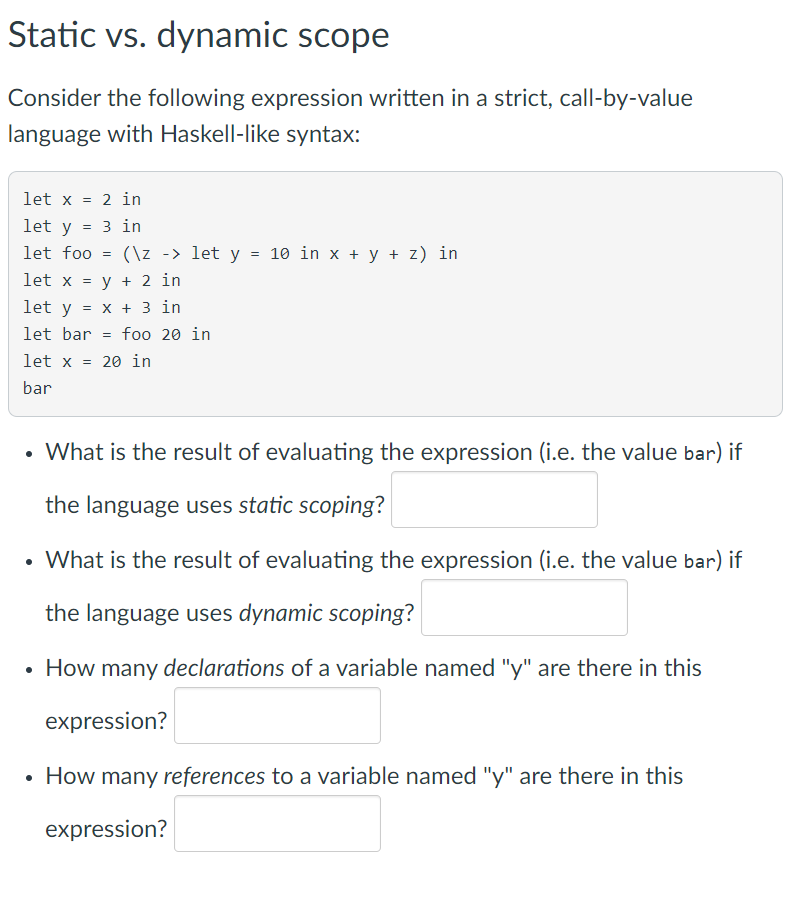
Static vs. dynamic scope Consider the following expression written in a strict, call-by-value language with Haskell-like syntax: let y = let x = 2 in 3 in let foo (\z -> let y = 10 in x + y + z) in let x = y + 2 in let y = x + 3 in let bar foo 20 in let x = 20 in bar = What is the result of evaluating the expression (i.e. the value bar) if the language uses static scoping? What is the result of evaluating the expression (i.e. the value bar) if the language uses dynamic scoping? How many declarations of a variable named "y" are there in this expression? How many references to a variable named "y" are there in this expression? Static vs. dynamic scope Consider the following expression written in a strict, call-by-value language with Haskell-like syntax: let y = let x = 2 in 3 in let foo (\z -> let y = 10 in x + y + z) in let x = y + 2 in let y = x + 3 in let bar foo 20 in let x = 20 in bar = What is the result of evaluating the expression (i.e. the value bar) if the language uses static scoping? What is the result of evaluating the expression (i.e. the value bar) if the language uses dynamic scoping? How many declarations of a variable named "y" are there in this expression? How many references to a variable named "y" are there in this expression
Step by Step Solution
There are 3 Steps involved in it

Get step-by-step solutions from verified subject matter experts
 Study Help