







Question: Statistical mechanics Note: for statistical mechanics problems, you may use the following numbers of congurations] microstates depending on the phase of the system (ideal gas,
Statistical mechanics
![following numbers of congurations] microstates depending on the phase of the system](https://s3.amazonaws.com/si.experts.images/answers/2024/06/667bf128ecf85_696667bf128d7011.jpg)
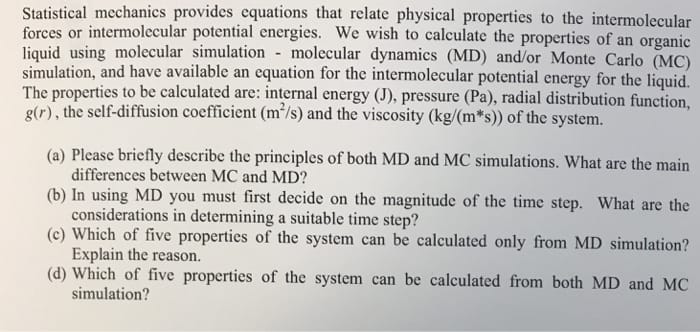
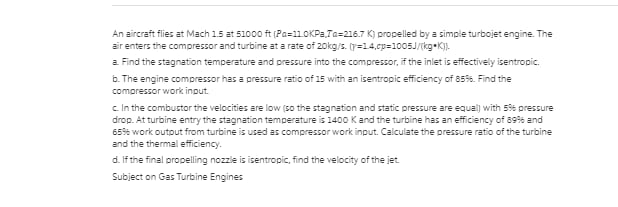
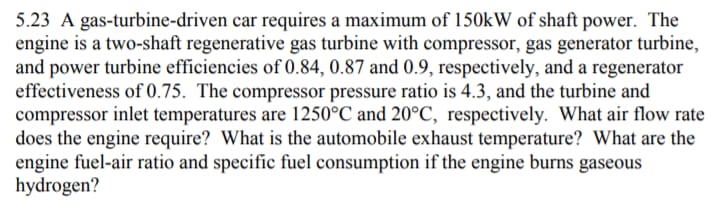
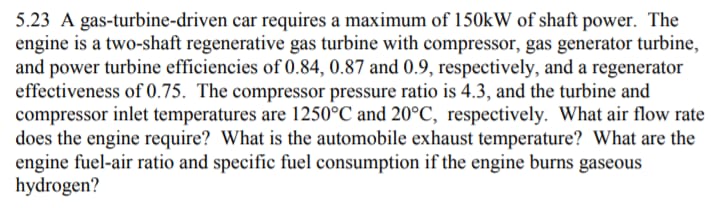
Note: for statistical mechanics problems, you may use the following numbers of congurations] microstates depending on the phase of the system (ideal gas, 9, liquid, 1, or solid, 5): 1. Communal Entropy. The difference in entropy upon melting of a solid is commonly referred to as the "communal entropy," and for a crystalline solid is predominantly due to the difference in congurational entropy of the resulting liquid (denoted by I) compared to the initial solid (denoted by s): rms 2' sdlsconfig = configJ Sconfig Use statistical mechanics to find a simple expression for drugs by assuming that the molar (or molecular) volume of the solid and liquid are approximately equal. Hint: you will need to employ Stirling's formula (Equation 1.? in Simon 9 McQuarrfe). Statistical mechanics provides equations that relate physical properties to the intermolecular forces or intermolecular potential energies. We wish to calculate the properties of an organic liquid using molecular simulation - molecular dynamics (MD) and/or Monte Carlo (MC) simulation, and have available an equation for the intermolecular potential energy for the liquid. The properties to be calculated are: internal energy (J), pressure (Pa), radial distribution function, g(r) , the self-diffusion coefficient (m /s) and the viscosity (kg/(m*s)) of the system. (a) Please briefly describe the principles of both MD and MC simulations. What are the main differences between MC and MD? (b) In using MD you must first decide on the magnitude of the time step. What are the considerations in determining a suitable time step? (c) Which of five properties of the system can be calculated only from MD simulation? Explain the reason. (d) Which of five properties of the system can be calculated from both MD and MC simulation?An aircraft flies at Mach 1.5 at 51000 ft (Pa=11 0KPa,To=216.7 K) propelled by a simple turbojet engine. The air enters the compressor and turbine at a rate of 20kg/s. (7=14,cp=1005J/{kg.Kj). a Find the stagnation temperature and pressure into the compressor, if the inlet is effectively isentropic. b. The engine compressor has a pressure ratio of 15 with an isentropic efficiency of 8516. Find the compressor work input. c. In the combustor the velocities are low (so the stagnation and static pressure are equal] with 596 pressure drop. At turbine entry the stagnation temperature is 1400 K and the turbine has an efficiency of 89%% and 65%% work output from turbine is used as compressor work input. Calculate the pressure ratio of the turbine and the thermal efficiency. d. If the final propelling nozzle is isentropic, find the velocity of the jet Subject on Gas Turbine Engines5.23 A gas-turbine-driven car requires a maximum of 150k W of shaft power. The engine is a two-shaft regenerative gas turbine with compressor, gas generator turbine, and power turbine efficiencies of 0.84, 0.87 and 0.9, respectively, and a regenerator effectiveness of 0.75. The compressor pressure ratio is 4.3, and the turbine and compressor inlet temperatures are 1250 C and 20 C, respectively. What air flow rate does the engine require? What is the automobile exhaust temperature? What are the engine fuel-air ratio and specific fuel consumption if the engine burns gaseous hydrogen
Step by Step Solution
There are 3 Steps involved in it

Get step-by-step solutions from verified subject matter experts
 Study Help