Question: Strategic (value-based) segmentation is typically more relevant but less actionable than tactical (profile-based) segmentation O True O False Positioning differs from a value proposition in


Strategic (value-based) segmentation is typicallyStrategic (value-based) segmentation is typicallyStrategic (value-based) segmentation is typicallyStrategic (value-based) segmentation is typicallyStrategic (value-based) segmentation is typically

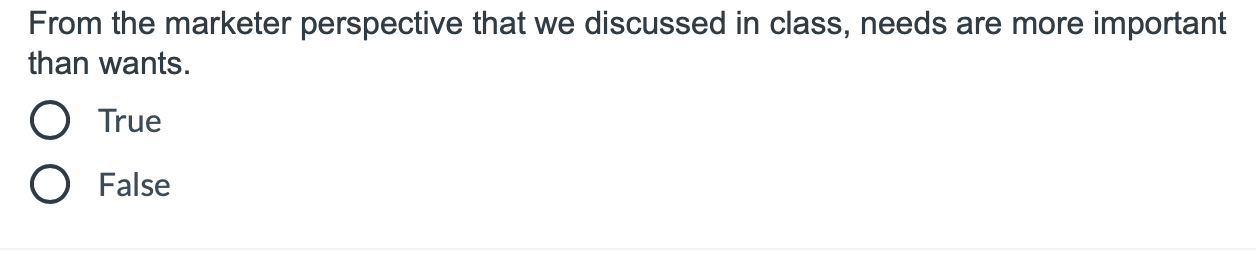
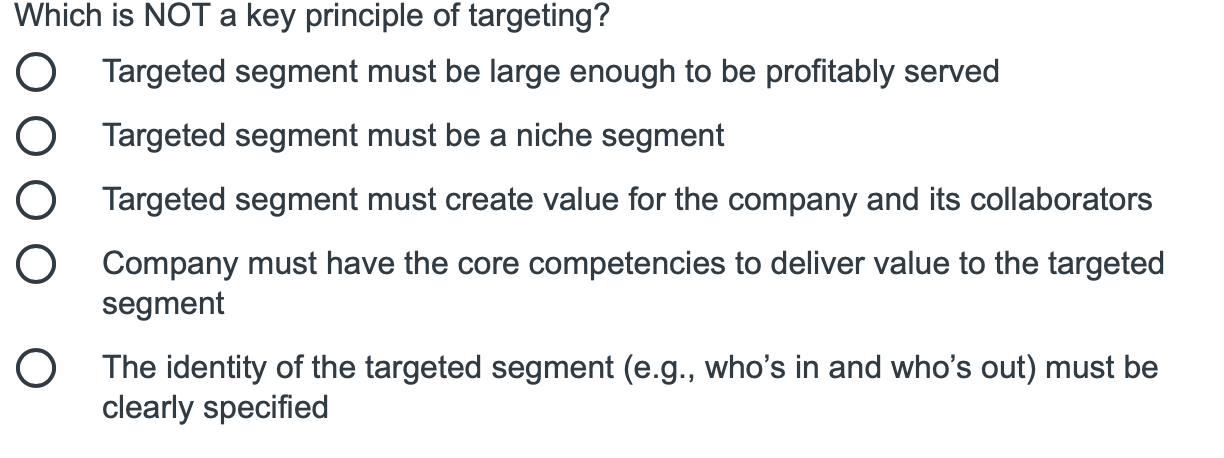
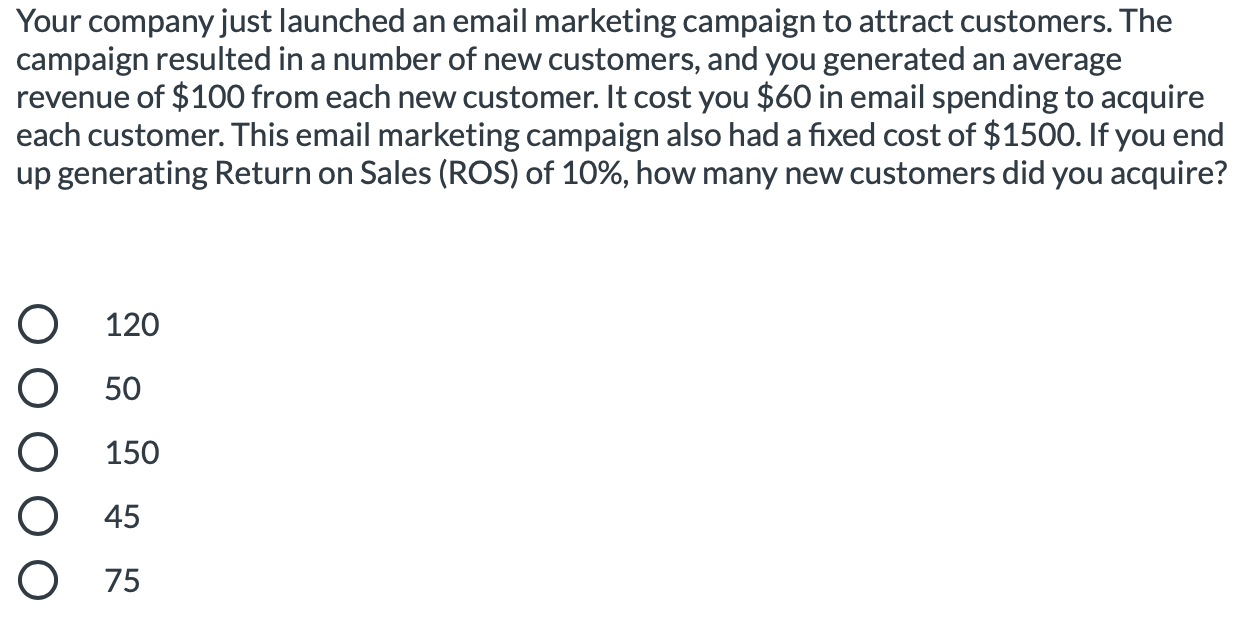
Strategic (value-based) segmentation is typically more relevant but less actionable than tactical (profile-based) segmentation O True O False Positioning differs from a value proposition in that it describes many benefits of a product offering whereas a value proposition focuses on a single benefit. O True O False Your company just launched an email marketing campaign to attract customers. The campaign resulted in a number of new customers, and you generated an average revenue of $100 from each new customer. It cost you $60 in email spending to acquire each customer. This email marketing campaign also had a fixed cost of $1500. If you end up generating Return on Sales (ROS) of 10%, how many new customers did you acquire? 0 120 0 50 0 150 0 45 0 75 From the marketer perspective that we discussed in class, needs are more important than wants. True O False Which is NOT a key principle of targeting? O Targeted segment must be large enough to be profitably served O Targeted segment must be a niche segment Targeted segment must create value for the company and its collaborators 0 Company must have the core competencies to deliver value to the targeted segment 0 The identity of the targeted segment (e.g., who's in and who's out) must be clearly specified
Step by Step Solution

There are 3 Steps involved in it

1 Expert Approved Answer
Step: 1 Unlock blur-text-image

Question Has Been Solved by an Expert!

Get step-by-step solutions from verified subject matter experts

Step: 2 Unlock
Step: 3 Unlock

Students Have Also Explored These Related General Management Questions!