







Question: Students will create a n Excel worksheet t o forecast the cash flows o f a proposed project leading t o calculating its N P
Students will create Excel worksheet forecast the cash flows a proposed project leading
calculating its result, following the method introduced Chapter The proposed
project Example Baldwin Company Chapter Cash Flow The goal
have a systematic approach forecast cash flows and also provide users the flexibility modify
key inputs quickly get the results under different scenarios. A good reference the
Excel Template provided the Canvas course. grading purposes, these key inputs include:
Units sold for each year the project
Price per unit for Year
Price increase percentage per year the same for all years
Unit production cost for Year
Unit production cost increase percentage per year the same for all years
start project
for subsequent years a percentage Sales the same for all years
Cost warehouse
Cost machine
Depreciation rate for each year the project
Salvage value machine tax
Tax rate the same for all years
Discount rate the same for all years
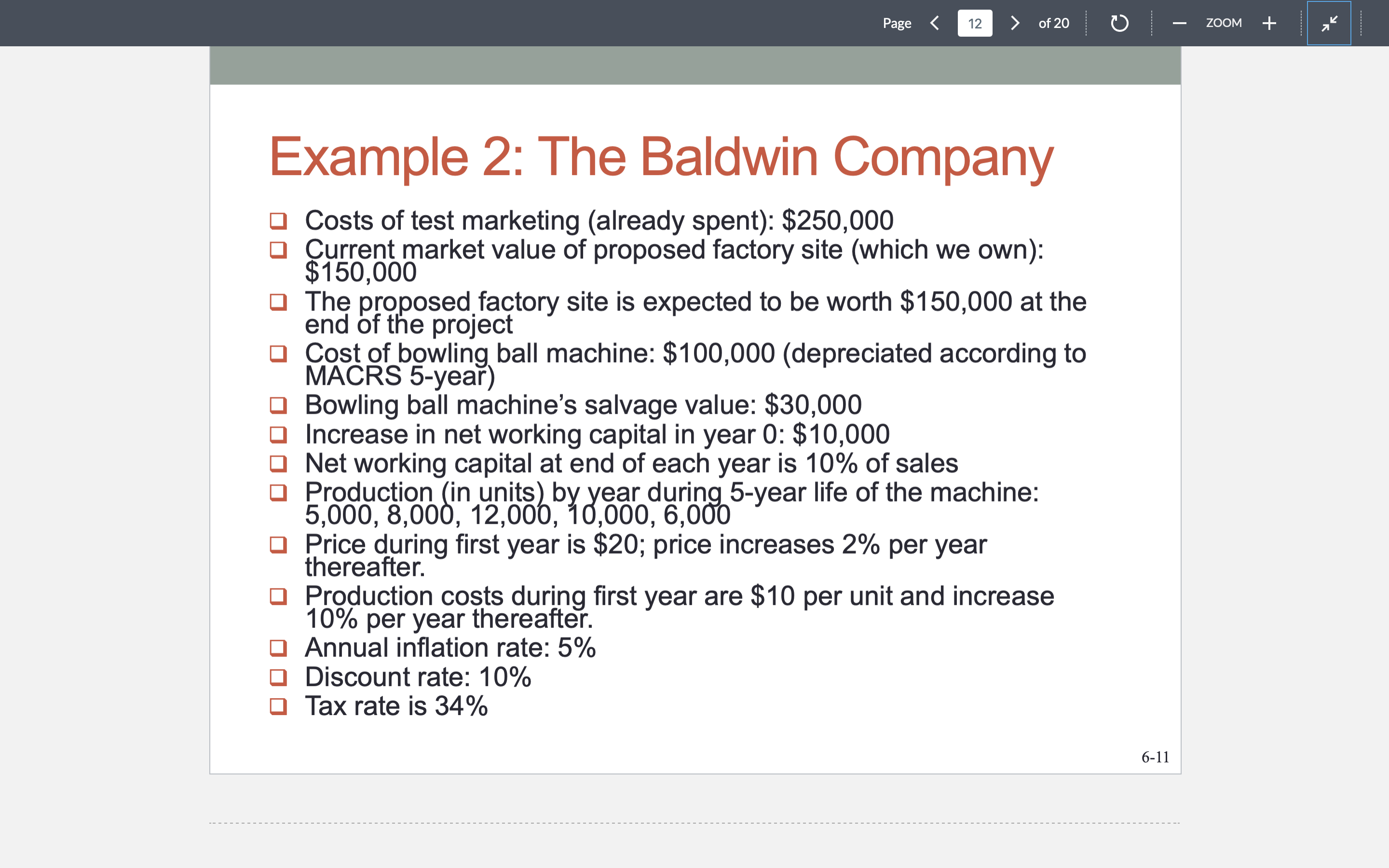
Example : The Baldwin Company
Costs test marketing spent: $
Current market value proposed factory site own:
$
The proposed factory site expected worth $ the
end the project
Cost bowling ball machine: $ according
MACRS year
Bowling ball machine's salvage value: $
Increase net working capital year : $
Net working capital end each year sales
Production units year during year life the machine:
Price during first year $; price increases per year
thereafter.
Production costs during first year are $ per unit and increase
per year thereafter.
Annual inflation rate:
Discount rate:
Tax rate Example : The Baldwin Company
Costs test marketing spent: $
Current market value proposed factory site own:
$
The proposed factory site expected worth $ the
end the project
Cost bowling ball machine: $ according
MACRS year
Bowling ball machine's salvage value: $
Increase net working capital year : $
Net working capital end each year sales
Production units year during year life the machine:
Price during first year $; price increases per year
thereafter.
Production costs during first year are $ per unit and increase
per year thereafter.
Annual inflation rate:
Discount rate:
Tax rate Purpose
The purpose this project provide students incentive practice their Excel modelling
skills learned class cash flow forecasting for the capital budgeting purpose.
Instruction
Students will create Excel worksheet forecast the cash flows a proposed project leading
calculating its result, following the method introduced Chapter The proposed
project Example Baldwin Company Chapter Cash Flow The goal
have a systematic approach forecast cash flows and also provide users the flexibility modify
key inputs quickly get the results under different scenarios. A good reference the
Excel Template provided the Canvas course.
grading purposes, these key inputs include:
Units sold for each year the project
Price per unit for Year
Price increase percentage per year the same for all years
Unit production cost for Year
Unit production cost increase percentage per year the same for all years
start project
for subsequent years a percentage Sales the same for all years
Cost warehouse
Cost machine
Depreciation rate for each year the project
Salvage value machine tax
Tax rate the same for all years
Discount rate the same for all years
Step by Step Solution
There are 3 Steps involved in it
1 Expert Approved Answer
Step: 1 Unlock

Question Has Been Solved by an Expert!
Get step-by-step solutions from verified subject matter experts
Step: 2 Unlock
Step: 3 Unlock
 Study Help