







Question: Summarize this case In 2017 there was considerable media coverage of the rewards being received by the senior staff (called vice chancellors) at UK universities.
Summarize this case
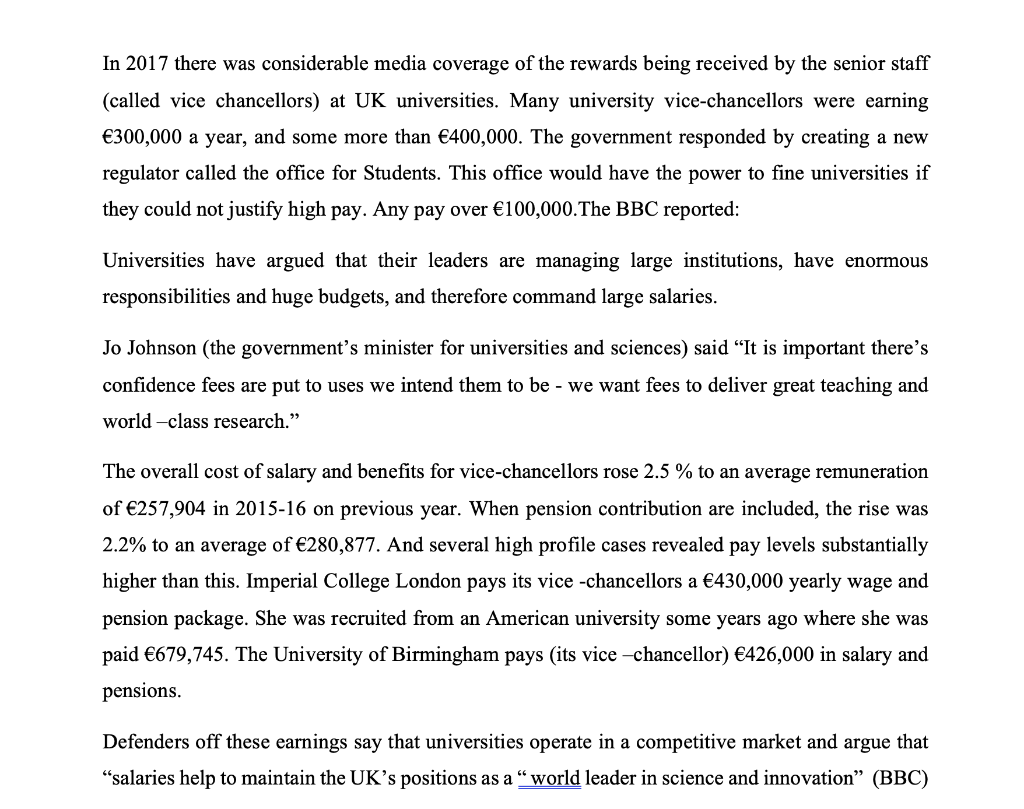
In 2017 there was considerable media coverage of the rewards being received by the senior staff (called vice chancellors) at UK universities. Many university vice-chancellors were earning 300,000 a year, and some more than 400,000. The government responded by creating a new regulator called the office for Students. This office would have the power to fine universities if they could not justify high pay. Any pay over 100,000.The BBC reported: Universities have argued that their leaders are managing large institutions, have enormous responsibilities and huge budgets, and therefore command large salaries. Jo Johnson (the government's minister for universities and sciences) said "It is important there's confidence fees are put to uses we intend them to be - we want fees to deliver great teaching and world -class research." The overall cost of salary and benefits for vice-chancellors rose 2.5% to an average remuneration of 257,904 in 2015-16 on previous year. When pension contribution are included, the rise was 2.2% to an average of 280,877. And several high profile cases revealed pay levels substantially higher than this. Imperial College London pays its vice -chancellors a 430,000 yearly wage and pension package. She was recruited from an American university some years ago where she was paid 679,745. The University of Birmingham pays (its vice -chancellor) 426,000 in salary and pensions. Defenders off these earnings say that universities operate in a competitive market and argue that "salaries heln to maintain the UK's positions as a " world leader in science and innovation" (BBC)
Step by Step Solution
There are 3 Steps involved in it

Get step-by-step solutions from verified subject matter experts
 Study Help