



Question: Superfund The Comprehensive Environmental Response Compensation and Liability Act (CERCLA) is more commonly referred to as the Superfund law. Superfund's concept is centered upon the
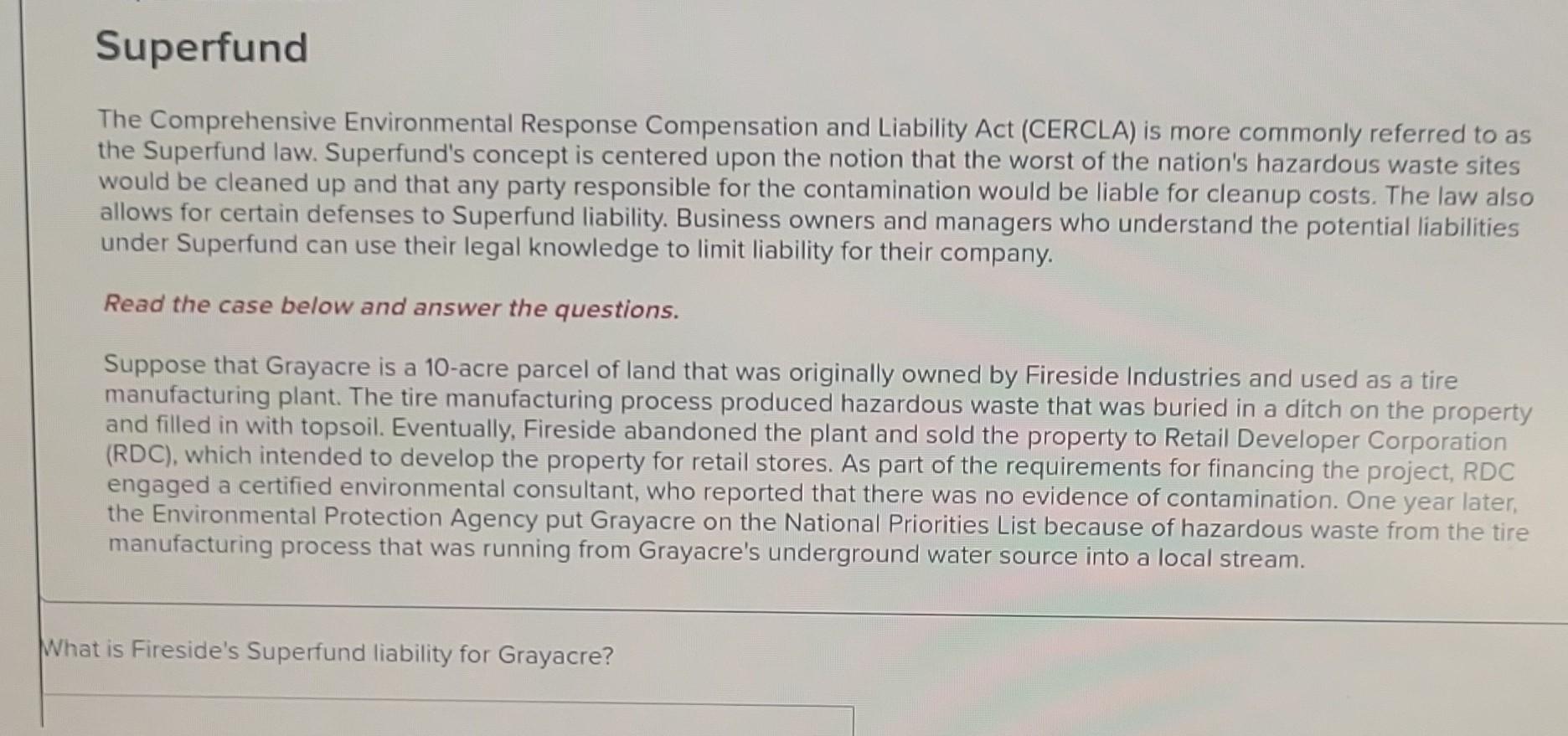
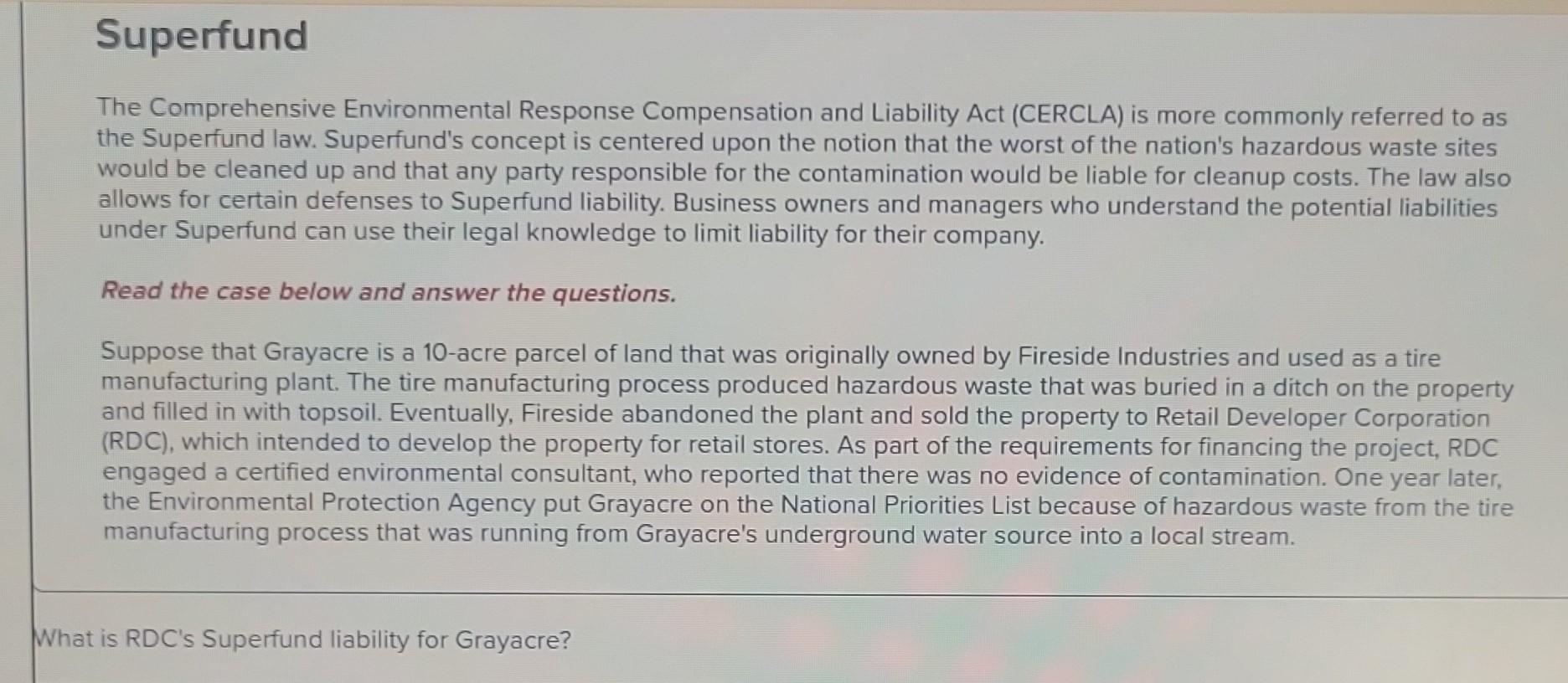
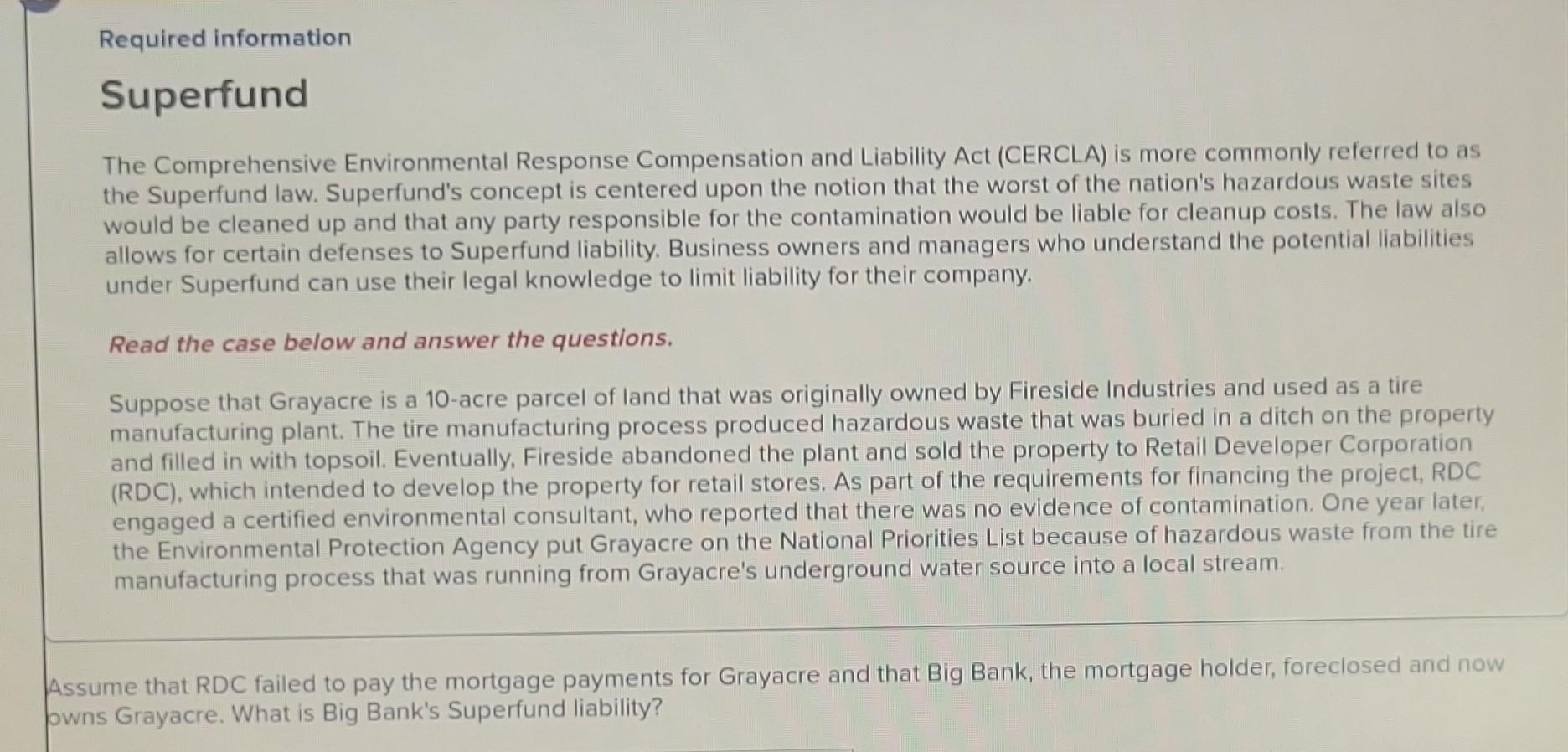
Superfund The Comprehensive Environmental Response Compensation and Liability Act (CERCLA) is more commonly referred to as the Superfund law. Superfund's concept is centered upon the notion that the worst of the nation's hazardous waste sites would be cleaned up and that any party responsible for the contamination would be liable for cleanup costs. The law also allows for certain defenses to Superfund liability. Business owners and managers who understand the potential liabilities under Superfund can use their legal knowledge to limit liability for their company. Read the case below and answer the questions. Suppose that Grayacre is a 10-acre parcel of land that was originally owned by Fireside Industries and used as a tire manufacturing plant. The tire manufacturing process produced hazardous waste that was buried in a ditch on the property and filled in with topsoil. Eventually, Fireside abandoned the plant and sold the property to Retail Developer Corporation (RDC), which intended to develop the property for retail stores. As part of the requirements for financing the project, RDC engaged a certified environmental consultant, who reported that there was no evidence of contamination. One year later, the Environmental Protection Agency put Grayacre on the National Priorities List because of hazardous waste from the tire manufacturing process that was running from Grayacre's underground water source into a local stream. What is RDC's Superfund liability for Grayacre? Superfund The Comprehensive Environmental Response Compensation and Liability Act (CERCLA) is more commonly referred to as the Superfund law. Superfund's concept is centered upon the notion that the worst of the nation's hazardous waste sites would be cleaned up and that any party responsible for the contamination would be liable for cleanup costs. The law also allows for certain defenses to Superfund liability. Business owners and managers who understand the potential liabilities under Superfund can use their legal knowledge to limit liability for their company. Read the case below and answer the questions. Suppose that Grayacre is a 10-acre parcel of land that was originally owned by Fireside Industries and used as a tire manufacturing plant. The tire manufacturing process produced hazardous waste that was buried in a ditch on the property and filled in with topsoil. Eventually, Fireside abandoned the plant and sold the property to Retail Developer Corporation (RDC), which intended to develop the property for retail stores. As part of the requirements for financing the project, RDC engaged a certified environmental consultant, who reported that there was no evidence of contamination. One year later, the Environmental Protection Agency put Grayacre on the National Priorities List because of hazardous waste from the tire manufacturing process that was running from Grayacre's underground water source into a local stream. What is Fireside's Superfund liability for Grayacre? Required information Superfund The Comprehensive Environmental Response Compensation and Liability Act (CERCLA) is more commonly referred to as the Superfund law. Superfund's concept is centered upon the notion that the worst of the nation's hazardous waste sites would be cleaned up and that any party responsible for the contamination would be liable for cleanup costs. The law also allows for certain defenses to Superfund liability. Business owners and managers who understand the potential liabilities under Superfund can use their legal knowledge to limit liability for their company. Read the case below and answer the questions. Suppose that Grayacre is a 10-acre parcel of land that was originally owned by Fireside Industries and used as a tire manufacturing plant. The tire manufacturing process produced hazardous waste that was buried in a ditch on the property and filled in with topsoil. Eventually, Fireside abandoned the plant and sold the property to Retail Developer Corporation (RDC), which intended to develop the property for retail stores. As part of the requirements for financing the project, RDC engaged a certified environmental consultant, who reported that there was no evidence of contamination. One year later, the Environmental Protection Agency put Grayacre on the National Priorities List because of hazardous waste from the tire manufacturing process that was running from Grayacre's underground water source into a local stream. Assume that RDC failed to pay the mortgage payments for Grayacre and that Big Bank, the mortgage holder, foreclosed and now pwns Grayacre. What is Big Bank's Superfund liability
Step by Step Solution
There are 3 Steps involved in it

Get step-by-step solutions from verified subject matter experts