Question: Supply Chains Issues Encountered in This Game and Insite Gained The data about the retailer after playing the game is below. The data is represented
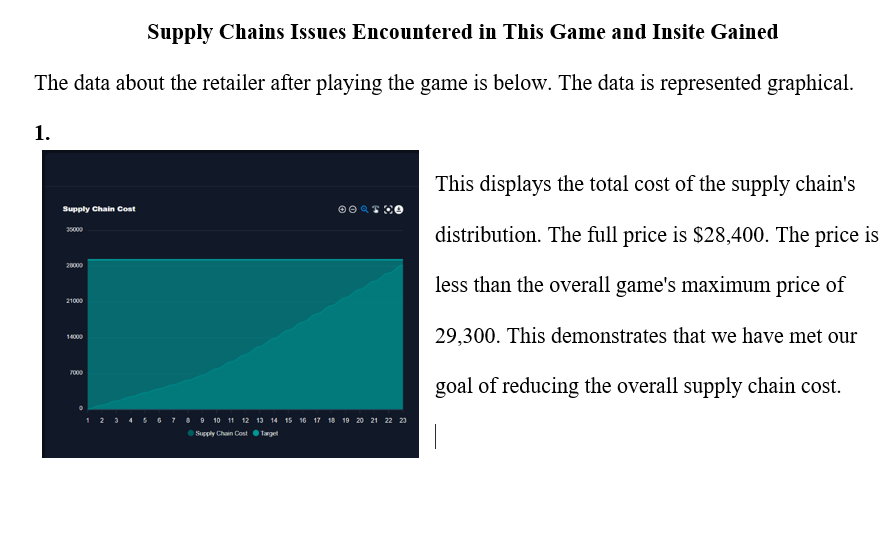
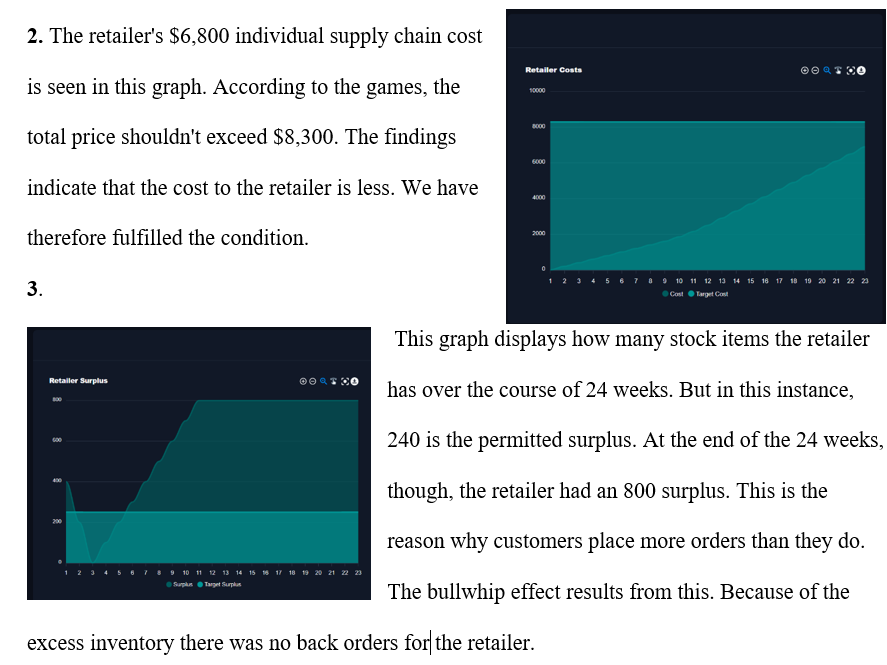
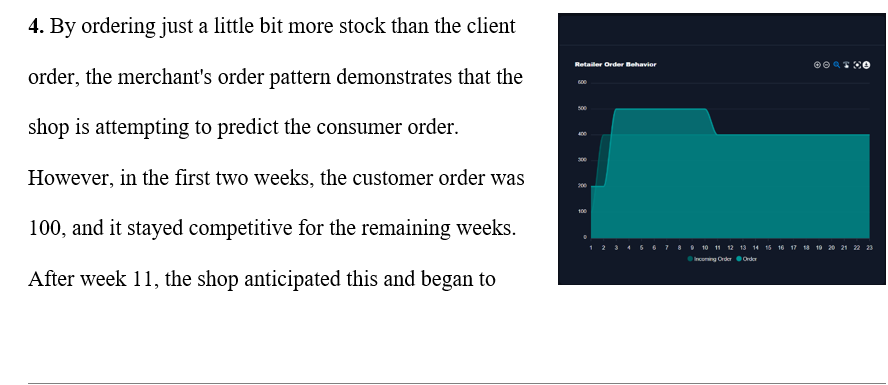
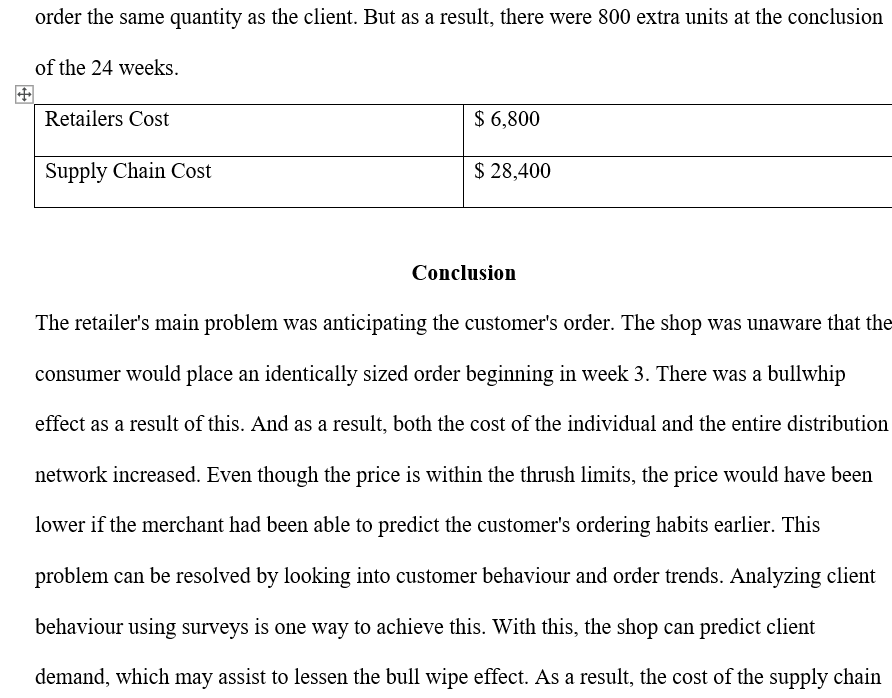
Supply Chains Issues Encountered in This Game and Insite Gained The data about the retailer after playing the game is below. The data is represented graphical. 1. This displays the total cost of the supplyr chain's distribution. The full price is $28,400. The price is less than the overall game's maximum price of 29,300. This demonstrates that we have met our goal of reducing the overall supply chain cost. 2. The retailer's $6,800 individual supply chain cost is seen in this graph. According to the games, the total price shouldn't exceed $8,300. The ndings indicate that the cost to the retailer is less. We have therefore fullled the condition. 3. This graph displays how many stock items the retailer has over the course of 24 weeks. But in this instance, 240 is the permitted surplus. At the end of the 24 weeks, though, the retailer had an 800 surplus. This is the reason why customers place more orders than they do. The bullwhip effect results from this. Because of the excess inventory there was no back orders fOI'I the retailer. 4. By ordering just a little bit more stock than the client order, the merchant's order pattern demonstrates that the shop is attempting to predict the consumer order. However, in the rst two weeks, the customer order was 100, and it stayed competitive for the remaining weeks. Aer week 11, the shop anticipated this and began to order the same quantity as the client. But as a result, there were 800 extra units at the conclusion of the 24 weeks. Supply Chain Cost $ 28,400 Conclusion The retailer's main problem was anticipating the customer's order. The shop was unaware that the consumer would place an identically sized order beginning in week 3. There was a bullwhip effect as a result of this. And as a result, both the cost of the individual and the entire distribution network increased. Even though the price is within the thrush limits, the price would have been lower if the merchant had been able to predict the customer's ordering habits earlier. This problem can be resolved by looking into customer behaviour and order trends. Analyzing client behaviour using surveys is one way to achieve this. With this, the shop can predict client demand, which may assist to lessen the bull wipe effect. As a result, the cost of the supply chain
Step by Step Solution
There are 3 Steps involved in it
1 Expert Approved Answer
Step: 1 Unlock
Question Has Been Solved by an Expert!
Get step-by-step solutions from verified subject matter experts
Step: 2 Unlock
Step: 3 Unlock
Students Have Also Explored These Related General Management Questions!









 Study Help