







Question: Support Media Advantages and Limitations Support media include out - of - home advertising ( outdoor , in - store, and transit ) , promotional
Support Media Advantages and Limitations
Support media include outofhome advertising outdoor instore, and transit promotional products, and inflight advertising, among many others. There are pros and cons for each type of support media, and managers should be aware of the advantages and disadvantages of each of these strategies.
Support media are used to reach those people in the target market the primary media may not have effectively reached and to reinforce, or support, their messages. It is important to remember that some of these media are not used only for support, but for some companies may be the primary or sole medium used. Support media include outofhome advertising outdoor instore, and transit promotional products, and inflight advertising, among many others. The fastest growing area is that of branded entertainment including product placements, product integrations, and others. Support media offer a variety of advantages. Cost, ability to reach the target market, and flexibility are just a few. But each of these support media has disadvantages. Perhaps the major weakness with most is the lack of audience measurement and verification. As the number and variety of support media continue to grow, it is likely the major weaknesses will be overcome.
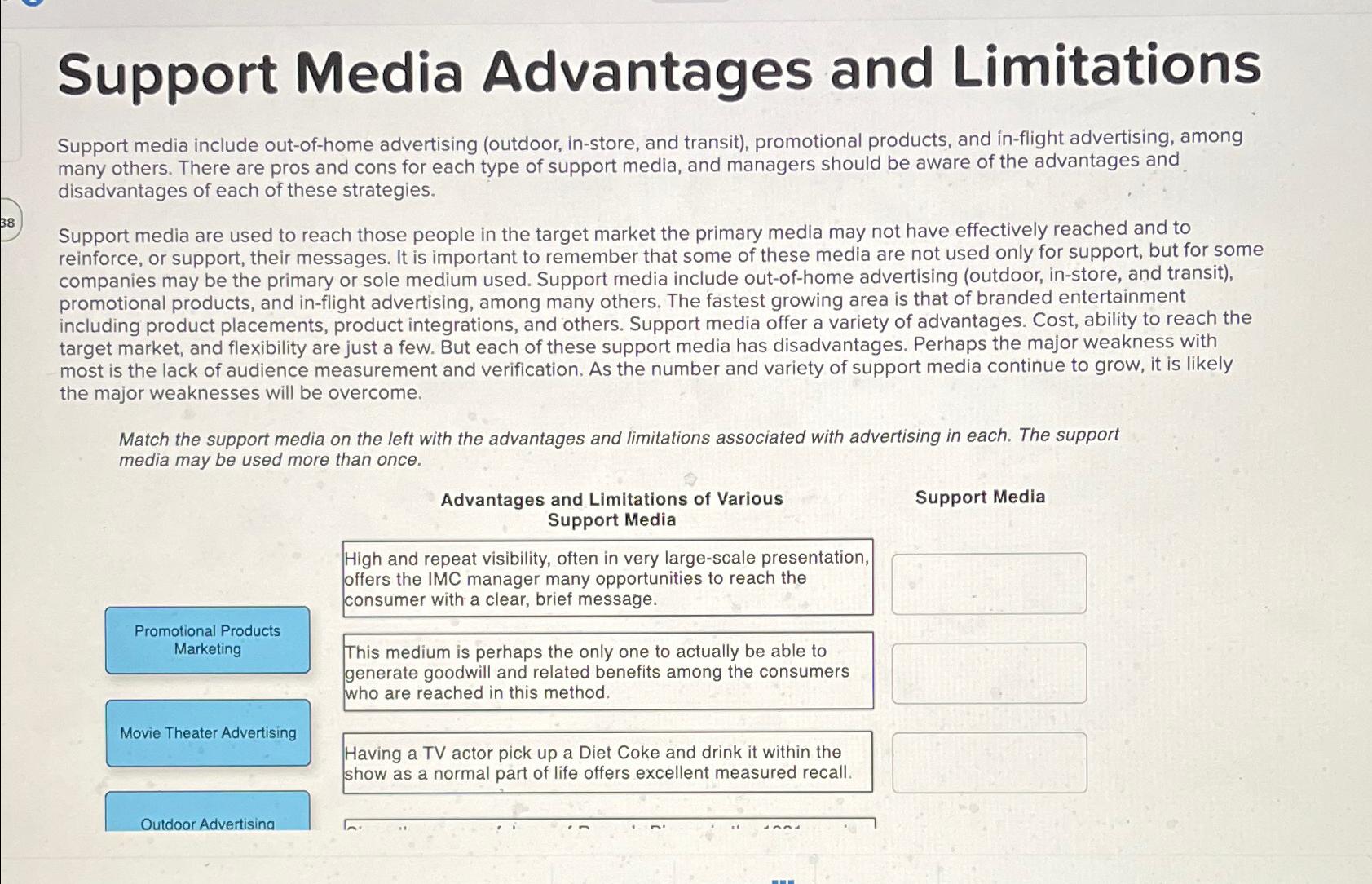
Match the support media on the left with the advantages and limitations associated with advertising in each. The support media may be used more than once.
Advantages and Limitations of Various Support Media
High and repeat visibility, often in very largescale presentation, offers the IMC manager many opportunities to reach the consumer with a clear, brief message.
This medium is perhaps the only one to actually be able to generate goodwill and related benefits among the consumers who are reached in this method.
Having a TV actor pick up a Diet Coke and drink it within the show as a normal part of life offers excellent measured recall.
Support Media
Movie Theater Advertising
Outdoor Advertisina
Step by Step Solution
There are 3 Steps involved in it
1 Expert Approved Answer
Step: 1 Unlock

Heres how you can match the support media with their advantages and limitations 1 High and repeat vi... View full answer
Question Has Been Solved by an Expert!
Get step-by-step solutions from verified subject matter experts
Step: 2 Unlock
Step: 3 Unlock
 Study Help