







Question: Suppose that g is the function given by the graph below. Use the graph to determine the values g(2), g(1), 9(0), 9(1), and 9(2), if
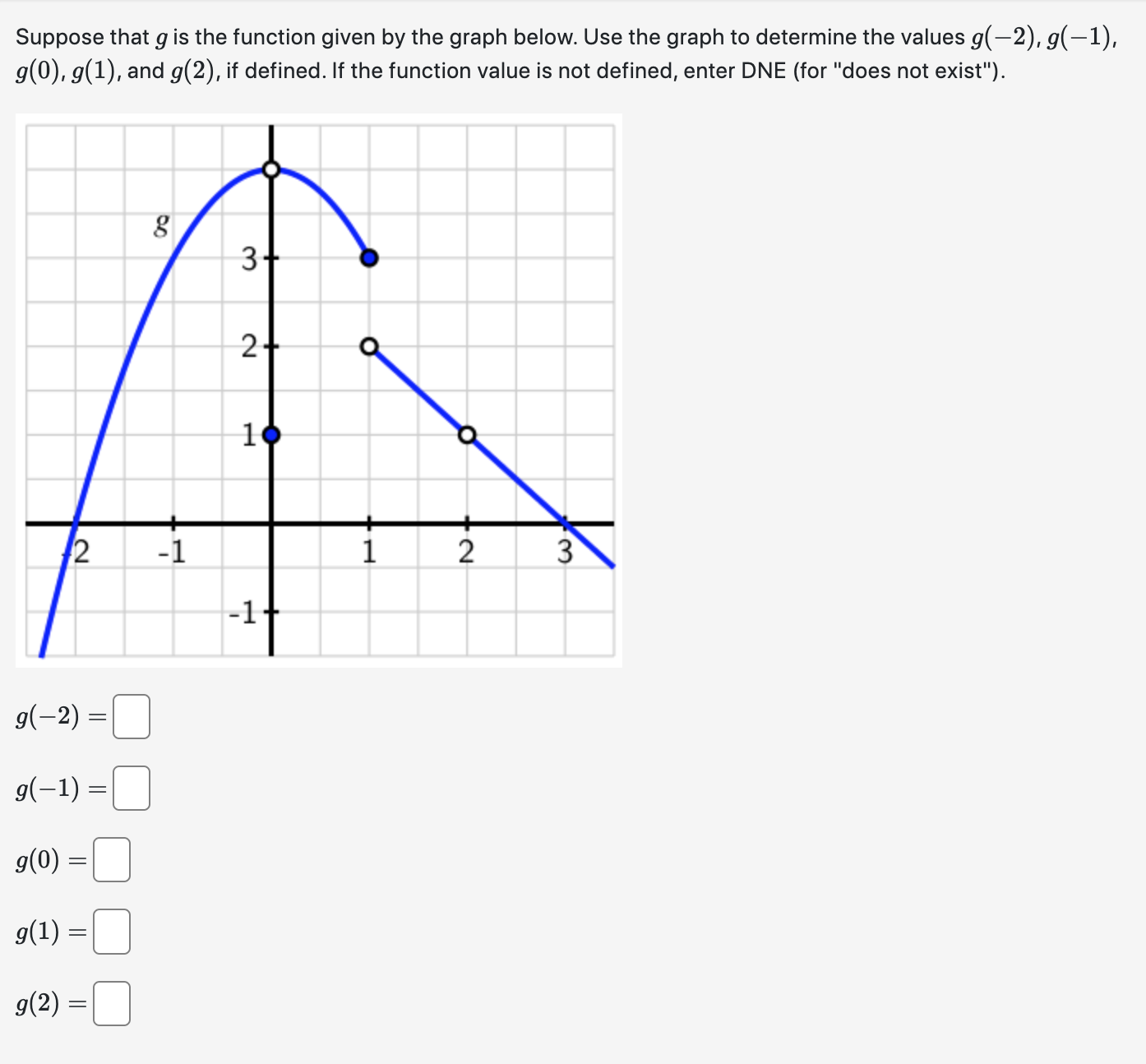
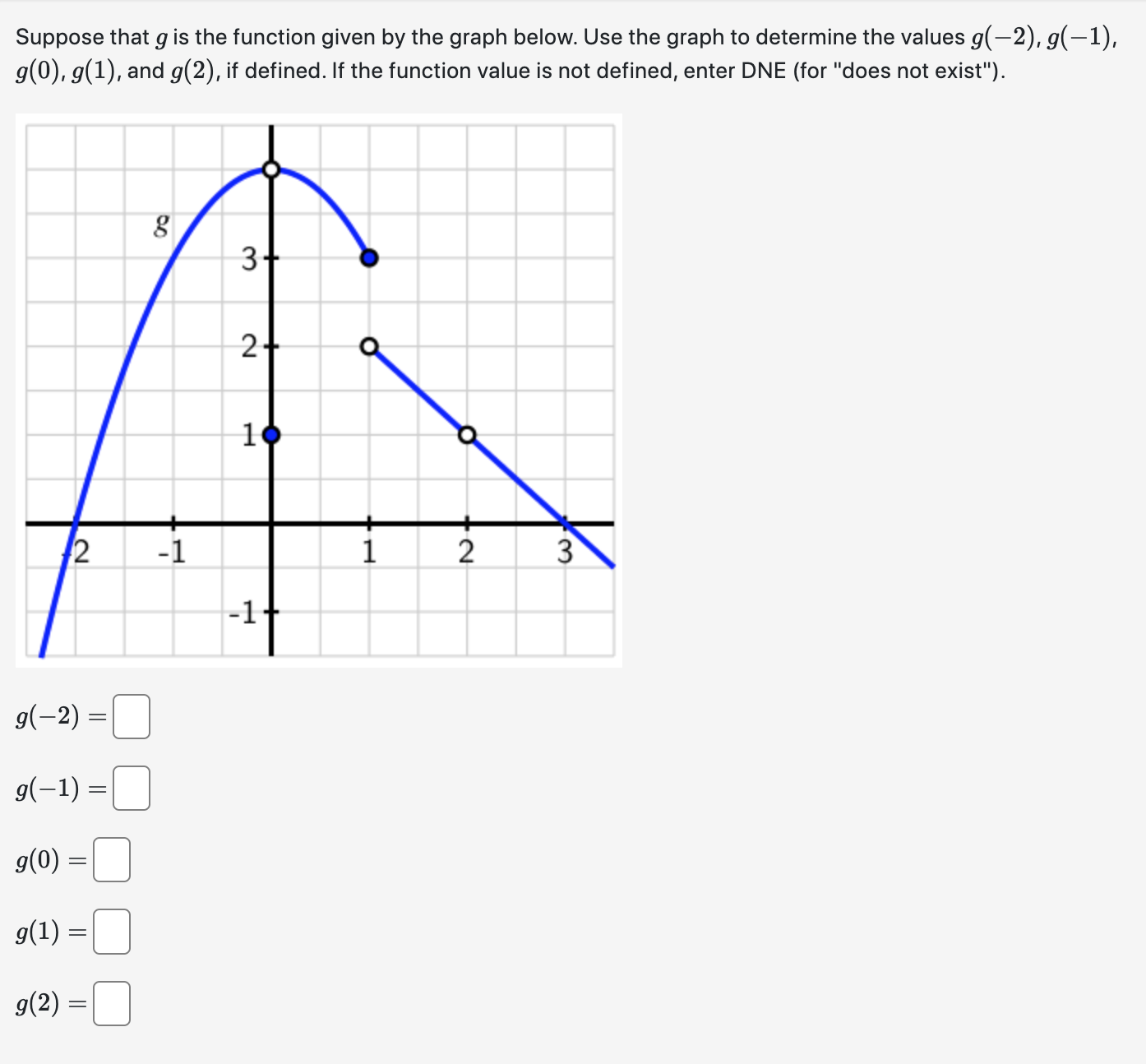
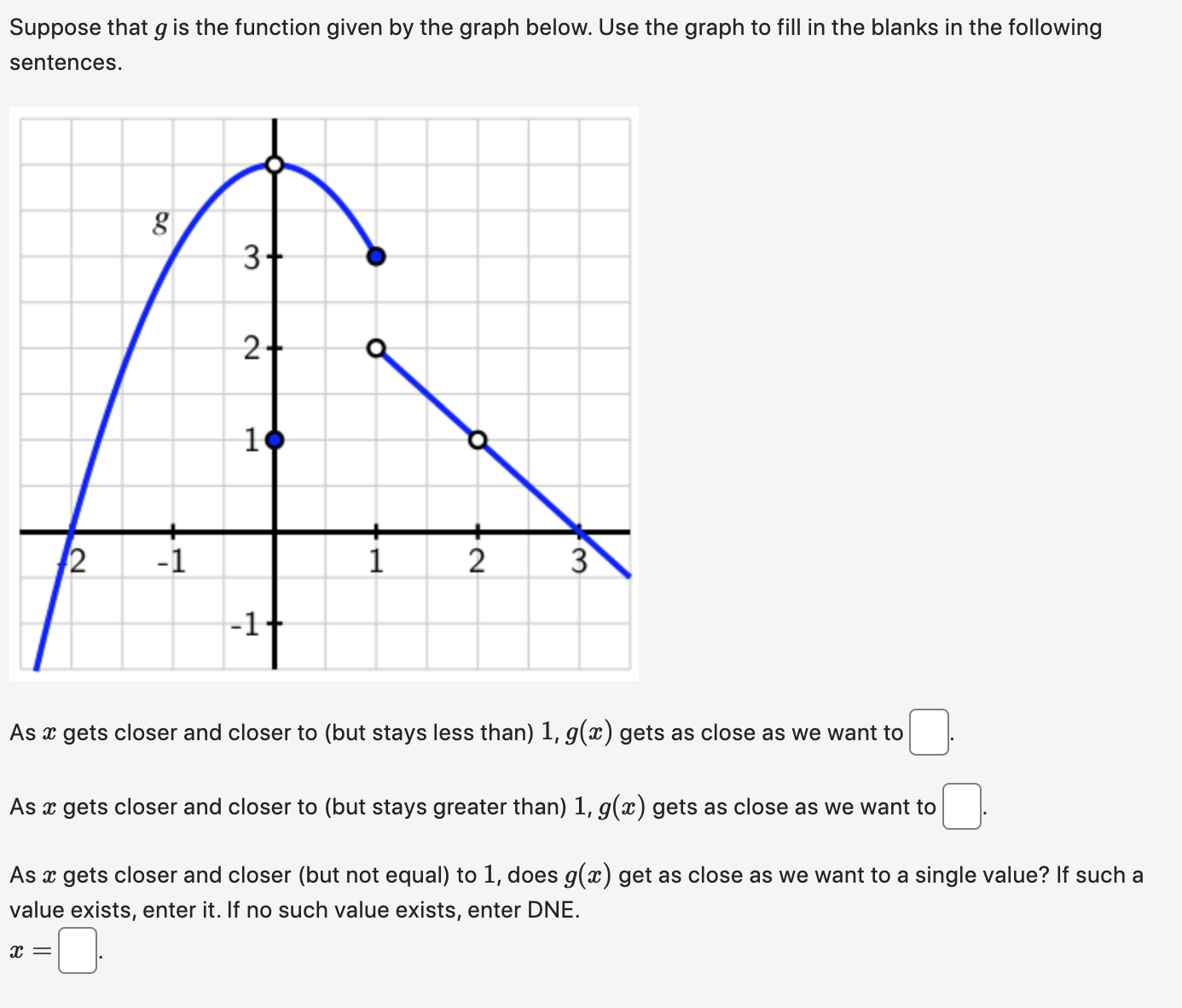
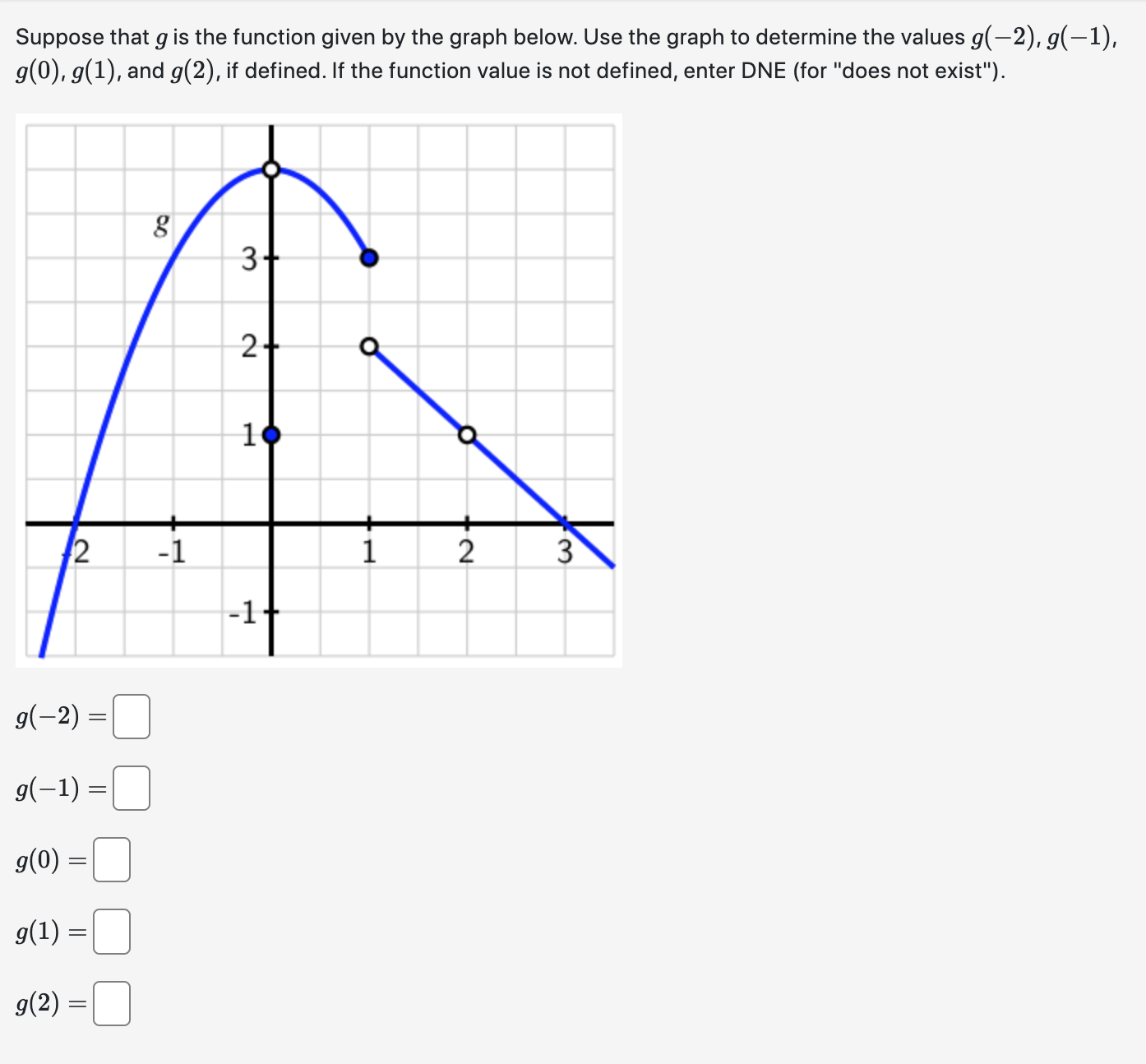
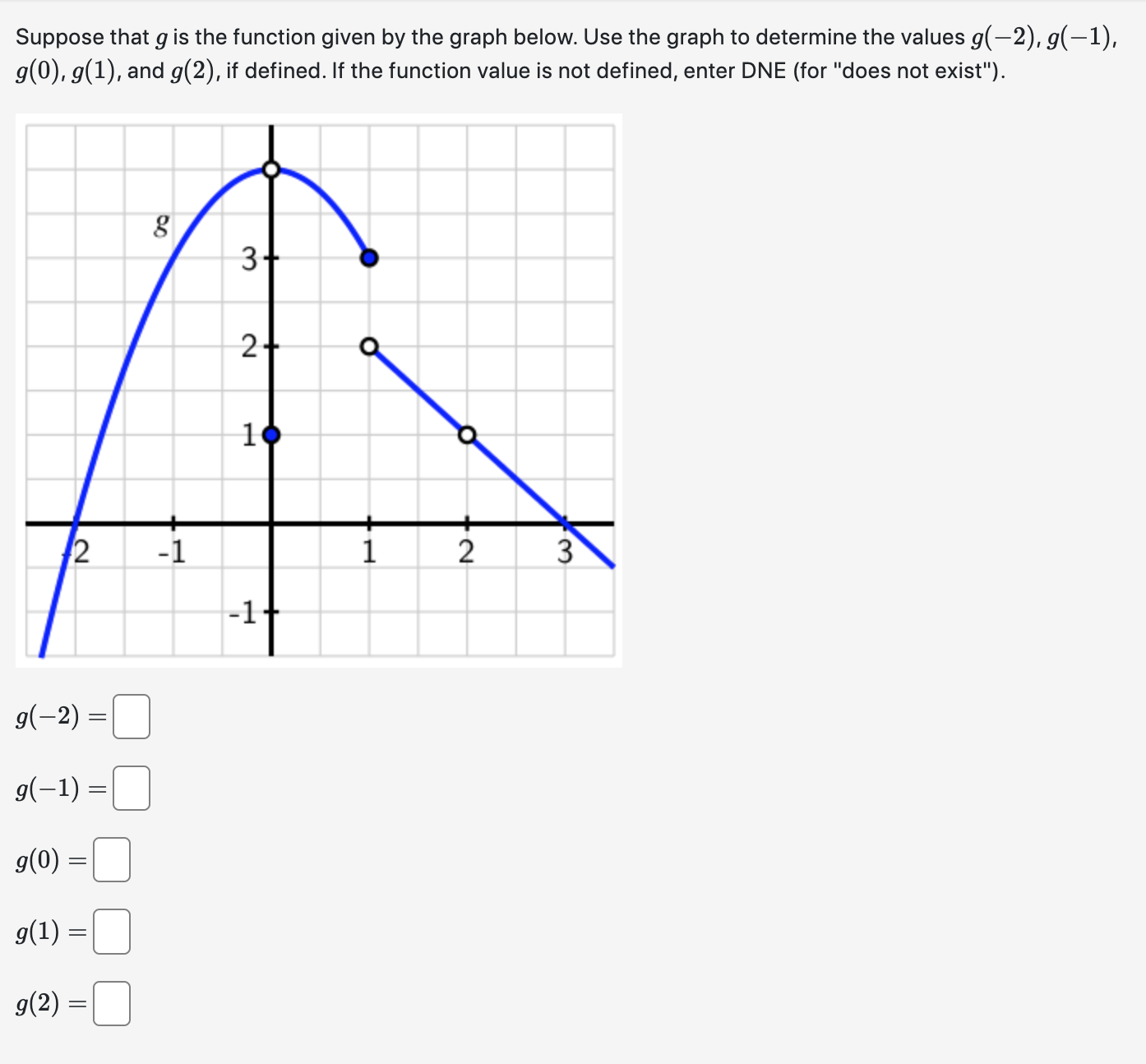
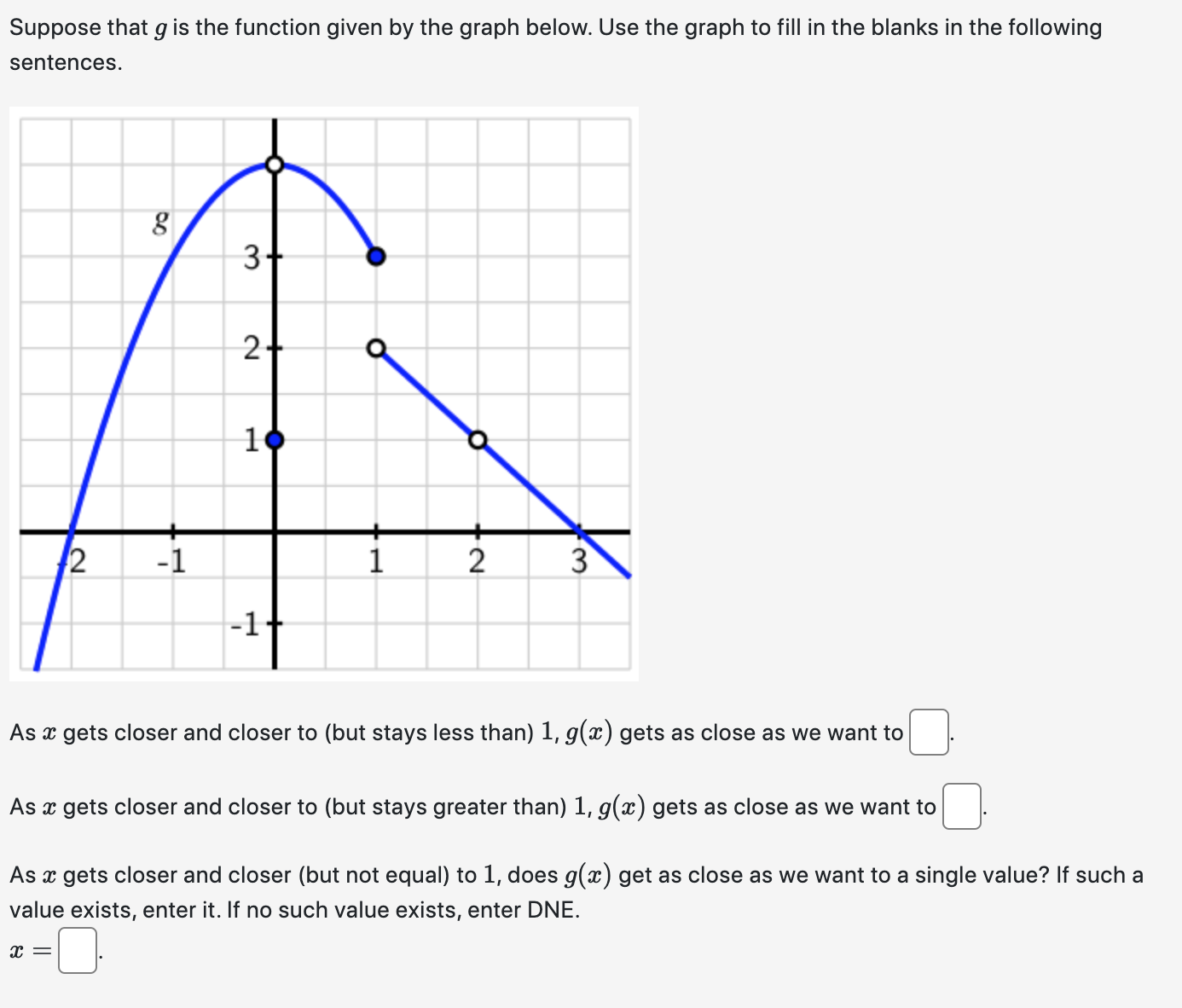
Suppose that g is the function given by the graph below. Use the graph to determine the values g(2), g(1), 9(0), 9(1), and 9(2), if defined. If the function value is not defined, enter DNE (for "does not exist"). Suppose that g is the function given by the graph below. Use the graph to determine the values g(2), g(1), 9(0), 9(1), and 9(2), if defined. If the function value is not defined, enter DNE (for "does not exist"). Suppose that g is the function given by the graph below. Use the graph to fill in the blanks in the following sentences. As :6 gets closer and closer to (but stays less than) 1, g(:c) gets as close as we want to C]. As :6 gets closer and closer to (but stays greater than) 1, g(9;) gets as close as we want to C]. As 5: gets closer and closer (but not equal) to 1, does g(a:) get as close as we want to a single value? If such a value exists, enter it. If no such value exists, enter DNE. 3:0
Step by Step Solution
There are 3 Steps involved in it

Get step-by-step solutions from verified subject matter experts
 Study Help