



Question: Suppose that it) = 3mx/2m2+3 (A) Find all critical values of f. If there are no critical values, enter 'l 000. If there are more
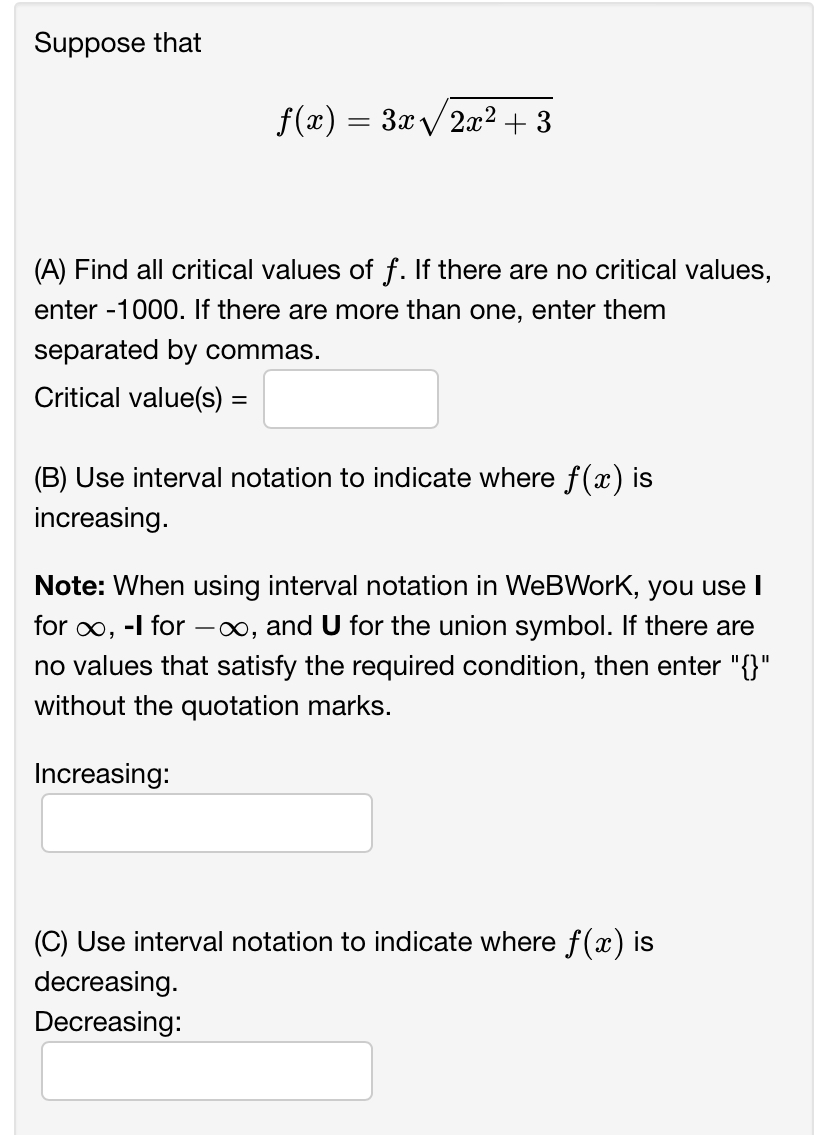
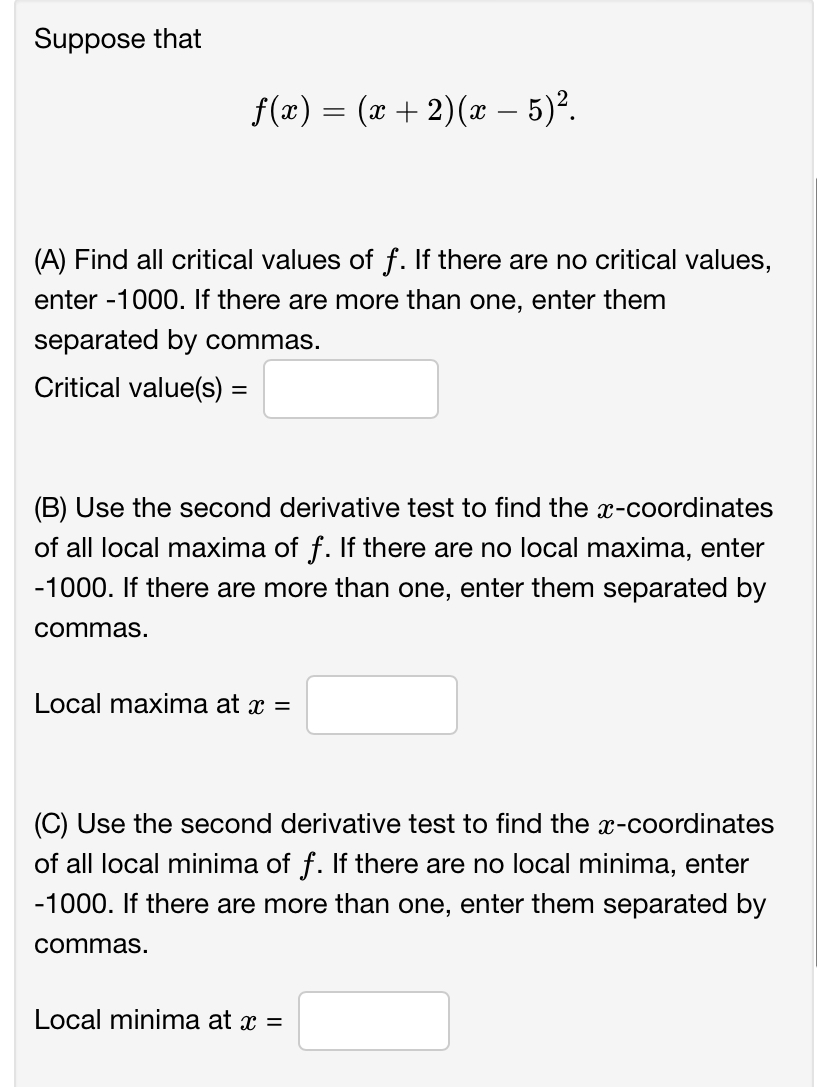
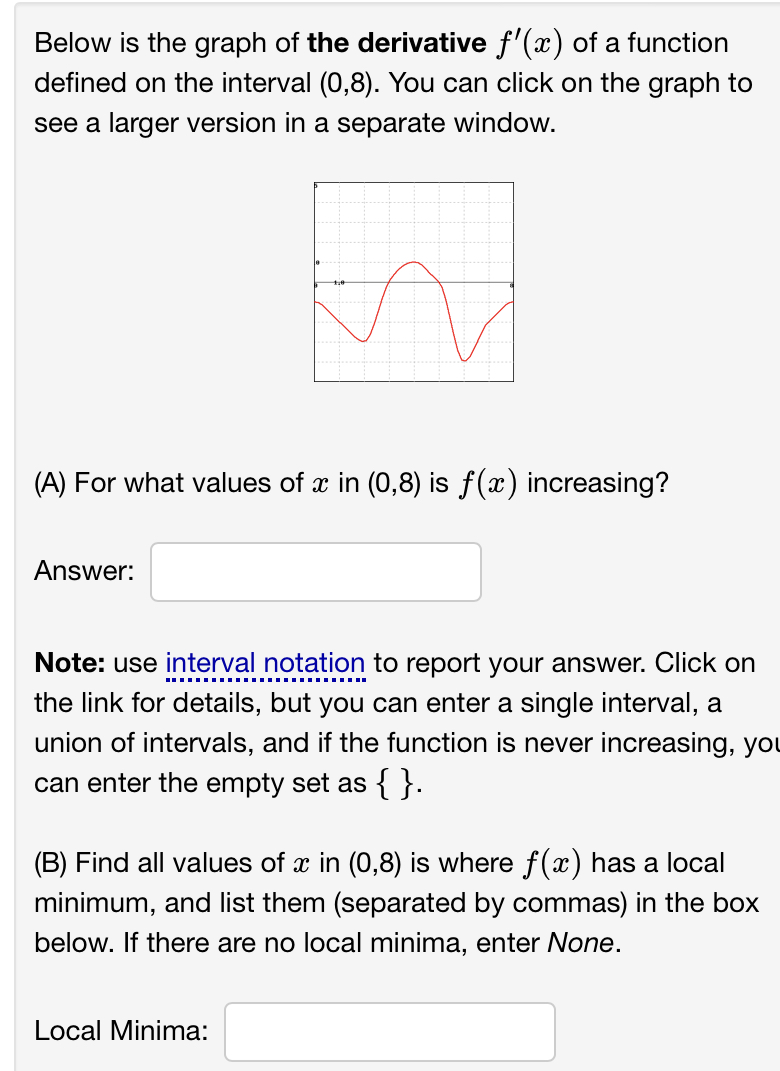
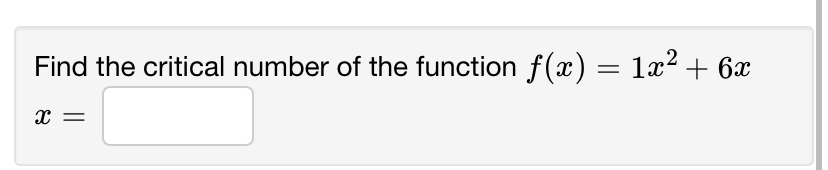
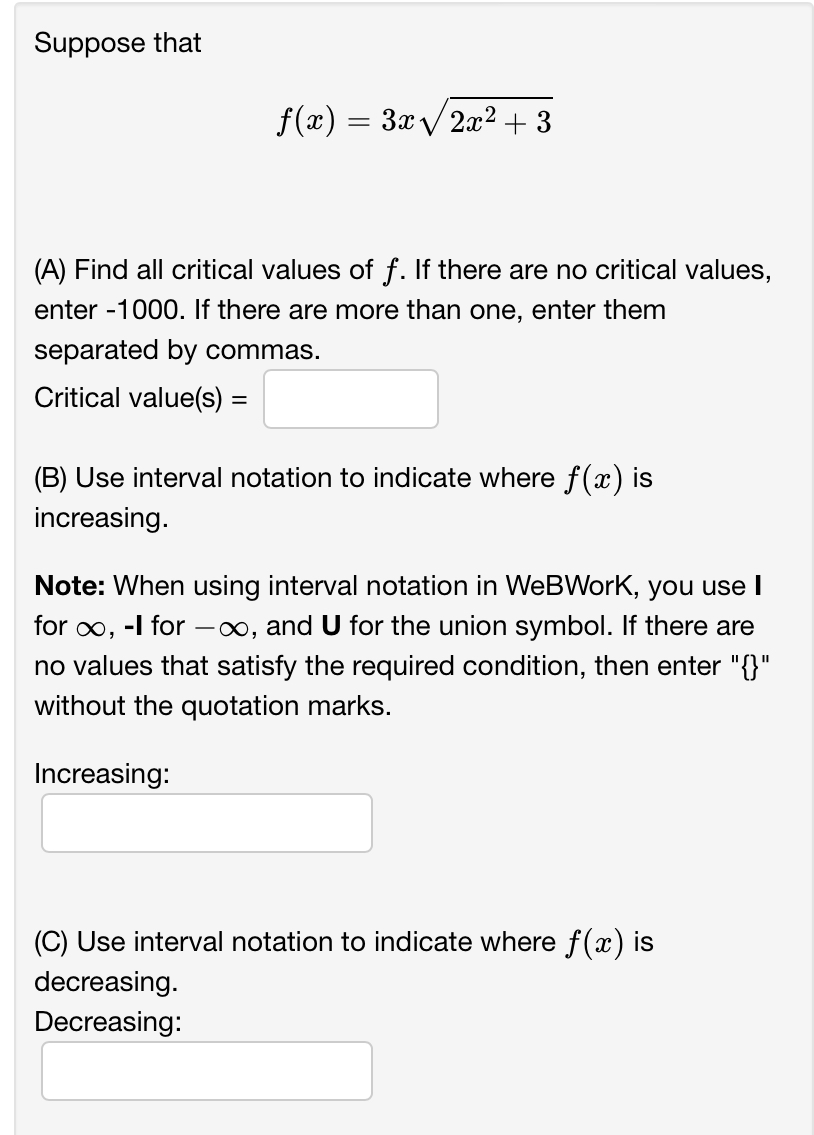
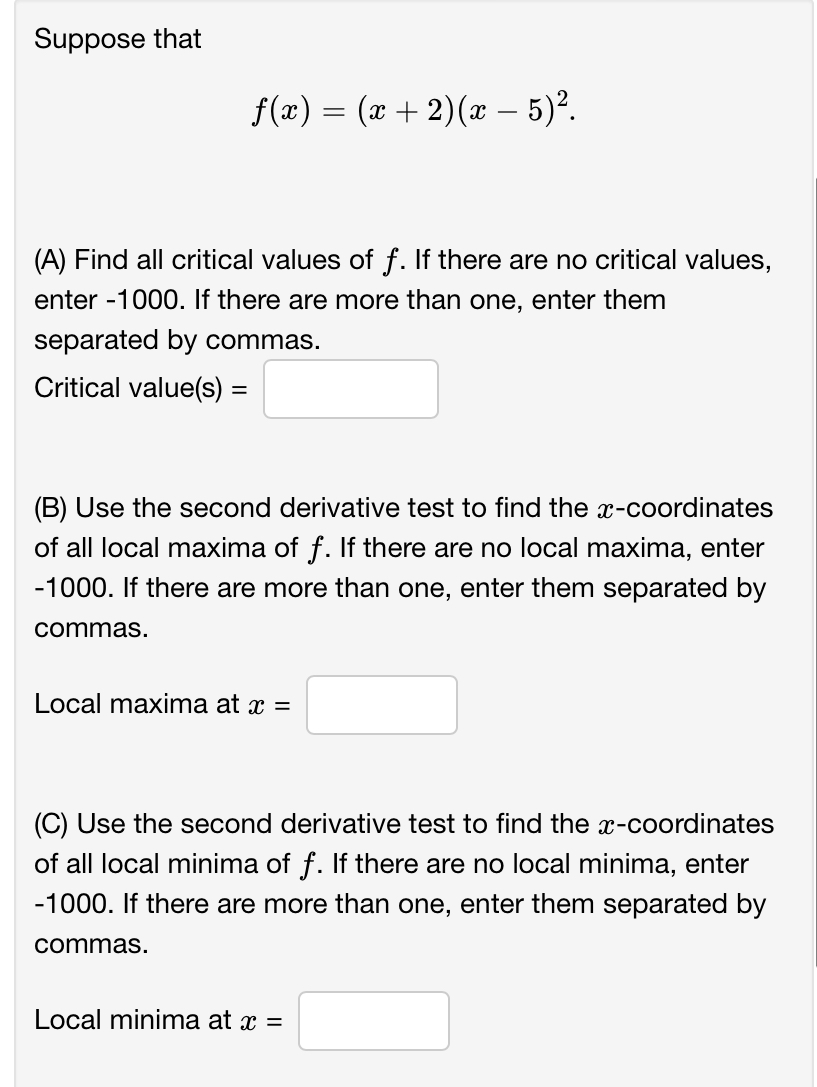
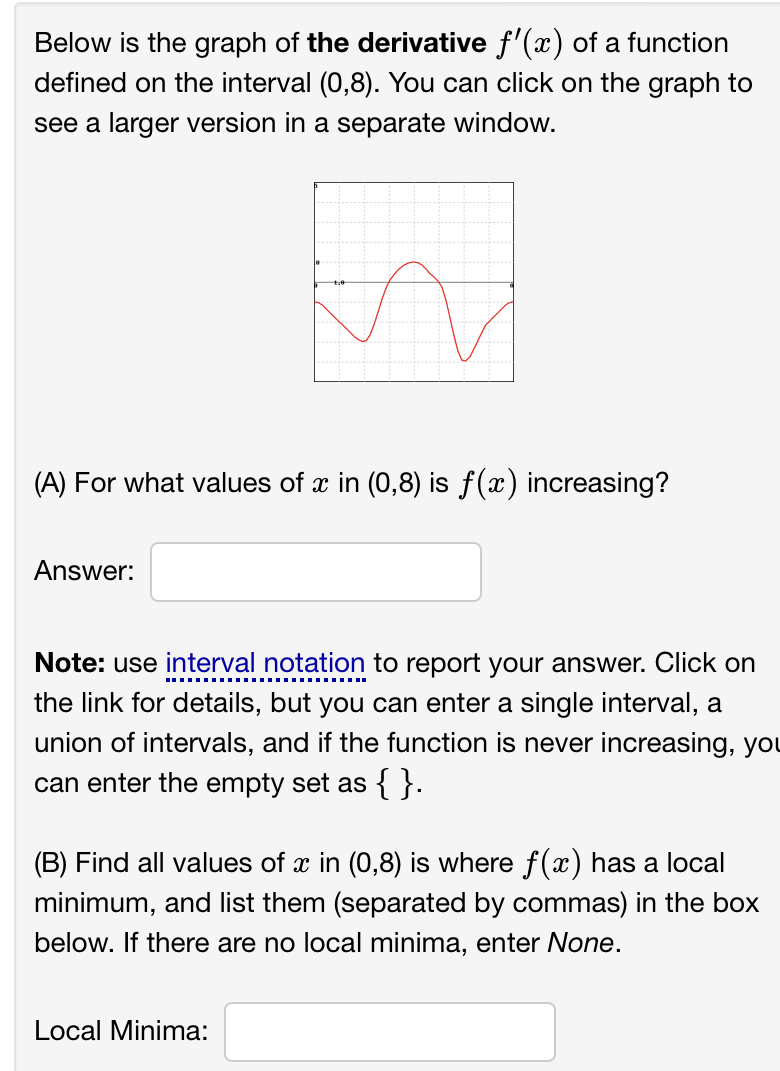
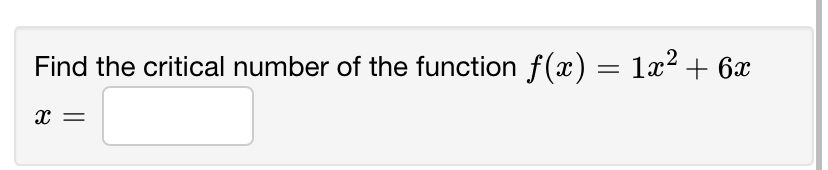
Suppose that it) = 3mx/2m2+3 (A) Find all critical values of f. If there are no critical values, enter 'l 000. If there are more than one, enter them separated by commas. Critical value(s) 2 (B) Use interval notation to indicate where f(:c) is increasing. Note: When using interval notation in WeBWorK, you use | for co, -| for oo, and U for the union symbol. If there are no values that satisfy the required condition, then enter "{}" without the quotation marks. Increasing: (C) Use interval notation to indicate where at) is decreasing. Decreasing: Suppose that f($) = (m + 2W 5)2- (A) Find all critical values of f. If there are no critical values, enter 1000. If there are more than one, enter them separated by commas. Critical value(s) = (B) Use the second derivative test to find the mcoordinates of all local maxima of f. If there are no local maxima, enter 1000. If there are more than one, enter them separated by commas. Local maxima at m = (C) Use the second derivative test to find the mcoordinates of all local minima of f. If there are no local minima, enter 1000. If there are more than one, enter them separated by commas. Local minima at m = Below is the graph of the derivative f ' (m) of a function defined on the interval (0,8). You can click on the graph to see a larger version in a separate window. (A) For what values of m in (0,8) is x) increasing? Answer: Note: use intervalpotatlo to report your answer. Click on the link for details, but you can enter a single interval, a union of intervals, and if the function is never increasing, yol can enter the emptyr set as { }. (B) Find all values of m in (0,8) is where x) has a local minimum, and list them (separated by commas) in the box below. If there are no local minima, enter None. Local Minima:
Step by Step Solution
There are 3 Steps involved in it

Get step-by-step solutions from verified subject matter experts