







Question: Suppose that Johns preferences over baskets containing fish (good ), and silk (good ), are described by the utility function . Johns corresponding marginal utilities
Suppose that John’s preferences over baskets containing fish (good ), and silk (good
 ), are described by the utility function
 .
.
John’s corresponding marginal utilities are,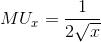 and
and .
.
Use to represent the price of fish,
 to represent the price of silk, and
 to represent John’s income.
Question 1: Find John’s fish demand function, and John’s silk demand function. For the purposes of this question you should assume that
Question 2: Describe the relationship between John’s demand for fish and,
(a) John’s income;
(b) the price of fish;
(c) the price of silk.
Your answers should reference the demand function that you derived in question 1, and correctly apply the relevant terminology. You should continue to assume that .
.
Question 3: Now assume that . Find John’s fish demand function, and John’s silk demand function.
Question 4: Suppose that the price of silk is per item, and that John’s income is
 . What are the income and substitution effects if the price of fish increases from
 per item, to
 per item?
X
Step by Step Solution
3.43 Rating (150 Votes )
There are 3 Steps involved in it
Question 1 Johns demand functions can be found using the following steps Set up the budget constraint Johns budget constraint states that his total expenditure on fish and silk cannot exceed his incom... View full answer

Get step-by-step solutions from verified subject matter experts
 Study Help