







Question: Suppose that we have a sample space S = {E1,E2,E3,E4, E5, E6, E7}, where E1, E2, ..., E7 denote the sample points. The following probability
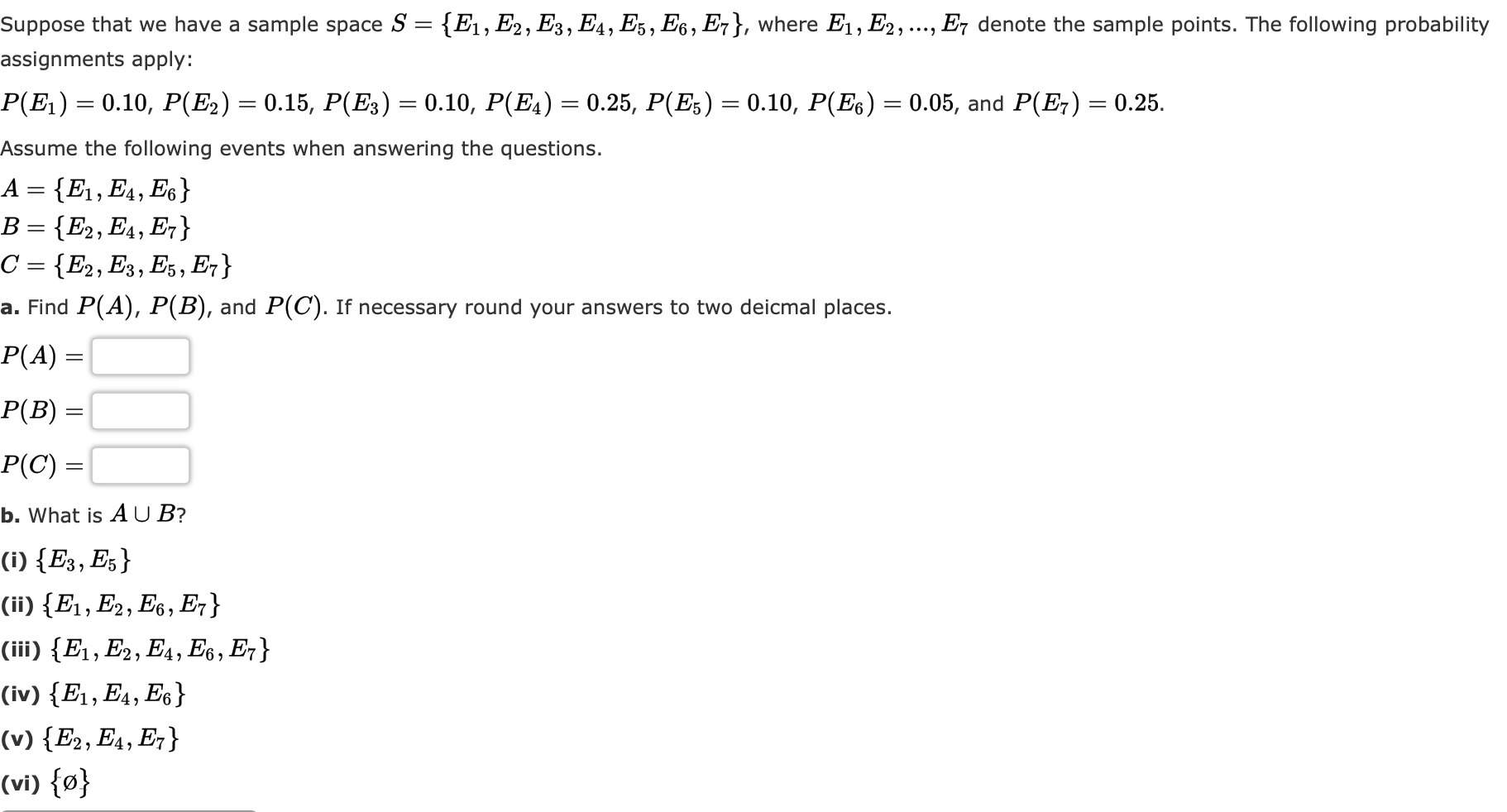
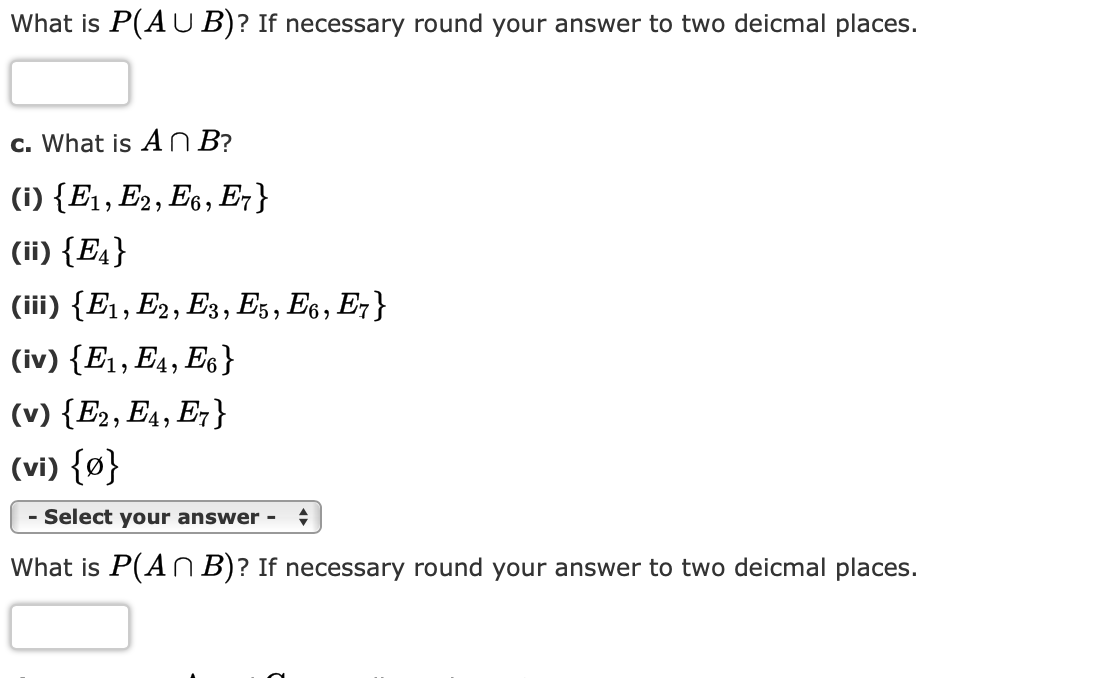
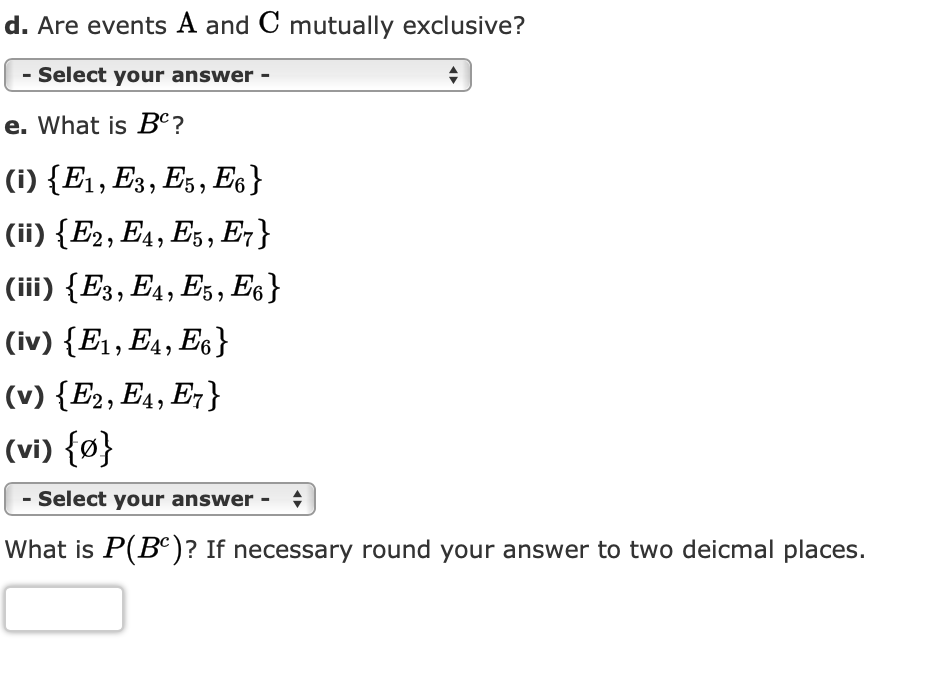
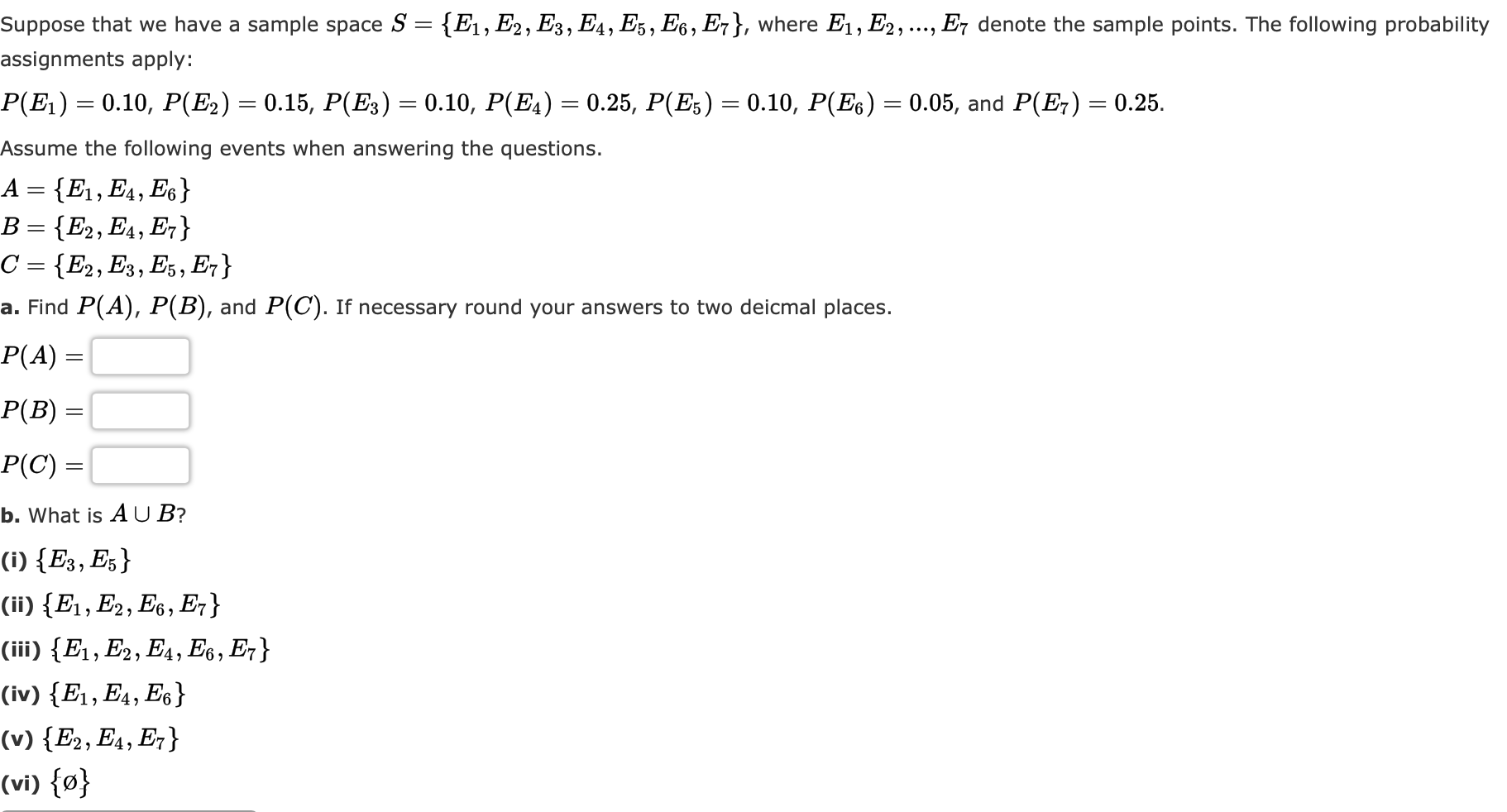
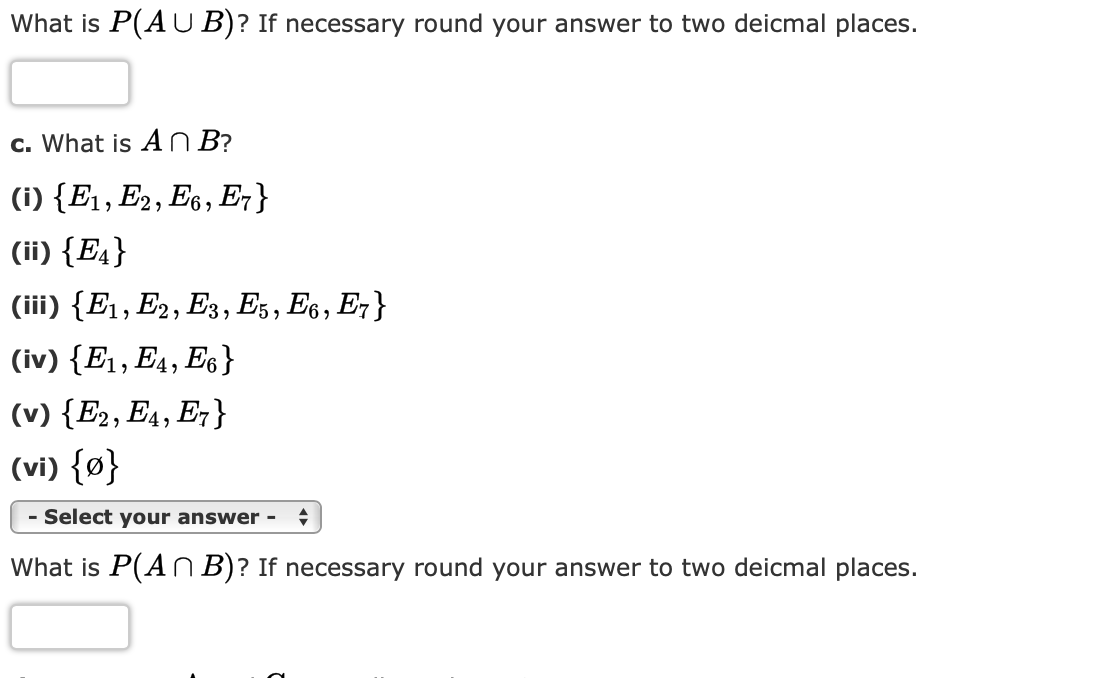
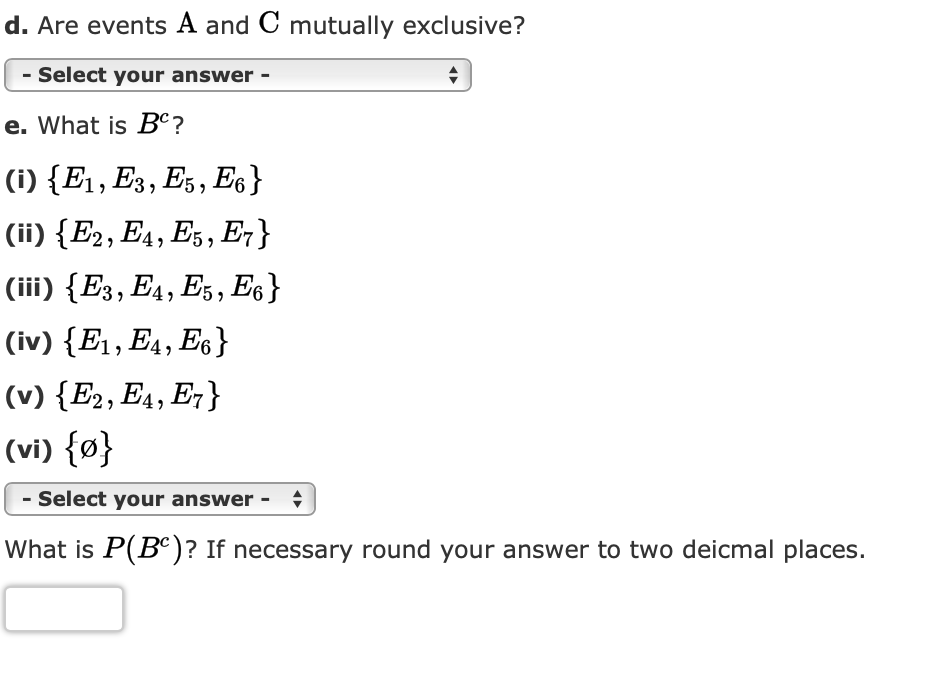
Suppose that we have a sample space S = {E1,E2,E3,E4, E5, E6, E7}, where E1, E2, ..., E7 denote the sample points. The following probability assignments apply: P(E1) = 0.10, P(E2) = 0.15, P(E3) = 0.10, P(E4) = 0.25, P(E5) = 0.10, P(E) = 0.05, and P(E7) = 0.25. Assume the following events when answering the questions. A = {E1,E4,E5} B = {E2,E4,E7} 0 = {EziEaaEmE'r} a. Find P(A), P(B), and P(C). If necessary round your answers to two deicmal places. PM) = 13(3) = 19(0) = b. What is A U B? (i) {E32E5} (ii) {E17E2.E6,E7} (iii) {E1,E2,E4, E6, E7} (\"1) {191,194,136} (V) {E2,E4, E7} (vi) {a} What is P(A U B)? If necessary round your answer to two deicmal places. c. What is A n B? (i) {E1,E2,E6,E7} (ii) {E4} (iii) {E1,E2,E3,E5,E6,E7} (iV) {31,34,136} 0') {32,194,437} (vi) {9} What is P(A D B)? If necessary round your answer to two deicmal places. d. Are events A and C mutually exclusive? - Select your answer - e. What is B"? (i) {E13E33E51E6} (ii) {E23E41E53E7} (iii) {E3,E4,E5,E6} (iv) {E13E43E6} (V) {32,134,137} (vi) {a} What is P(B)? If necessary round your answer to two deicmal places
Step by Step Solution
There are 3 Steps involved in it

Get step-by-step solutions from verified subject matter experts
 Study Help