



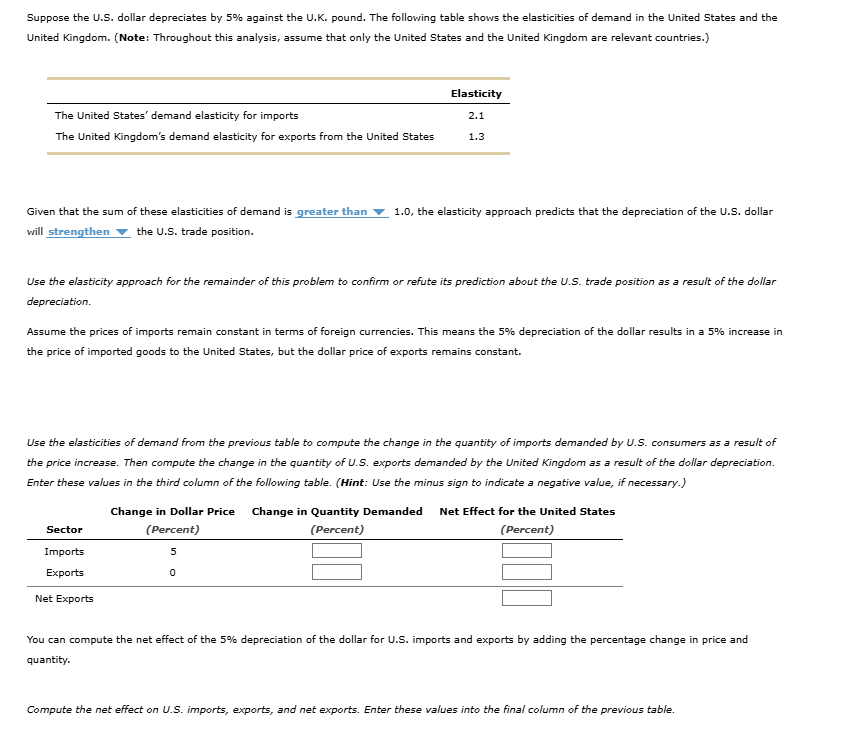
Question: Suppose the U . S . dollar depreciates by 5 % against the U . K . pound. The following table shows the elasticities of
Suppose the US dollar depreciates by against the UK pound. The following table shows the elasticities of demand in the United States and the
United Kingdom. Note: Throughout this analysis, assume that only the United States and the United Kingdom are relevant countries.
Given that the sum of these elasticities of demand is greater than vv the elasticity approach predicts that the depreciation of the US dollar
wil
the US trade position.
Use the elasticity approach for the remainder of this problem to confirm or refute its prediction about the US trade position as a result of the dollar
depreciation.
Assume the prices of imports remain constant in terms of foreign currencies. This means the depreciation of the dollar results in a increase in
the price of imported goods to the United States, but the dollar price of exports remains constant.
Use the elasticities of demand from the previous table to compute the change in the quantity of imports demanded by US consumers as a result of
the price increase. Then compute the change in the quantity of US exports demanded by the United Kingdom as a result of the dollar depreciation.
Enter these values in the third column of the following table. Hint: Use the minus sign to indicate a negative value, if necessary.
Change in Dollar Price Change in Quantity Demanded Net Effect for the United States
Net Exports
You can compute the net effect of the depreciation of the dollar for US imports and exports by adding the percentage change in price and
quantity.
Compute the net effect on US imports, exports, and net exports. Enter these values into the final column of the previous table.
Step by Step Solution
There are 3 Steps involved in it
1 Expert Approved Answer
Step: 1 Unlock

Question Has Been Solved by an Expert!
Get step-by-step solutions from verified subject matter experts
Step: 2 Unlock
Step: 3 Unlock