







Question: Suppose there is a computer that stores real numbers in only 12 bits; the first bit is the sign bit, the next four bits are
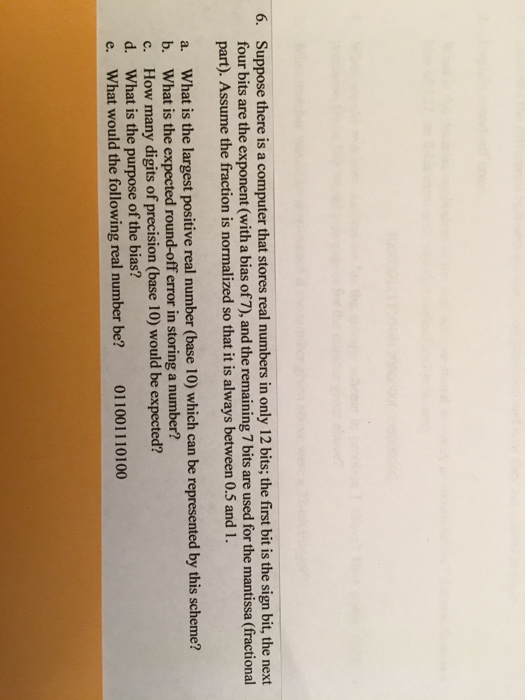
Suppose there is a computer that stores real numbers in only 12 bits; the first bit is the sign bit, the next four bits are the exponent (with a bias of 7), and the remaining 7 bits are used for the mantissa (fractional part). Assume the fraction is normalized so that it is always between 0.5 and 1. a. What is the largest positive real number (base 10) which can be represented by this scheme? b. What is the expected round-off error in storing a number? c. How many digits of precision (base 10) would be expected? d. What is the purpose of the bias? e. What would the following real number be
Step by Step Solution
There are 3 Steps involved in it
1 Expert Approved Answer
Step: 1 Unlock

Question Has Been Solved by an Expert!
Get step-by-step solutions from verified subject matter experts
Step: 2 Unlock
Step: 3 Unlock
 Study Help