







Question: Suppose we run the Multistage Algorithm on the data of , with the same support threshold of 4.On the first pass of the PCY Algorithm
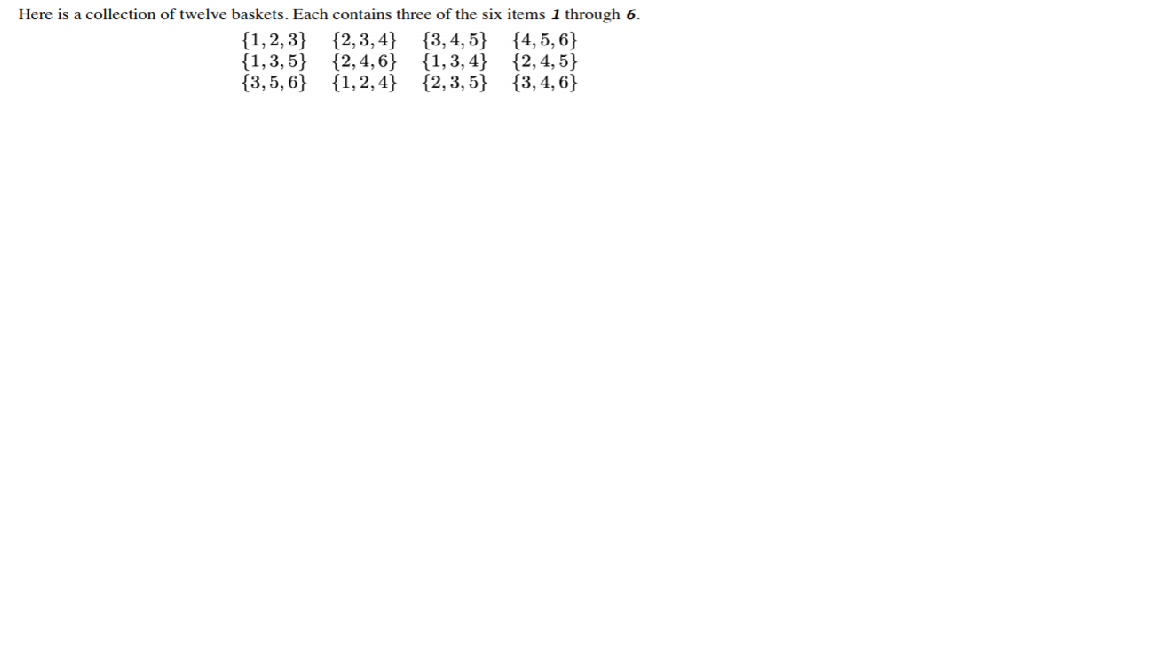
Suppose we run the Multistage Algorithm on the data of , with the same support threshold of 4.On the first pass of the PCY Algorithm we use a hash table with 11 buckets, and the set {i,j} is hashed to bucket ij mod 11. and for the second pass, we hash pairs to nine buckets, using the hash function that hashes {i,j} to bucket i+j mod 9. (a) Determine the counts of the buckets on the second pass. (b) Does the second pass reduce the set of candidate pairs? Note that all items are frequent, so the only reason a pair would not be hashed on the second pass is if it hashed to an infrequent bucket on the first pass
 .
.
Here is a collection of twelve baskets. Each contains three of the six items 1 through 6. {1,2,3) {2,3,4} {3,4,5} {4,5,6) {1,3,5) {2,4,6} {1,3,4} {2,4,5) {3,5,6} {1,2,4} {2,3,5) {3, 4, 6) Here is a collection of twelve baskets. Each contains three of the six items 1 through 6. {1,2,3) {2,3,4} {3,4,5} {4,5,6) {1,3,5) {2,4,6} {1,3,4} {2,4,5) {3,5,6} {1,2,4} {2,3,5) {3, 4, 6)
Step by Step Solution
There are 3 Steps involved in it

Get step-by-step solutions from verified subject matter experts
 Study Help