







Question: System Design: Based on the requirements, the development team created a detailed system design, including architecture, database design, and user interface specifications. They employed tools
System Design: Based on the requirements, the development team created a detailed system design, including architecture, database design, and user interface specifications. They employed tools such as Unified Modeling Language UML and design patterns to ensure a wellstructured and scalable solution.
Development and Testing: The development team followed an iterative and incremental approach, where small modules or features were developed, tested, and validated before moving on to the next. They used coding standards, version control systems, and automated testing tools to ensure code quality and reliability.
Integration and Deployment: Once individual modules were developed and tested, they were integrated into the larger system. Integration testing was performed to verify the proper functioning and interoperability of different components. Deployment involved configuring the software on target environments, conducting acceptance testing, and ensuring a smooth transition to production.
Maintenance and Support: After deployment, RENEW Software Solutions provided ongoing maintenance and support services, including bug fixes, performance optimization, and software updates. They established a feedback loop with clients to gather user feedback and address anyissues or enhancements.
Results:
The successful implementation of the SDLC process led to several benefits for RENEW
Software Solutions:
Improved Project Management: The structured approach allowed better project planning, tracking, and control, leading to improved project outcomes, including timely delivery, reduced cost overruns, and enhanced client satisfaction.
Enhanced Quality: By following the SDLC process, RENEW Software Solutions ensured consistent quality in their software deliverables. Testing and quality assurance activities were integrated throughout the development process, resulting in fewer defects and improved software reliability.
Mitigated Risks: Early identification and mitigation of potential risks minimized project disruptions and helped in proactively managing project challenges. Risk management activities,
such as risk assessments and mitigation plans, ensured smoother project execution.
Effective Collaboration: The SDLC process facilitated effective communication and
collaboration among development teams, stakeholders, and clients. Regular meetings, progress updates, and feedback sessions improved understanding and alignment between all parties involved.
Continuous Improvement: The implementation of the SDLC process fostered a culture of continuous improvement at RENEW Software Solutions. Metrics and feedback were collected and analyzed to identify areas for process enhancement, resulting in increased efficiency and productivity.
Overall, the implementation of the SDLC process at RENEW Software Solutions brought about significant improvements in project management, software quality, risk management, collaboration, and continuous improvement. It positioned the company for successful and consistent delivery of highquality software solutions to their clients.
QUESTION ONE
Discuss the role of a systems analysts at RENEW Software Solutions in relation to
knowledge, skills and education.Case Study: Software Development Life Cycle SDLC Implementation at RENEW Software Solutions
Background:
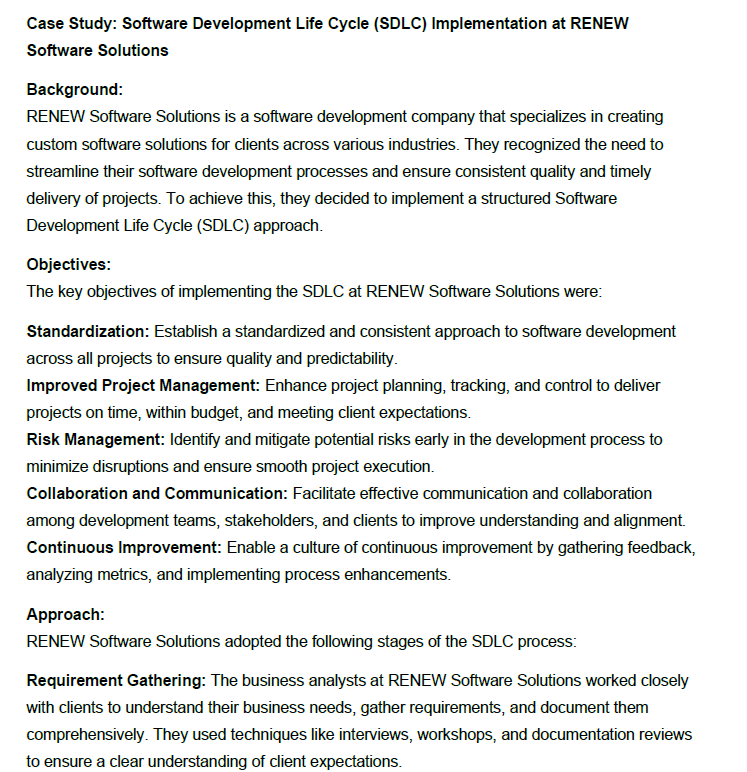
RENEW Software Solutions is a software development company that specializes in creating custom software solutions for clients across various industries. They recognized the need to streamline their software development processes and ensure consistent quality and timely delivery of projects. To achieve this, they decided to implement a structured Software Development Life Cycle SDLC approach.
Objectives:
The key objectives of implementing the SDLC at RENEW Software Solutions were:
Standardization: Establish a standardized and consistent approach to software development across all projects to ensure quality and predictability.
Improved Project Management: Enhance project planning, tracking, and control to deliver projects on time, within budget, and meeting client expectations.
Risk Management: Identify and mitigate potential risks early in the development process to minimize disruptions and ensure smooth project execution.
Collaboration and Communication: Facilitate effective communication and collaboration among development teams, stakeholders, and clients to improve understanding and alignment.
Continuous Improvement: Enable a culture of continuous improvement by gathering feedback, analyzing metrics, and implementing process enhancements.
Approach:
RENEW Software Solutions adopted the following stages of the SDLC process:
Requirement Gathering: The business analysts at RENEW Software Solutions worked closely with clients to understand their business needs, gather requirements, and document them comprehensively. They used techniques like interviews, workshops, and documentation reviews to ensure a clear understanding of client expectations.
Step by Step Solution
There are 3 Steps involved in it
1 Expert Approved Answer
Step: 1 Unlock

Question Has Been Solved by an Expert!
Get step-by-step solutions from verified subject matter experts
Step: 2 Unlock
Step: 3 Unlock
 Study Help