







Question: Table 1 Dungeons and Dragons various monster traits. The data was obtained from the 5e D&D Monster Manual (Mearls et al., 2020). Life type
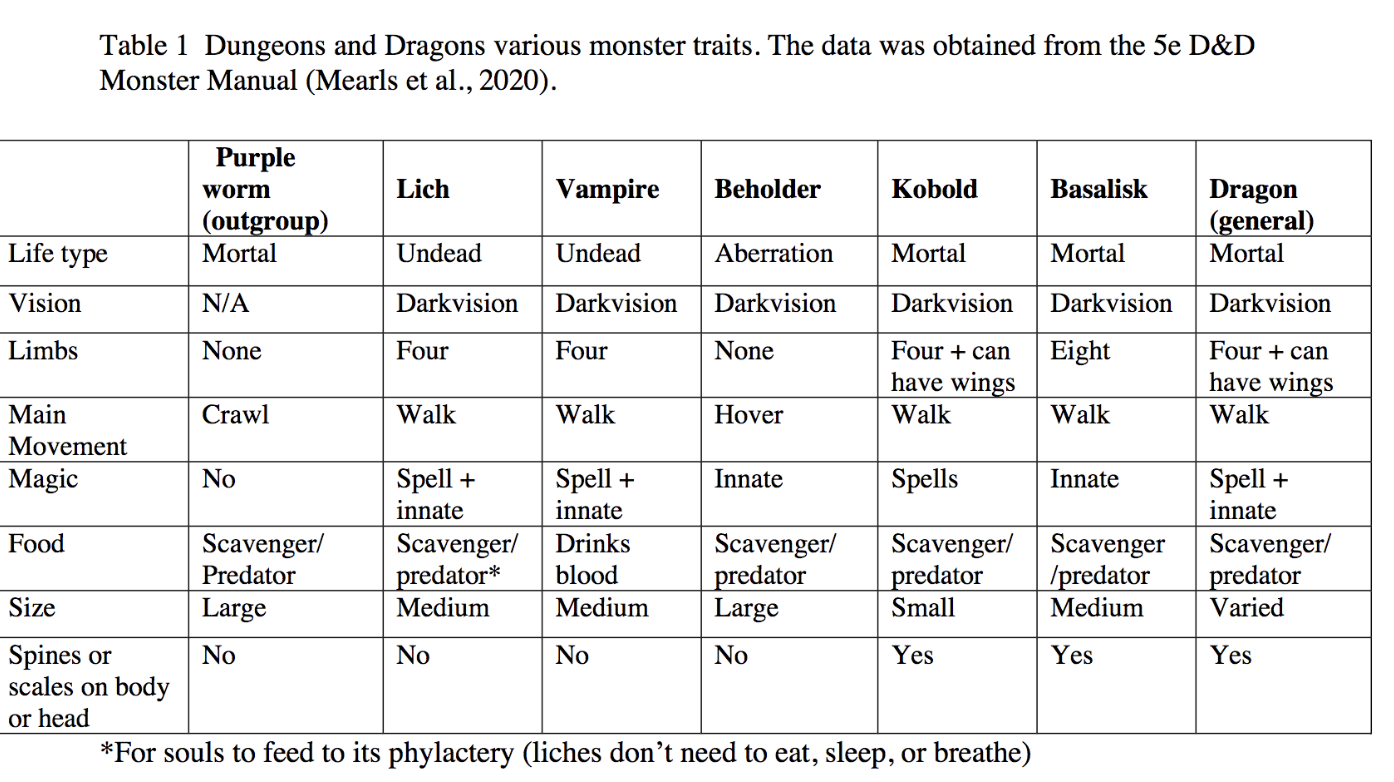
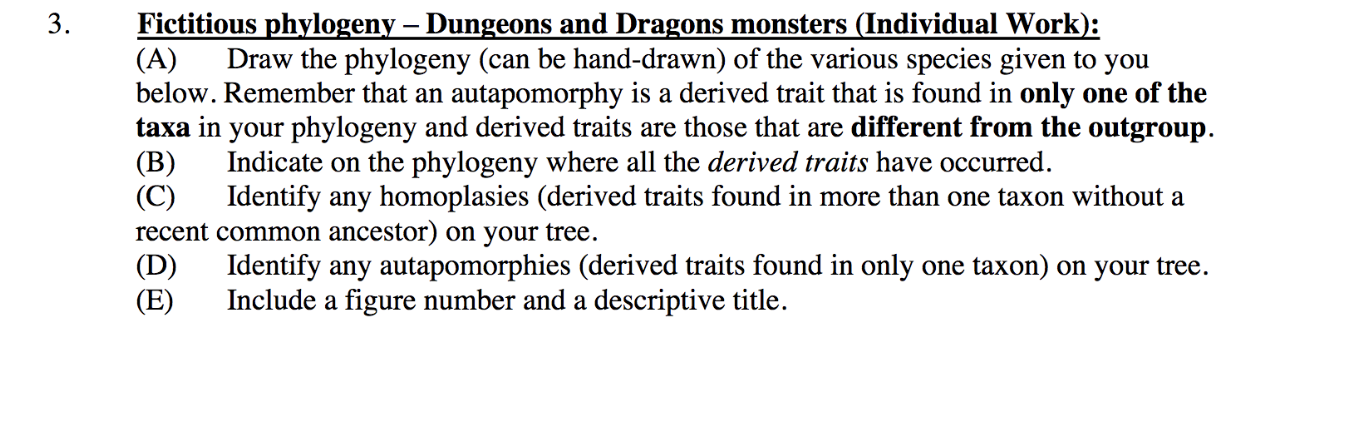
Table 1 Dungeons and Dragons various monster traits. The data was obtained from the 5e D&D Monster Manual (Mearls et al., 2020). Life type Vision Limbs Main Movement Magic Food Purple worm (outgroup) Mortal N/A None Crawl No Scavenger/ Predator Large No Lich Undead Undead Darkvision Darkvision Four Walk Spell + innate Vampire Beholder Scavenger/ predator* Medium No Four Walk Spell + innate Drinks blood Medium No Aberration Darkvision None Hover Innate Scavenger/ predator Large No Kobold Mortal Darkvision Four + can have wings Walk Basalisk Size Spines or scales on body or head *For souls to feed to its phylactery (liches don't need to eat, sleep, or breathe) Mortal Darkvision Eight Walk Spells Scavenger/ Scavenger predator /predator Small Medium Yes Yes Innate Dragon (general) Mortal Darkvision Four + can have wings Walk Spell + innate Scavenger/ predator Varied Yes 3. Fictitious phylogeny Dungeons and Dragons monsters (Individual Work): (A) Draw the phylogeny (can be hand-drawn) of the various species given to you below. Remember that an autapomorphy is a derived trait that is found in only one of the taxa in your phylogeny and derived traits are those that are different from the outgroup. (B) Indicate on the phylogeny where all the derived traits have occurred. (C) Identify any homoplasies (derived traits found in more than one taxon without a recent common ancestor) on your tree. (D) Identify any autapomorphies (derived traits found in only one taxon) on your tree. (E) Include a figure number and a descriptive title.
Step by Step Solution
3.38 Rating (164 Votes )
There are 3 Steps involved in it
Here is my analysis of the fictitious phylogeny of Dungeons and Dragons monsters from the i... View full answer

Get step-by-step solutions from verified subject matter experts
 Study Help