



Question: TABLE 1 Historical and Pro Forma Balance Sheets for Years Ended December 31 (in Thousands of Dollars) 7,000,000 shares of common stock were outstanding throughout
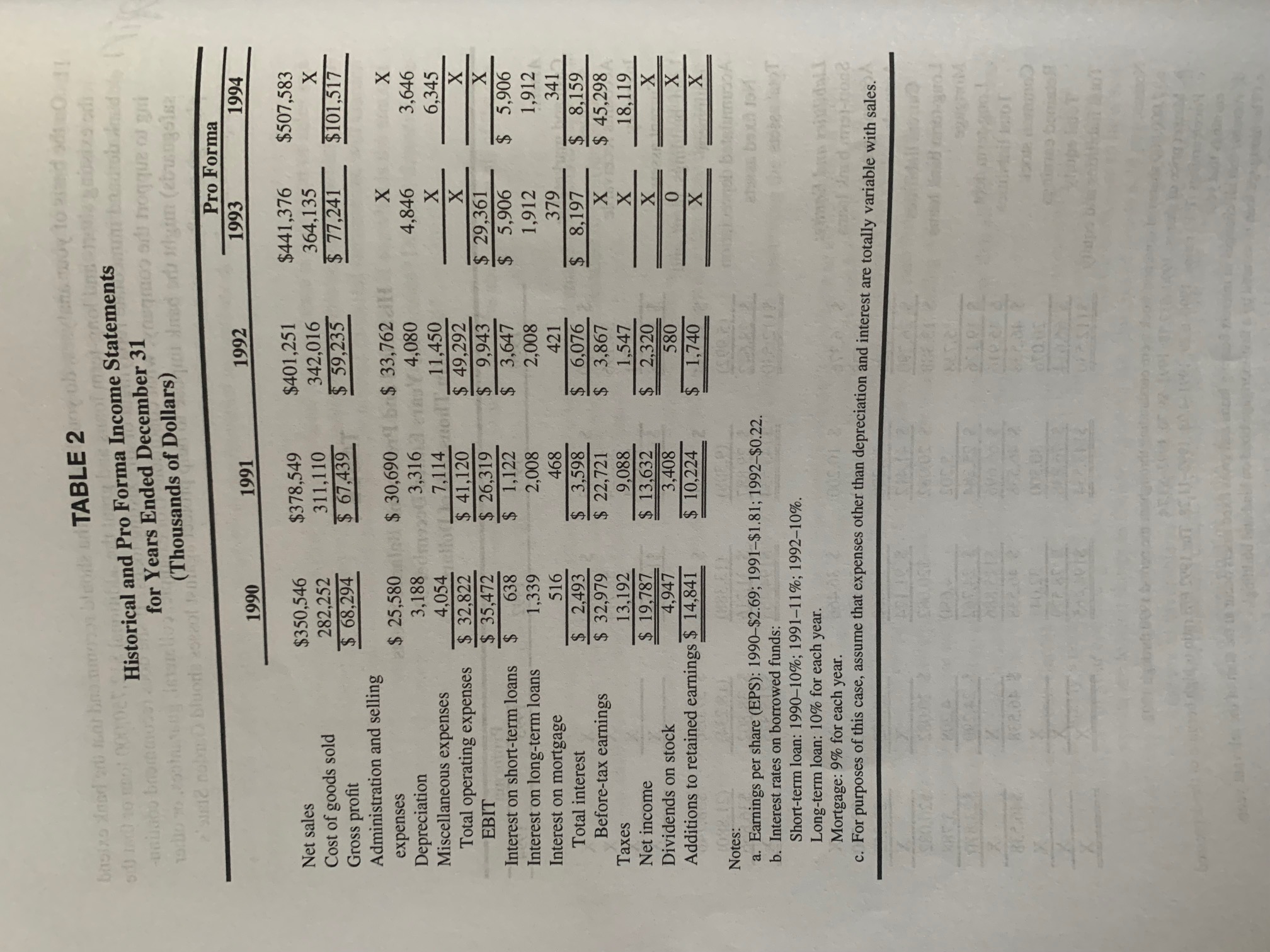
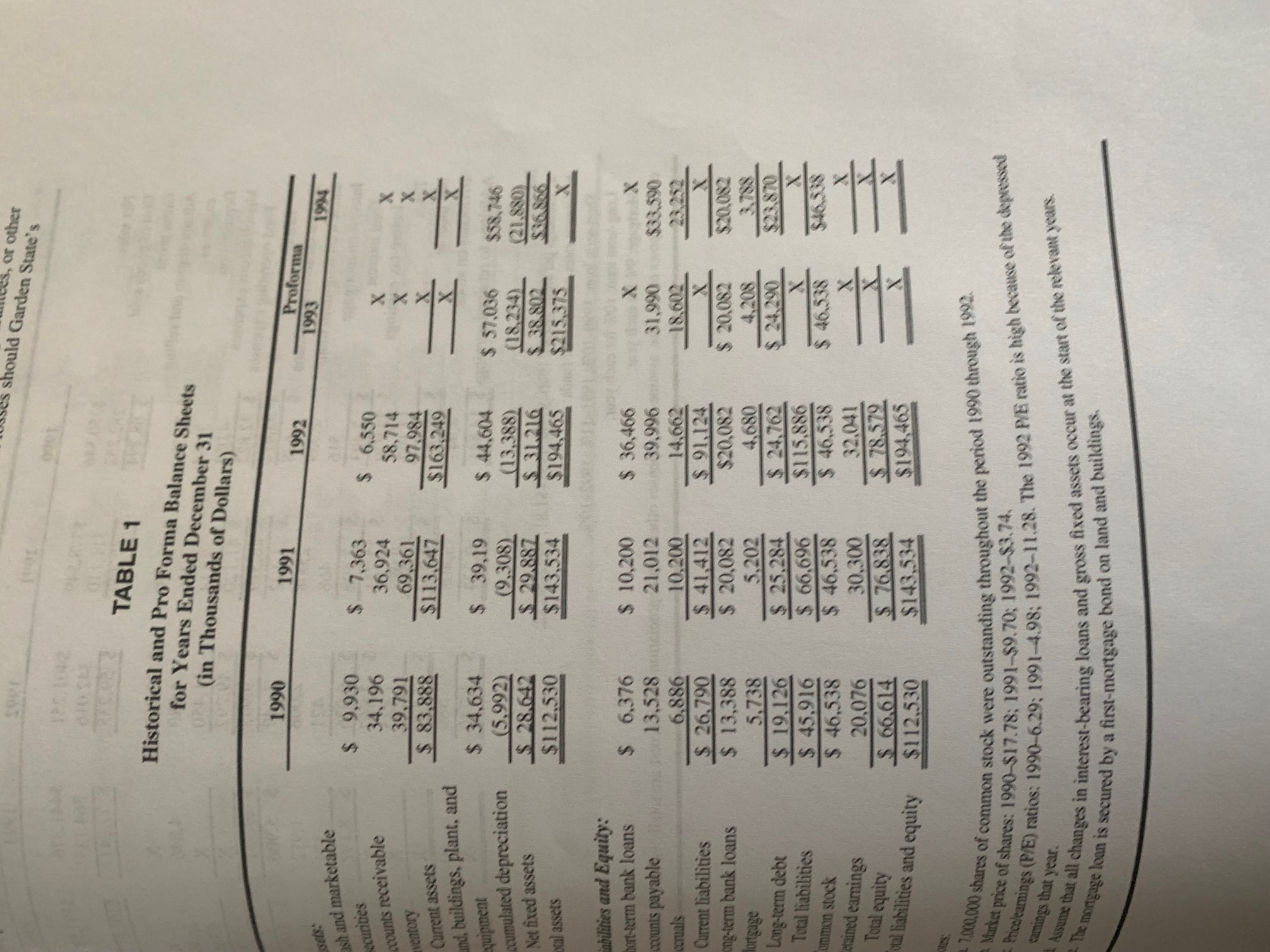
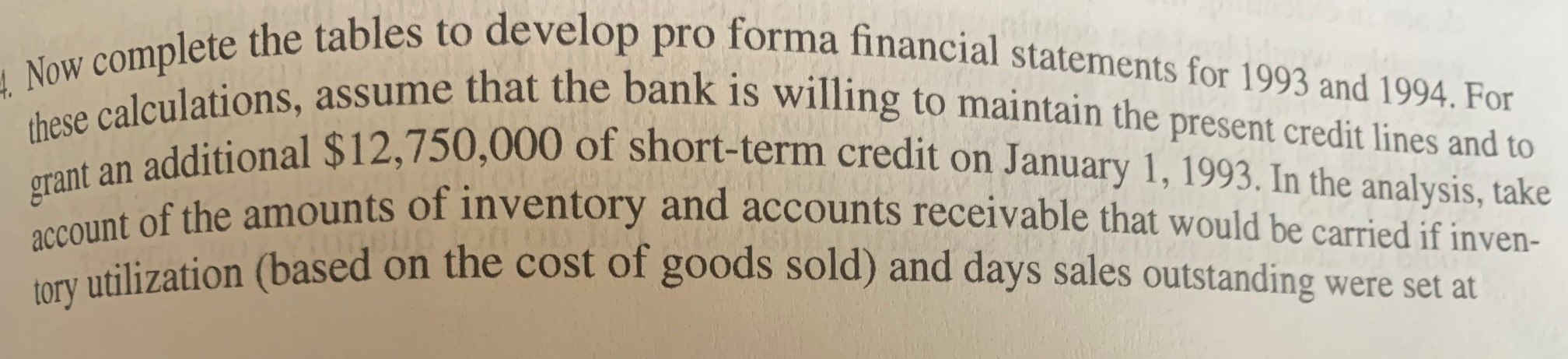
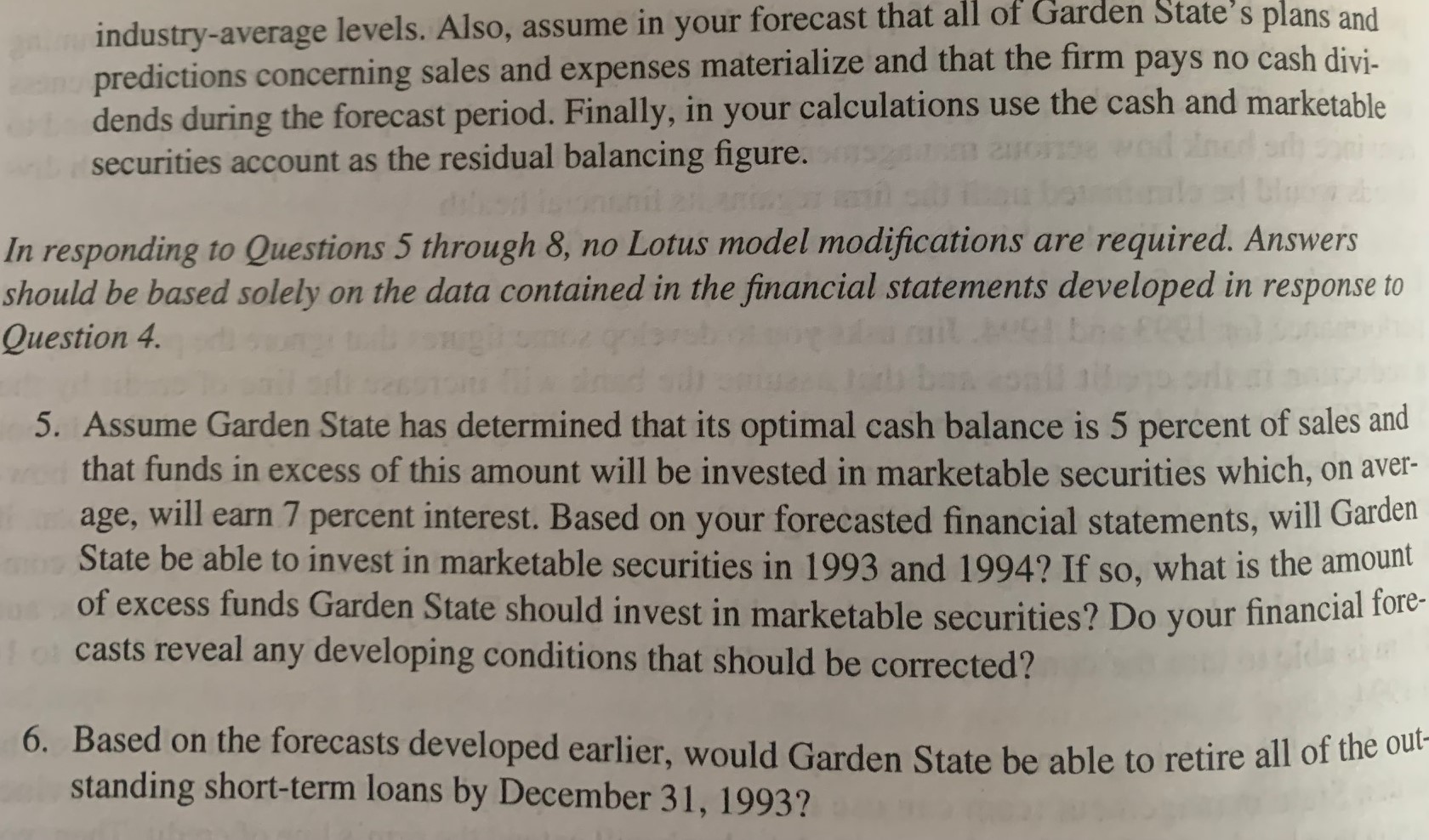
TABLE 1 Historical and Pro Forma Balance Sheets for Years Ended December 31 (in Thousands of Dollars) 7,000,000 shares of common stock were outstanding throughout the period 1990 through 1992. Market price of shares: 1990$17.78;1991$9.70;1992$3.74. Priceleanings (P/E) ratios: 19906.29;19914.98;199211.28. The 1992 P/E ratio is high hecause of the depressed earings that year. Assume that all changes in interest-bearing loans and gross fixed assets occur at the start of the relevant years. The montgage loan is secured by a first-mortgage bond on land and buildings. TABLE 2 Historical and Pro Forma Income Statements for Years Ended December 31 (Thousands of Dollars) Notes: a. Earnings per share (EPS): 1990-\$2.69; 1991-\$1.81; 1992-\$0.22. b. Interest rates on borrowed funds: Short-term loan: 1990-10\%; 1991-11\%; 1992-10\%. Long-term loan: 10% for each year. Mortgage: 9% for each year. c. For purposes of this case, assume that expenses other than depreciation and interest are totally variable with sales. industry-average levels. Also, assume in your forecast that all of Garden State's plans and predictions concerning sales and expenses materialize and that the firm pays no cash dividends during the forecast period. Finally, in your calculations use the cash and marketable securities account as the residual balancing figure. In responding to Questions 5 through 8, no Lotus model modifications are required. Answers hould be based solely on the data contained in the financial statements developed in response to Question 4. 5. Assume Garden State has determined that its optimal cash balance is 5 percent of sales and that funds in excess of this amount will be invested in marketable securities which, on average, will earn 7 percent interest. Based on your forecasted financial statements, will Garden State be able to invest in marketable securities in 1993 and 1994? If so, what is the amount of excess funds Garden State should invest in marketable securities? Do your financial forecasts reveal any developing conditions that should be corrected? 6. Based on the forecasts developed earlier, would Garden State be able to retire all of the out standing short-term loans by December 31,1993 ? Now complete the tables to develop pro forma financial statements for 1993 and 1994. For these calculations, assume that the bank is willing to maintain the present credit lines and to grant an additional $12,750,000 of short-term credit on January 1, 1993. In the analysis, take account of the amounts of inventory and accounts receivable that would be carried if inventory utilization (based on the cost of goods sold) and days sales outstanding were set at TABLE 1 Historical and Pro Forma Balance Sheets for Years Ended December 31 (in Thousands of Dollars) 7,000,000 shares of common stock were outstanding throughout the period 1990 through 1992. Market price of shares: 1990$17.78;1991$9.70;1992$3.74. Priceleanings (P/E) ratios: 19906.29;19914.98;199211.28. The 1992 P/E ratio is high hecause of the depressed earings that year. Assume that all changes in interest-bearing loans and gross fixed assets occur at the start of the relevant years. The montgage loan is secured by a first-mortgage bond on land and buildings. TABLE 2 Historical and Pro Forma Income Statements for Years Ended December 31 (Thousands of Dollars) Notes: a. Earnings per share (EPS): 1990-\$2.69; 1991-\$1.81; 1992-\$0.22. b. Interest rates on borrowed funds: Short-term loan: 1990-10\%; 1991-11\%; 1992-10\%. Long-term loan: 10% for each year. Mortgage: 9% for each year. c. For purposes of this case, assume that expenses other than depreciation and interest are totally variable with sales. industry-average levels. Also, assume in your forecast that all of Garden State's plans and predictions concerning sales and expenses materialize and that the firm pays no cash dividends during the forecast period. Finally, in your calculations use the cash and marketable securities account as the residual balancing figure. In responding to Questions 5 through 8, no Lotus model modifications are required. Answers hould be based solely on the data contained in the financial statements developed in response to Question 4. 5. Assume Garden State has determined that its optimal cash balance is 5 percent of sales and that funds in excess of this amount will be invested in marketable securities which, on average, will earn 7 percent interest. Based on your forecasted financial statements, will Garden State be able to invest in marketable securities in 1993 and 1994? If so, what is the amount of excess funds Garden State should invest in marketable securities? Do your financial forecasts reveal any developing conditions that should be corrected? 6. Based on the forecasts developed earlier, would Garden State be able to retire all of the out standing short-term loans by December 31,1993 ? Now complete the tables to develop pro forma financial statements for 1993 and 1994. For these calculations, assume that the bank is willing to maintain the present credit lines and to grant an additional $12,750,000 of short-term credit on January 1, 1993. In the analysis, take account of the amounts of inventory and accounts receivable that would be carried if inventory utilization (based on the cost of goods sold) and days sales outstanding were set at
Step by Step Solution
There are 3 Steps involved in it

Get step-by-step solutions from verified subject matter experts