



Question: Table 1: Table 2: Table 3: Table 4: semiannually on December 31 and June 30 . The fiscal year of the company is the calendar
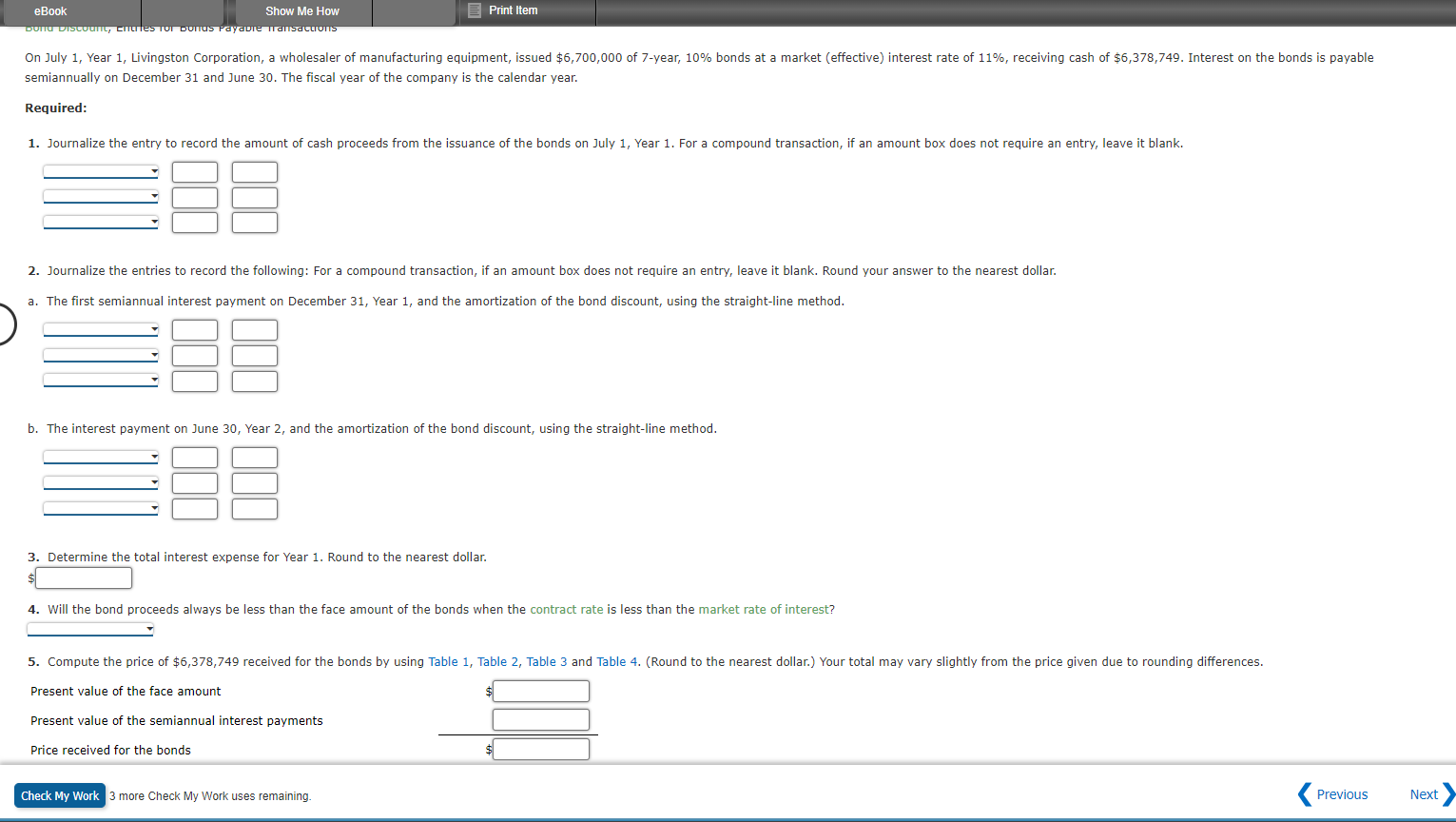
Table 1:
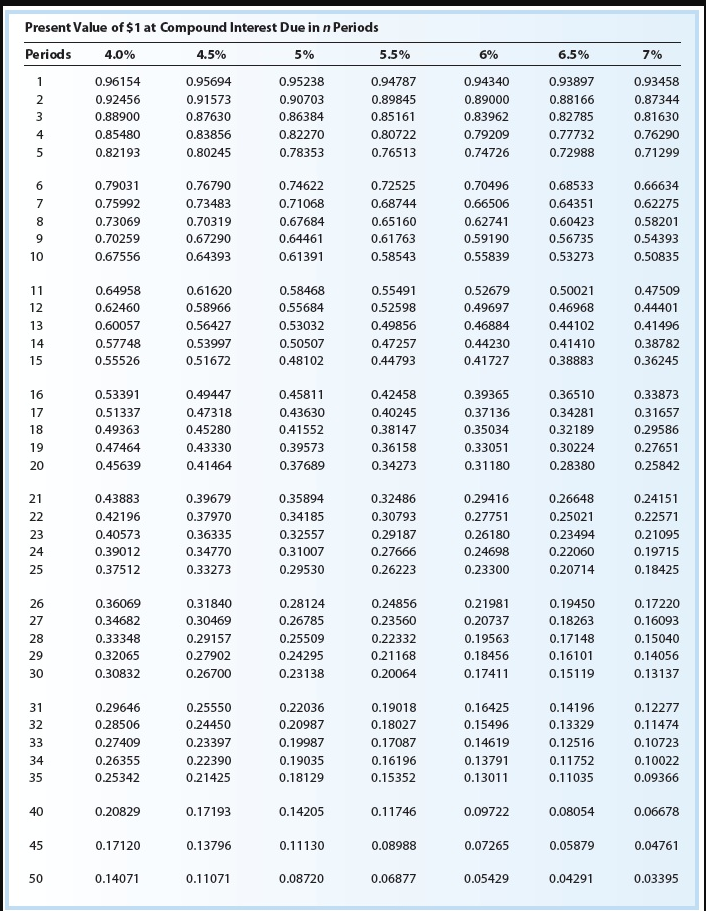
Table 2:
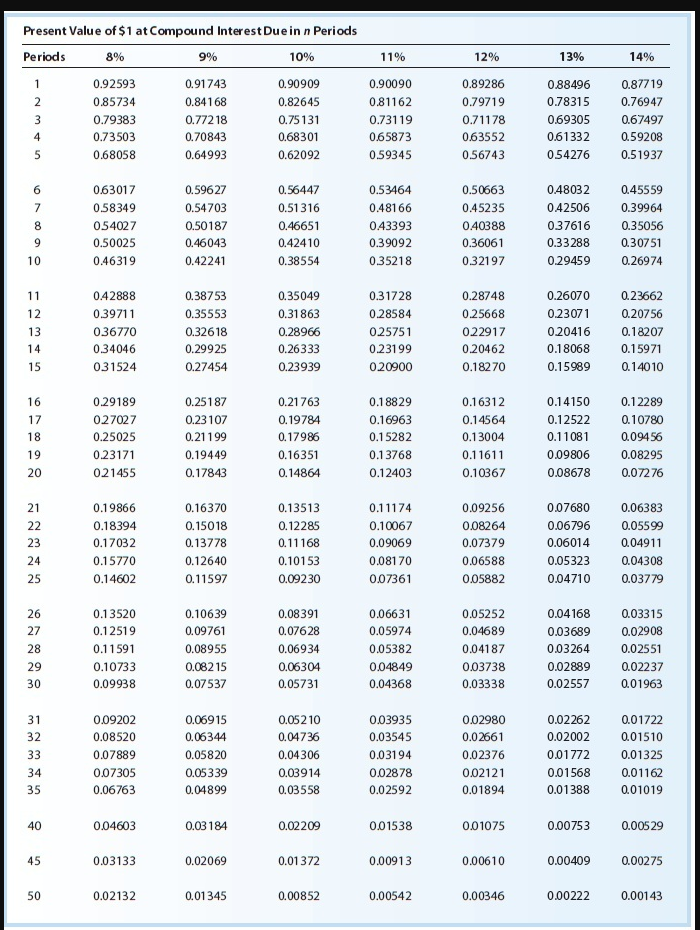
Table 3:
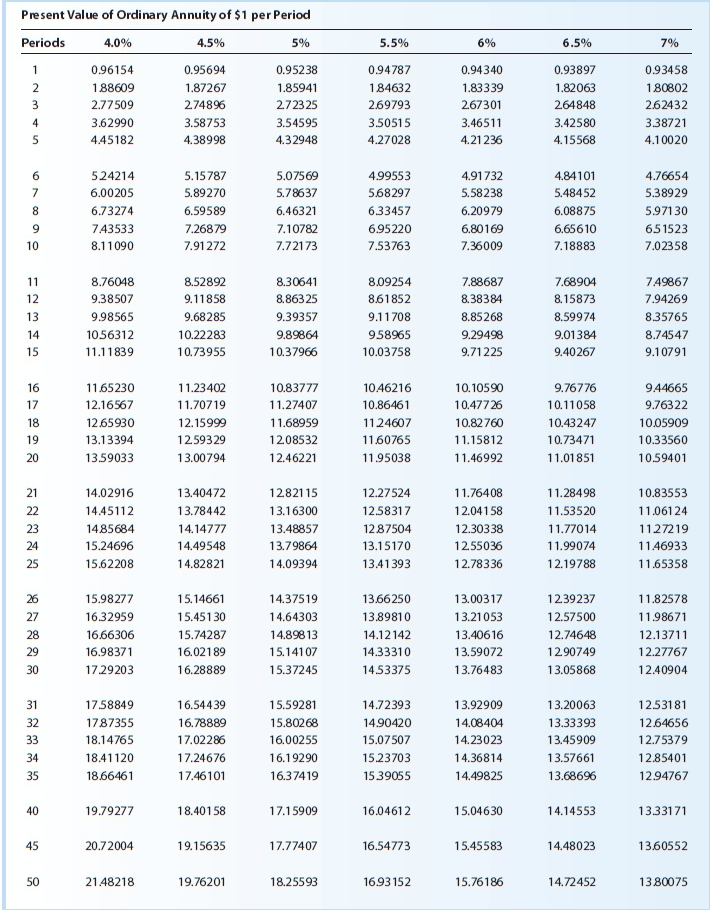
Table 4:
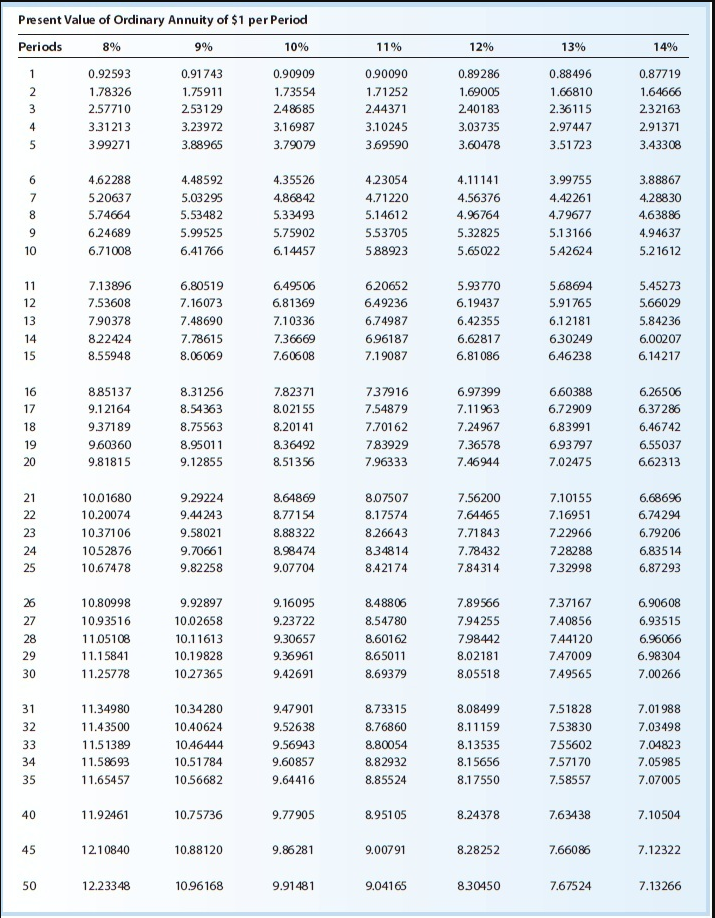
semiannually on December 31 and June 30 . The fiscal year of the company is the calendar year. Required: 1. Journalize the entry to record the amount of cash proceeds from the issuance of the bonds on July 1 , Year 1 . For a compound transaction, if an amount box does not require an entry, leave it blank. 2. Journalize the entries to record the following: For a compound transaction, if an amount box does not require an entry, leave it blank. Round your answer to the nearest dollar. a. The first semiannual interest payment on December 31 , Year 1 , and the amortization of the bond discount, using the straight-line method. b. The interest payment on June 30 , Year 2 , and the amortization of the bond discount, using the straight-line method. 3. Determine the total interest expense for Year 1. Round to the nearest dollar. 4. Will the bond proceeds always be less than the face amount of the bonds when the contract rate is less than the market rate of interest? 3 more Check My Work uses remaining. Present Value of $1 at Compound Interest Due in n Periods Present Value of $1 at Compound Interest Due in n Periods Present Value of Ordinary Annuity of $1 per Period Present Value of Ordinary Annuity of $1 per Period
Step by Step Solution
There are 3 Steps involved in it

Get step-by-step solutions from verified subject matter experts