







Question: Table 6 . 3 King Supply makes four different types of plumbing fixtures: W , x , Y and Z . The contribution margins for
Table
King Supply makes four different types of plumbing fixtures: and Z The contribution margins for these products are: $ for Product $ for Product $ for Product and $ for Product Z Fixed overhead is estimated at $ per week. The manufacture of each fixture requires four machines, Machines # and Each of the machines is available for hours a week and there is no setup time required when shifting from the production of one product to any other. The processing requirements to make one unit of each product are shown in the table. Weekly product demand for the next planning period has been forecasted as follows: and Zs
tableProcessing Time Minutes Per FixtureFixtureMachine Machine Machine Machine WXYZ
In the questions that follow, the traditional method refers to maximizing the contribution margin per unit for each product, and the bottleneck method refers to maximizing the contribution margin per minute at the bottleneck for each product.
Use the information in Table Using the bottleneck method, which product should be scheduled first?
Table
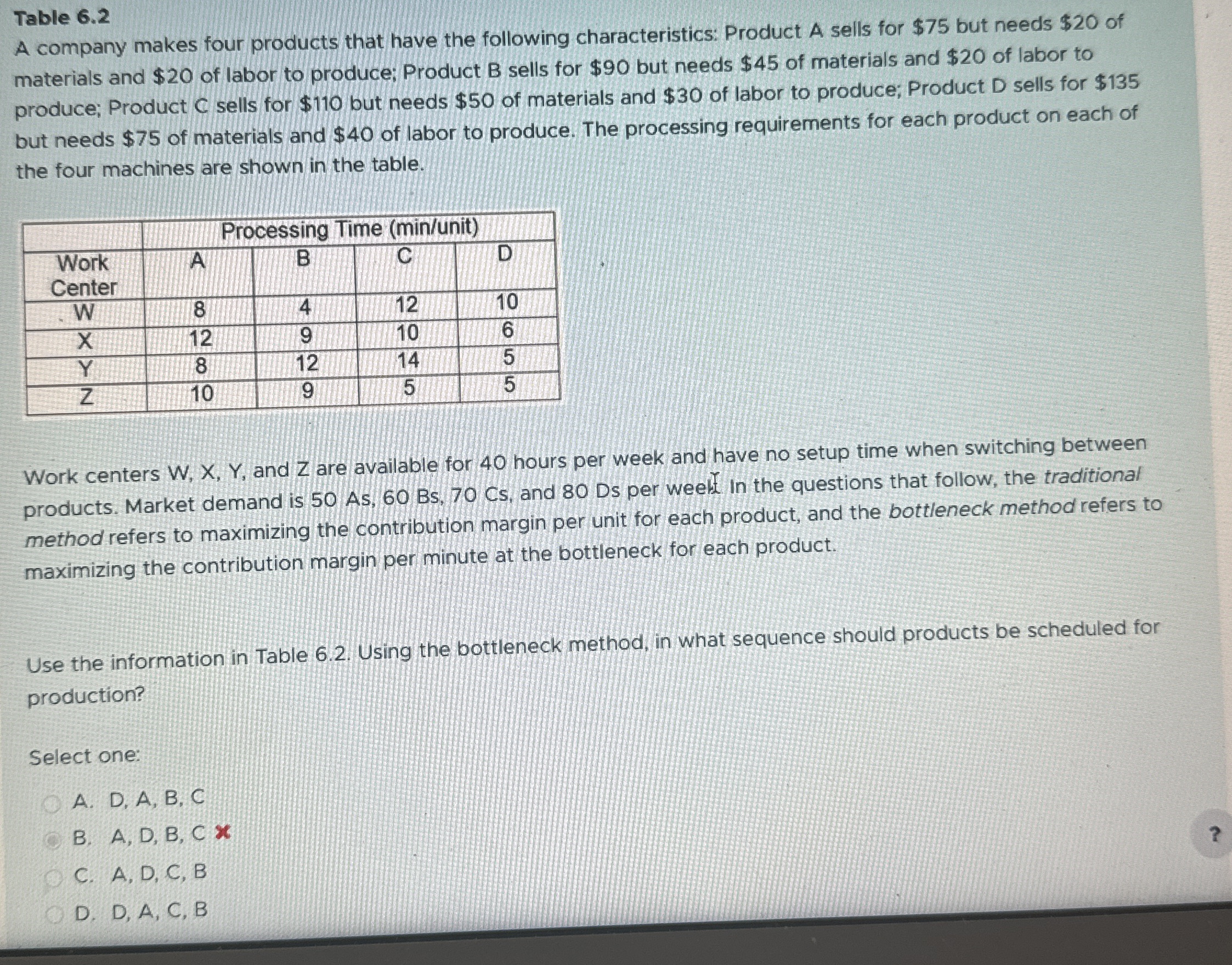
A company makes four products that have the following characteristics: Product A sells for $ but needs $ of materials and $ of labor to produce; Product B sells for $ but needs $ of materials and $ of labor to produce; Product C sells for $ but needs $ of materials and $ of labor to produce; Product D sells for $ but needs $ of materials and $ of labor to produce. The processing requirements for each product on each of the four machines are shown in the table.
tableProcessing Time minunittableWorkCenterABCDWY
Work centers W X Y and Z are available for hours per week and have no setup time when switching between products. Market demand is and Ds per weelf In the questions that follow, the traditional method refers to maximizing the contribution margin per unit for each product, and the bottleneck method refers to maximizing the contribution margin per minute at the bottleneck for each product.
Use the information in Table Using the bottleneck method, in what sequence should products be scheduled for production?
Select one:
A D A B C
B
C
D
Table
A company makes four products that have the following characteristics: Product A sells for $ but needs $ of materials and $ of labor to produce; Product B sells for $ but needs $ of materials and $ of labor to produce; Product C sells for $ but needs $ of materials and $ of labor to produce; Product D sells for $ but needs $ of materials and $ of labor to produce. The processing requirements for each product on each of the four machines are shown in the table.
tableProcessing Time minunittableWorkCenterABCDWY
Work centers W X Y and Z are available for hours per week and have no setup time when switching between products. Market demand is and Ds per weelf In the questions that follow, the traditional method refers to maximizing the contribution margin per unit for each product, and the bottleneck method refers to maximizing the contribution margin per minute at the bottleneck for each product.
Use the information in Table Using the bottleneck method, in what sequence should products be scheduled for production?
Select one:
A D A B C
B
C
Step by Step Solution
There are 3 Steps involved in it
1 Expert Approved Answer
Step: 1 Unlock

Question Has Been Solved by an Expert!
Get step-by-step solutions from verified subject matter experts
Step: 2 Unlock
Step: 3 Unlock
 Study Help