







Question: Table 9.1 A firm has determined its optimal capital structure which is composed of the following sources and target market value proportions. Target Market Source
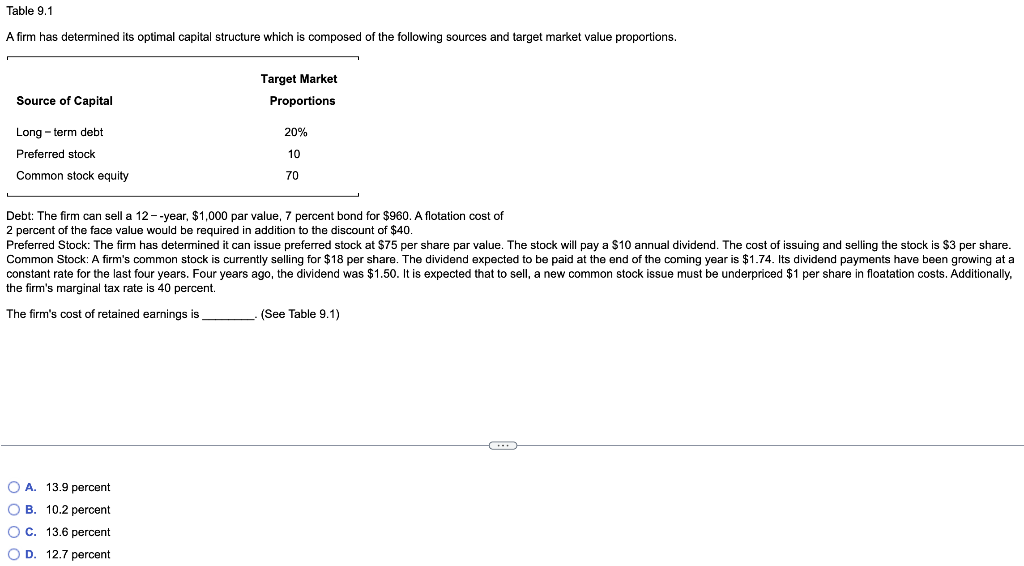
Table 9.1
A firm has determined its optimal capital structure which is composed of the following sources and target market value proportions.
| |||
|
Debt: The firm can sell a
12-year,
$1,000 par value, 7 percent bond for $960. A flotation cost of
2 percent of the face value would be required in addition to the discount of $40.
Preferred Stock: The firm has determined it can issue preferred stock at $75 per share par value. The stock will pay a $10 annual dividend. The cost of issuing and selling the stock is $3 per share.
Common Stock: A firm's common stock is currently selling for $18 per share. The dividend expected to be paid at the end of the coming year is $1.74. Its dividend payments have been growing at a constant rate for the last four years. Four years ago, the dividend was $1.50. It is expected that to sell, a new common stock issue must be underpriced $1 per share in floatation costs. Additionally, the firm's marginal tax rate is 40 percent.
The firm's cost of retained earnings is ________. (See Table 9.1)
Question content area bottom
Part 1
A.
13.9 percent
B.
10.2 percent
C.
13.6 percent
D.
12.7 percent
Table 9.1 A firm has determined its optimal capital structure which is composed of the following sources and target market value proportions. Debt: The firm can sell a 12 - -year, $1,000 par value, 7 percent bond for $960. A flotation cost of 2 percent of the face value would be required in addition to the discount of $40. Preferred Stock: The firm has determined it can issue preferred stock at $75 per share par value. The stock will pay a $10 annual dividend. The cost of issuing and selling the stock is $3 per share. Common Stock: A firm's common stock is currently selling for $18 per share. The dividend expected to be paid at the end of the coming year is $1.74. Its dividend payments have been growing at a constant rate for the last four years. Four years ago, the dividend was $1.50. It is expected that to sell, a new common stock issue must be underpriced $1 per share in floatation costs. Additionally, the firm's marginal tax rate is 40 percent. The firm's cost of retained earnings is (See Table 9.1) A. 13.9 percent B. 10.2 percent C. 13.6 percent D. 12.7 percent
Step by Step Solution
There are 3 Steps involved in it

Get step-by-step solutions from verified subject matter experts
 Study Help