


Question: Table needs to go through December but it wouldn't fit on the screenshot Shoney Video Concepts produces a line of video streaming servers that are
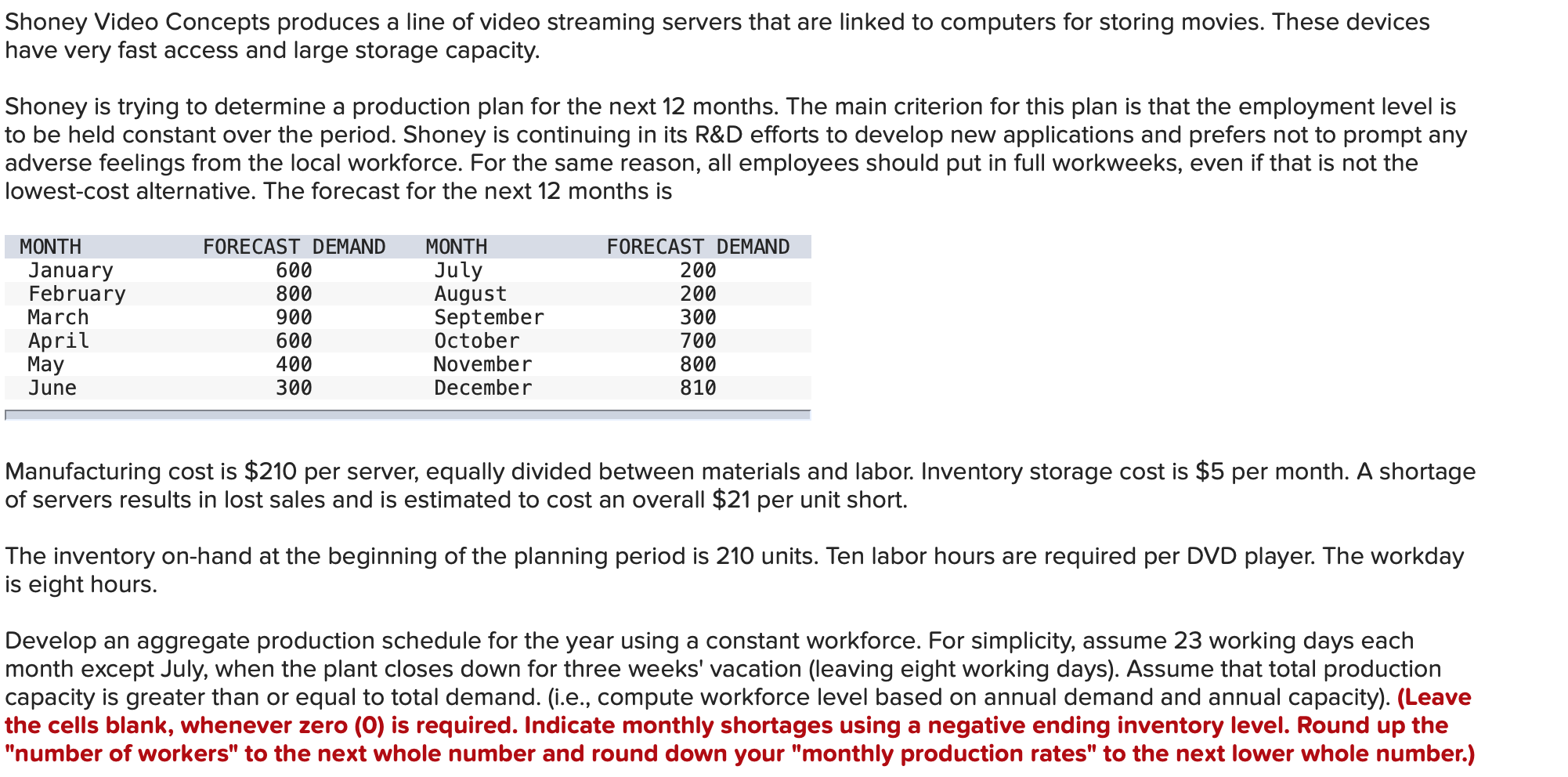
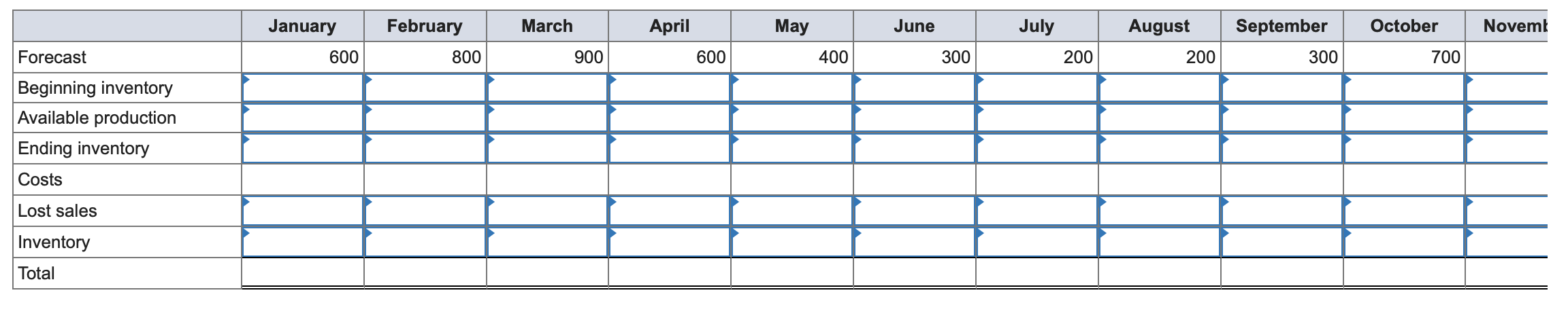
Table needs to go through December but itTable needs to go through December but itTable needs to go through December but it wouldn't fit on the screenshot

Shoney Video Concepts produces a line of video streaming servers that are linked to computers for storing movies. These devices have very fast access and large storage capacity. Shoney is trying to determine a production plan for the next 12 months. The main criterion for this plan is that the employment level is to be held constant over the period. Shoney is continuing in its R&D efforts to develop new applications and prefers not to prompt any adverse feelings from the local workforce. For the same reason, all employees should put in full workweeks, even if that is not the lowest-cost alternative. The forecast for the next 12 months is MONTH January February March April May June FORECAST DEMAND 600 800 900 600 400 300 MONTH July August September October November December FORECAST DEMAND 200 200 300 700 800 810 Manufacturing cost is $210 per server, equally divided between materials and labor. Inventory storage cost is $5 per month. A shortage of servers results in lost sales and is estimated to cost an overall $21 per unit short. The inventory on-hand at the beginning of the planning period is 210 units. Ten labor hours are required per DVD player. The workday is eight hours. Develop an aggregate production schedule for the year using a constant workforce. For simplicity, assume 23 working days each month except July, when the plant closes down for three weeks' vacation (leaving eight working days). Assume that total production capacity is greater than or equal to total demand. (i.e., compute workforce level based on annual demand and annual capacity). (Leave the cells blank, whenever zero (0) is required. Indicate monthly shortages using a negative ending inventory level. Round up the "number of workers" to the next whole number and round down your "monthly production rates" to the next lower whole number.) January February March April May June July August October Novem September 300 Forecast 600 800 900 600 400 300 200 200 700 Beginning inventory Available production Ending inventory Costs Lost sales Inventory Total

Step by Step Solution

There are 3 Steps involved in it

1 Expert Approved Answer
Step: 1 Unlock blur-text-image

Question Has Been Solved by an Expert!

Get step-by-step solutions from verified subject matter experts

Step: 2 Unlock
Step: 3 Unlock

Students Have Also Explored These Related General Management Questions!