







Question: -- Table structure for table `community` -- CREATE TABLE IF NOT EXISTS `community` ( `member_id` int(10) NOT NULL, `name` varchar(30) NOT NULL, `email` varchar(30) NOT
-- Table structure for table `community` --
CREATE TABLE IF NOT EXISTS `community` ( `member_id` int(10) NOT NULL, `name` varchar(30) NOT NULL, `email` varchar(30) NOT NULL, `phone` int(9) NOT NULL, PRIMARY KEY (`member_id`) ) ENGINE=InnoDB DEFAULT CHARSET=latin1;
-- --------------------------------------------------------
-- -- Table structure for table `registration` --
CREATE TABLE IF NOT EXISTS `registration` ( `register_id` int(10) NOT NULL AUTO_INCREMENT, `code` int(5) NOT NULL, `registration_date` date DEFAULT NULL, `user_id` varchar(128) NOT NULL, PRIMARY KEY (`register_id`), KEY `member_id` (`code`), KEY `code` (`code`), KEY `user_id` (`user_id`) ) ENGINE=InnoDB DEFAULT CHARSET=latin1 AUTO_INCREMENT=11 ;
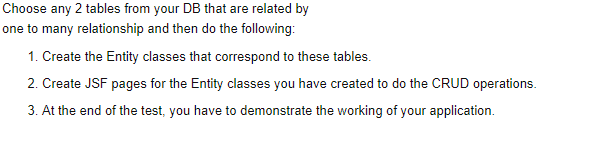
Choose any 2 tables from your DB that are related by one to many relationship and then do the following: 1. Create the Entity classes that correspond to these tables. 2. Create JSF pages for the Entity classes you have created to do the CRUD operations. 3. At the end of the test, you have to demonstrate the working of your application
Step by Step Solution
There are 3 Steps involved in it

Get step-by-step solutions from verified subject matter experts
 Study Help