







Question: Take lest. Lad # 1. halid Sallizer QUESTION 19 You will need to review CHM101 on concentrations in order to answer this question. On page
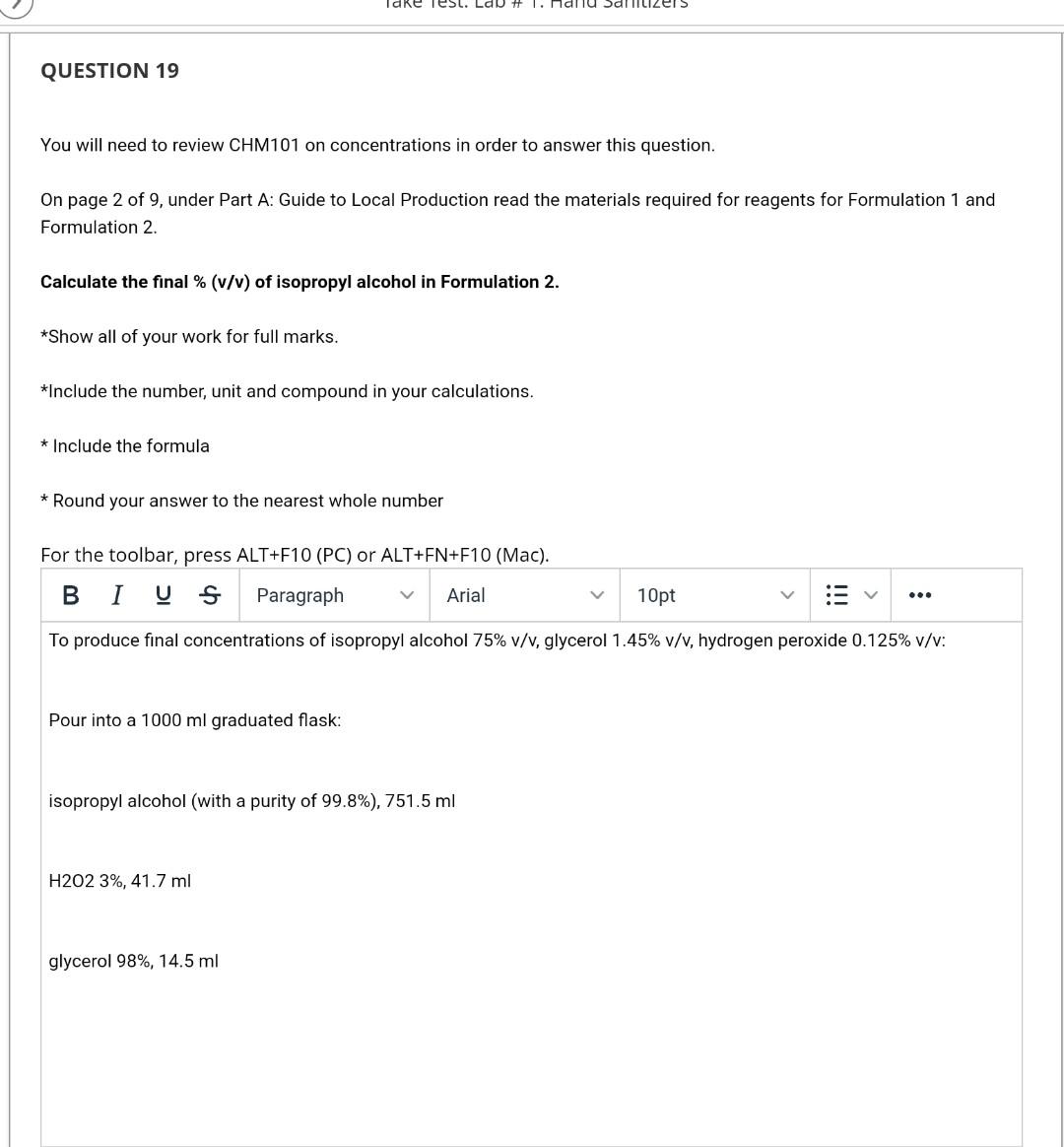
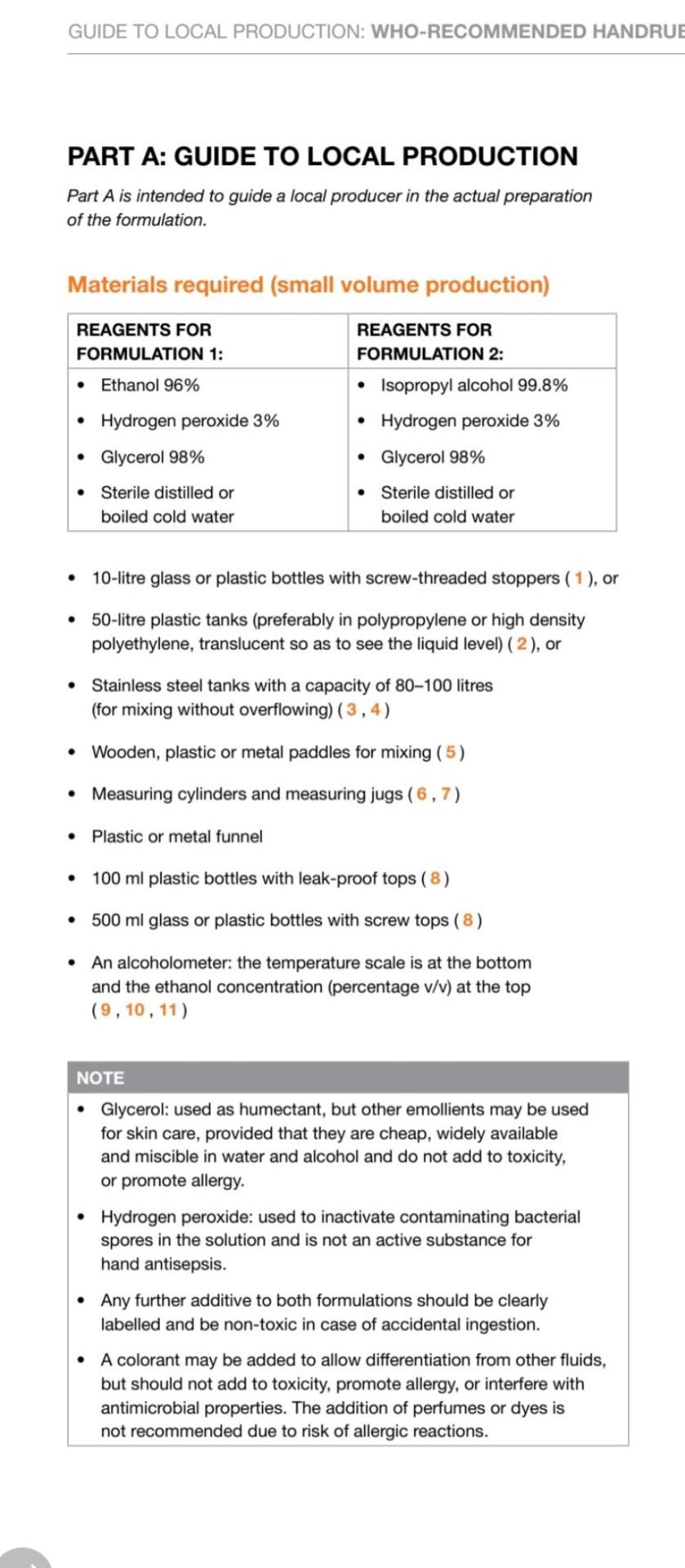
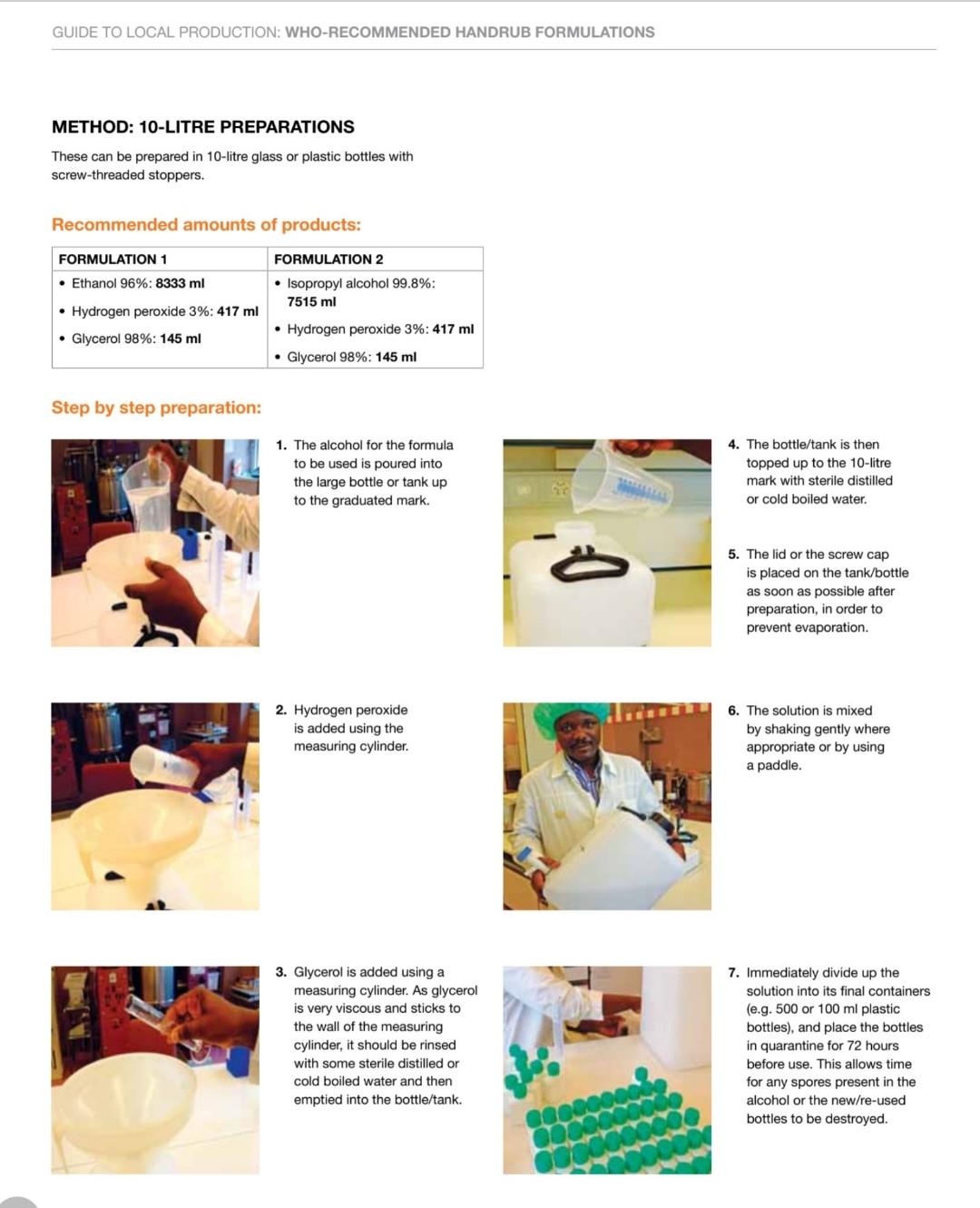
Take lest. Lad # 1. halid Sallizer QUESTION 19 You will need to review CHM101 on concentrations in order to answer this question. On page 2 of 9, under Part A Guide to Local Production read the materials required for reagents for Formulation 1 and Formulation 2. Calculate the final % (v/v) of isopropyl alcohol in Formulation 2. *Show all of your work for full marks. *Include the number, unit and compound in your calculations. * Include the formula * Round your answer to the nearest whole number For the toolbar, press ALT+F10 (PC) or ALT+FN+F10 (Mac). BI U S Paragraph Arial 10pt ili V ... To produce final concentrations of isopropyl alcohol 75% V/V, glycerol 1.45% v/v, hydrogen peroxide 0.125% v/v: Pour into a 1000 ml graduated flask: isopropyl alcohol (with a purity of 99.8%), 751.5 ml H202 3%, 41.7 ml glycerol 98%, 14.5 ml QUESTION 19 You will need to review CHM101 on concentrations in order to answer this question. On page 2 of 9, under Part A: Guide to Local Production read the materials required for reagents for Formulation 1 and Formulation 2. Calculate the final % (v/v) of isopropyl alcohol in Formulation 2. *Show all of your work for full marks. *Include the number, unit and compound in your calculations. * Include the formula * Round your answer to the nearest whole number For the toolbar, press ALT+F10 (PC) or ALT+FN+F10 (Mac). B I s Paragraph Arial V 10pt V ... : To produce final concentrations of isopropyl alcohol 75% v/v, glycerol 1.45% v/v, hydrogen peroxide 0.125% v/v: Pour into a 1000 ml graduated flask: isopropyl alcohol (with a purity of 99.8%), 751.5 ml H202 3%, 41.7 ml glycerol 98%, 14.5 ml GUIDE TO LOCAL PRODUCTION: WHO-RECOMMENDED HANDRUE PART A: GUIDE TO LOCAL PRODUCTION Part A is intended to guide a local producer in the actual preparation of the formulation. Materials required (small volume production) REAGENTS FOR FORMULATION 1: REAGENTS FOR FORMULATION 2: Ethanol 96% Isopropyl alcohol 99.8% Hydrogen peroxide 3% Glycerol 98% Hydrogen peroxide 3% Glycerol 98% Sterile distilled or boiled cold water Sterile distilled or boiled cold water 10-litre glass or plastic bottles with screw-threaded stoppers (1), or 50-litre plastic tanks (preferably in polypropylene or high density polyethylene, translucent so as to see the liquid level) ( 2 ), or . Stainless steel tanks with a capacity of 80-100 litres (for mixing without overflowing) (3, 4) Wooden, plastic or metal paddles for mixing (5) Measuring cylinders and measuring jugs (6,7) . Plastic or metal funnel 100 ml plastic bottles with leak-proof tops (8) 500 ml glass or plastic bottles with screw tops (8) An alcoholometer: the temperature scale is at the bottom and the ethanol concentration (percentage v/v) at the top (9, 10, 11) NOTE Glycerol: used as humectant, but other emollients may be used for skin care, provided that they are cheap, widely available and miscible in water and alcohol and do not add to toxicity, or promote allergy. Hydrogen peroxide: used to inactivate contaminating bacterial spores in the solution and is not an active substance for hand antisepsis. Any further additive to both formulations should be clearly labelled and be non-toxic in case of accidental ingestion. A colorant may be added to allow differentiation from other fluids, but should not add to toxicity, promote allergy, or interfere with antimicrobial properties. The addition of perfumes or dyes is not recommended due to risk of allergic reactions. GUIDE TO LOCAL PRODUCTION: WHO-RECOMMENDED HANDRUB FORMULATIONS METHOD: 10-LITRE PREPARATIONS These can be prepared in 10-litre glass or plastic bottles with screw-threaded stoppers. Recommended amounts of products: FORMULATION 1 FORMULATION 2 Ethanol 96%: 8333 ml Isopropyl alcohol 99.8%: 7515 ml Hydrogen peroxide 3%: 417 ml Glycerol 98%: 145 ml Hydrogen peroxide 3%: 417 ml Glycerol 98%: 145 ml Step by step preparation: 1. The alcohol for the formula to be used is poured into the large bottle or tank up to the graduated mark. 4. The bottle/tank is then topped up to the 10-litre mark with sterile distilled or cold boiled water. 5. The lid or the screw cap is placed on the tank/bottle as soon as possible after preparation, in order to prevent evaporation. 2. Hydrogen peroxide is added using the measuring cylinder. 6. The solution is mixed by shaking gently where appropriate or by using a paddle. 3. Glycerol is added using a measuring cylinder. As glycerol is very viscous and sticks to the wall of the measuring cylinder, it should be rinsed with some sterile distilled or cold boiled water and then emptied into the bottle/tank. 7. Immediately divide up the solution into its final containers (e.g. 500 or 100 ml plastic bottles), and place the bottles in quarantine for 72 hours before use. This allows time for any spores present in the alcohol or the new/re-used bottles to be destroyed
Step by Step Solution
There are 3 Steps involved in it

Get step-by-step solutions from verified subject matter experts
 Study Help