



Question: Tall 7202022/20v2.pat 2 / 2 - 86% + KWANTLEN POLYTECHNIC UNIVERSITY . legal, technological and international forces influence the industry, the company, and consumers? Part
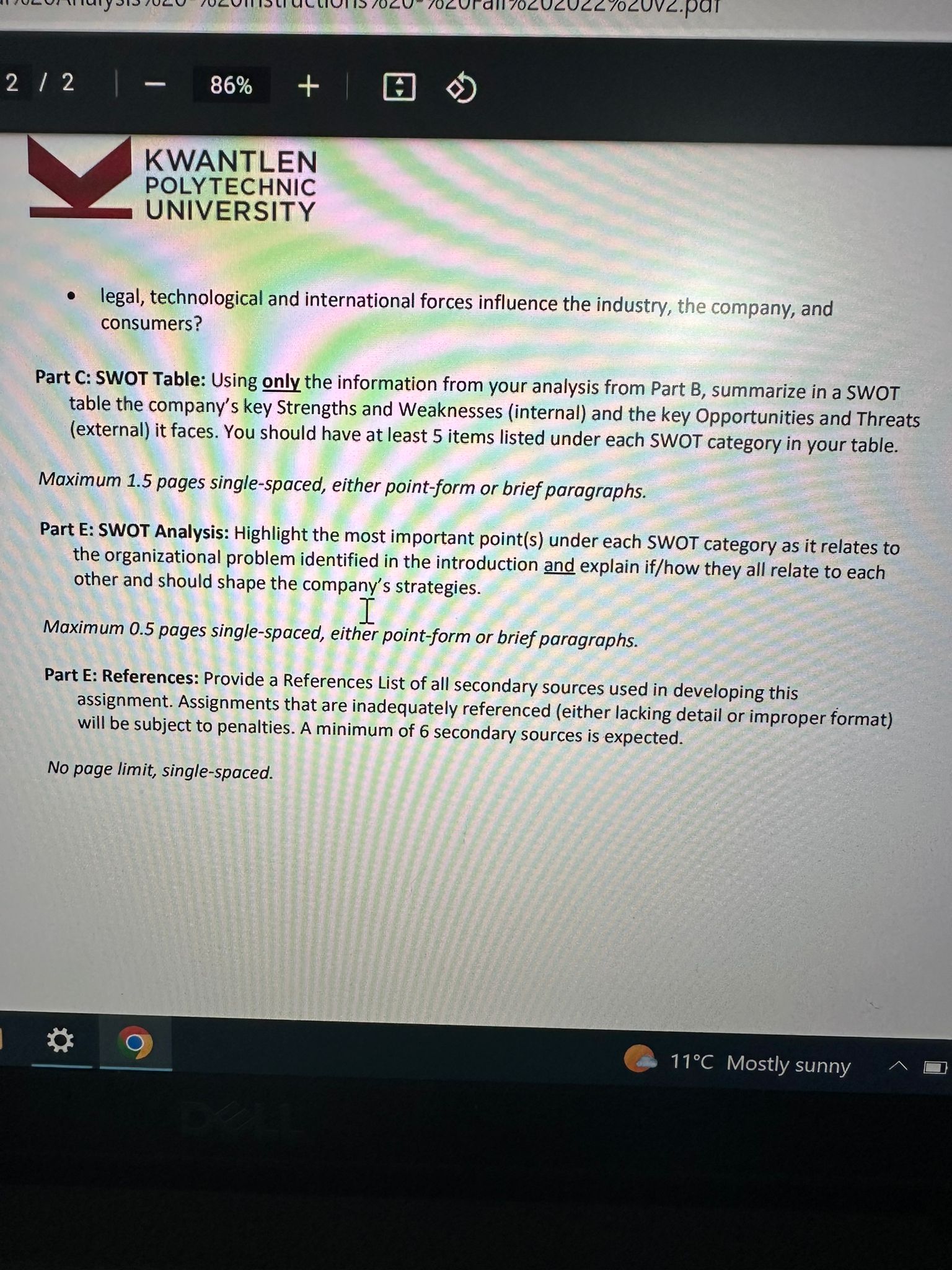
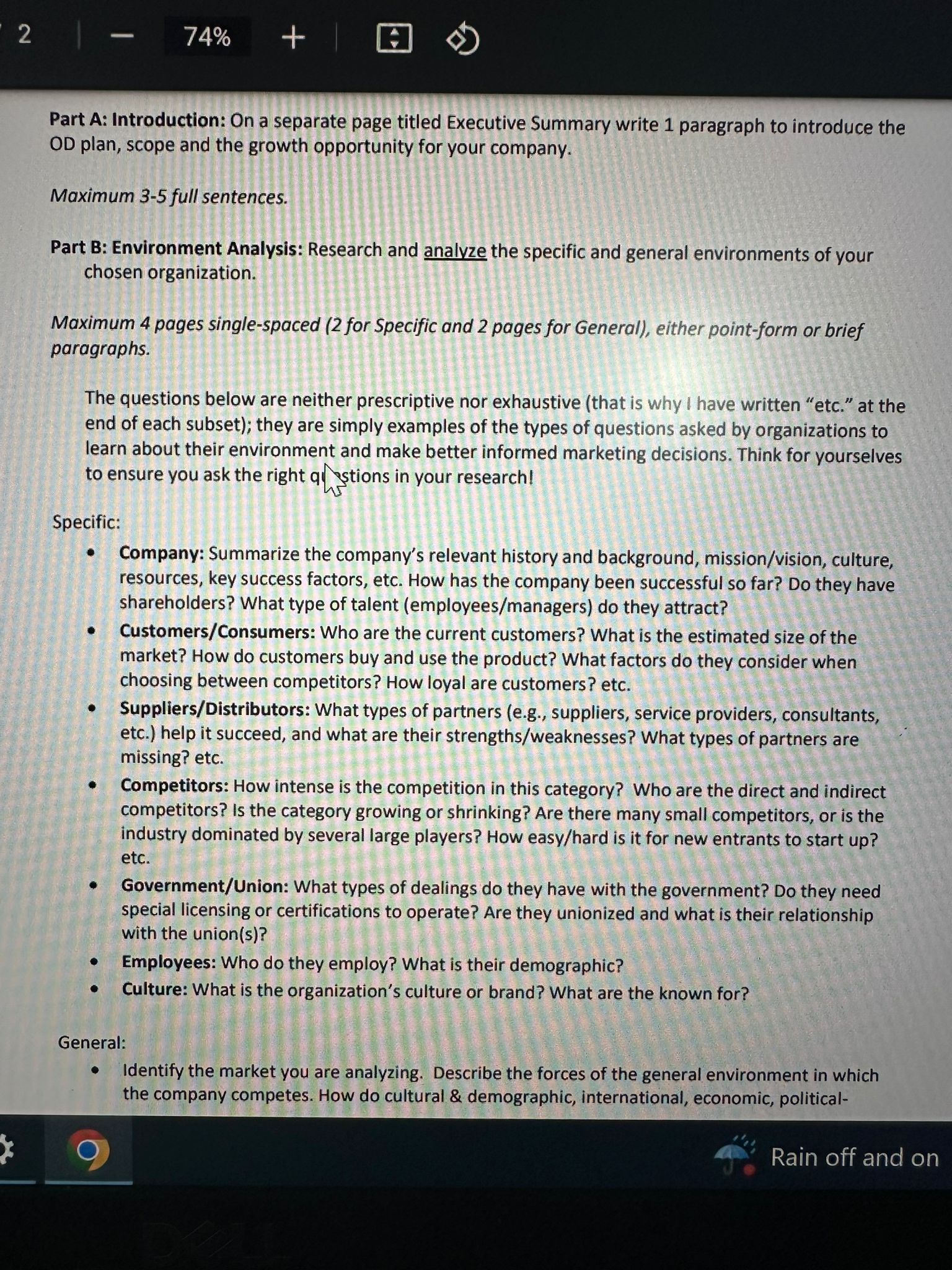
Tall 7202022/20v2.pat 2 / 2 - 86% + KWANTLEN POLYTECHNIC UNIVERSITY . legal, technological and international forces influence the industry, the company, and consumers? Part C: SWOT Table: Using only the information from your analysis from Part B, summarize in a SWOT table the company's key Strengths and Weaknesses (internal) and the key Opportunities and Threats (external) it faces. You should have at least 5 items listed under each SWOT category in your table. Maximum 1.5 pages single-spaced, either point-form or brief paragraphs. Part E: SWOT Analysis: Highlight the most important point(s) under each SWOT category as it relates to the organizational problem identified in the introduction and explain if/how they all relate to each other and should shape the company's strategies. Maximum 0.5 pages single-spaced, either point-form or brief paragraphs. Part E: References: Provide a References List of all secondary sources used in developing this assignment. Assignments that are inadequately referenced (either lacking detail or improper format) will be subject to penalties. A minimum of 6 secondary sources is expected. No page limit, single-spaced. 9 11.C Mostly sunny OPart A: Introduction: (in a separate page titled Executive Summary write 1 paragraph to introduce the OD plan, scope and the growth opportunity for your company. Maximum 3-5 full sentences. Part B: Environment Analysis: Research and analyze the specific and general environments of your chosen organization. Maximum 4 pages single-spaced (Zfor Specific and 2 pages for General), either point-form or brief paragraphs. The questions below are neither prescriptive nor exhaustive (that is 1-; ; i gave written "etc.\" at the end of each subset); they are simply examples of the types of questions asked by organizations to learn about their environment and make better informed marketing decisions. Think for yourselves to ensure you ask the right qgtions in your researchi Specific: a Company: Summarize the com pany's relevant history and background, mission/vision, culture, resources, key success factors, etc. How has the company been successful so far? Do they have shareholders? What type of talent (employees/managers) do they attract? Customers/Consumers: Who are the current customers? What is the estimated size of the market? How do customers buy and use the product? What factors do they consider when choosing between competitors? How loyal are customers? etc. Suppliers/Distributors: What types of partners (e.g., suppliers, service providers, consultants, etc.) help it succeed, and what are their strengths/weaknesses? What types of partners are missing? etc. Competitors: How intense is the competition in this category? who are the direct and indirect competitors? Is the category growing or shrinking? Are there many small competitors, or is the industry dominated by several large players? How easy/hard is it for new entrants to start up? etc. Government/Union: What types of dealings do they have with the government? Do they need special licensing or certifications to operate? Are they unionized and what is their relationship with the unionls)? 0 Employees: Who do they employ? what is their demographic? - Culture: What is the organization's culture or brand? What are the known for? General: 0 identify the market you are analyzing. Describe the forces of the generaienvironment in which the company competes. How do cultural & demographic, international, economic, political- Rain off and on
Step by Step Solution
There are 3 Steps involved in it

Get step-by-step solutions from verified subject matter experts