







Question: Task 1 In this task, you will use concepts from Unit 1 to analyze the apparent frequency of the horn on a train. A train
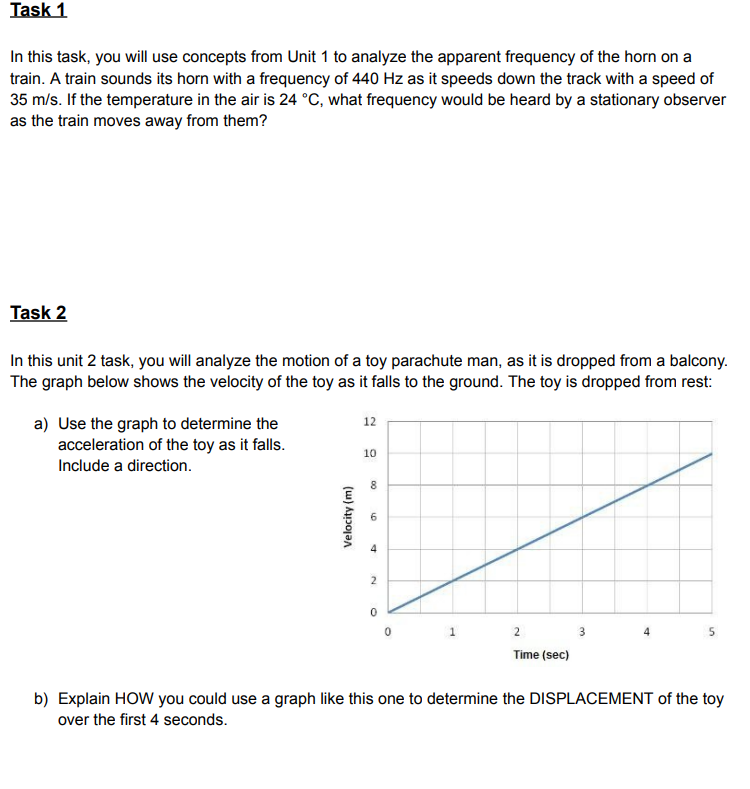
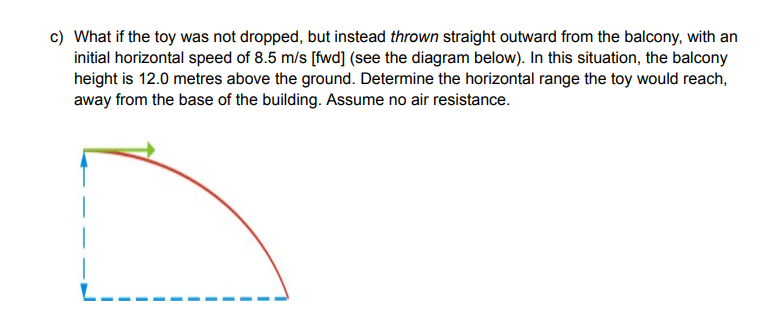
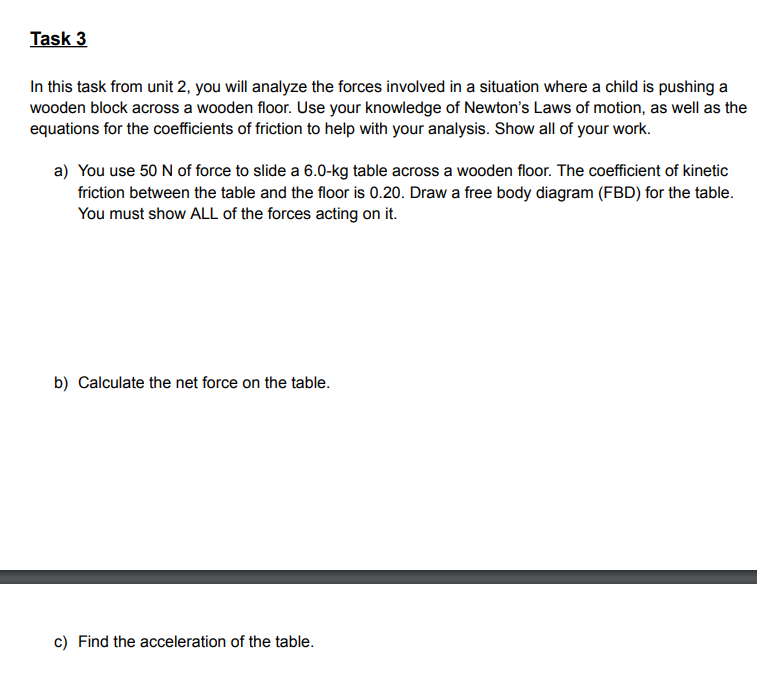
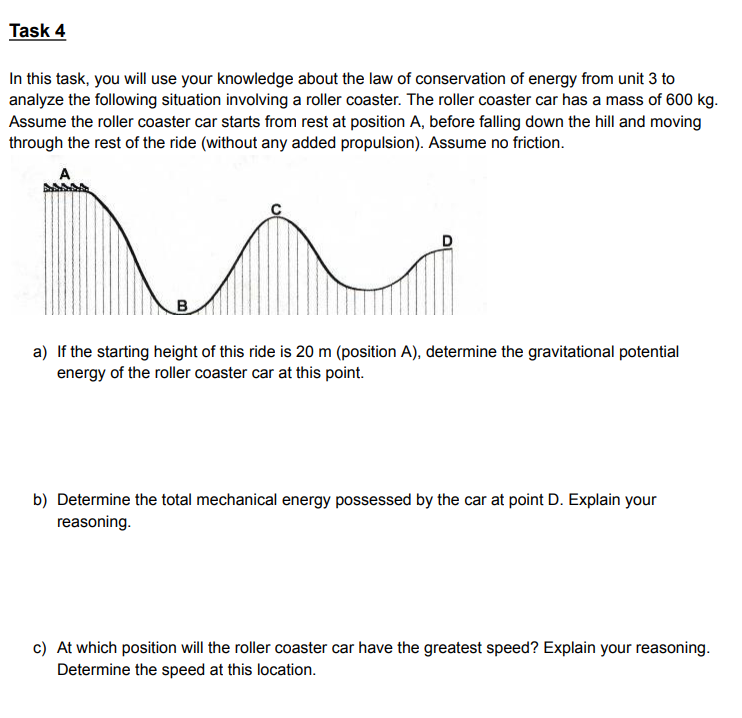
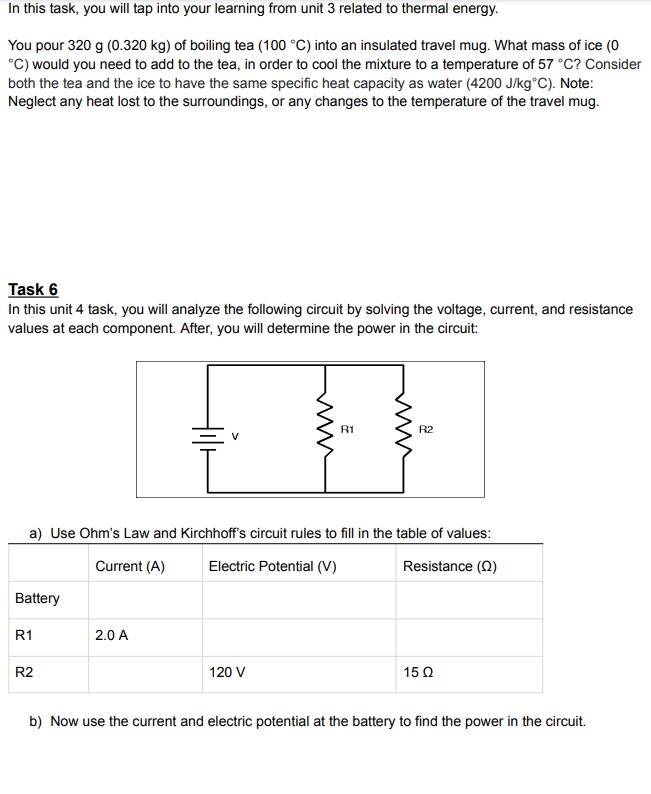
Task 1 In this task, you will use concepts from Unit 1 to analyze the apparent frequency of the horn on a train. A train sounds its horn with a frequency of 440 Hz as it speeds down the track with a speed of 35 m/s. If the temperature in the air is 24 *C, what frequency would be heard by a stationary observer as the train moves away from them? Task 2 In this unit 2 task, you will analyze the motion of a toy parachute man, as it is dropped from a balcony. The graph below shows the velocity of the toy as it falls to the ground. The toy is dropped from rest: a) Use the graph to determine the 12 acceleration of the toy as it falls. 10 Include a direction. Velocity (m) 0 Time (sec) b) Explain HOW you could use a graph like this one to determine the DISPLACEMENT of the toy over the first 4 seconds.c) What if the toy was not dropped, but instead thrown straight outward from the balcony, with an initial horizontal speed of 8.5 m/s [fwd] (see the diagram below). In this situation, the balcony height is 12.0 metres above the ground. Determine the horizontal range the toy would reach, away from the base of the building. Assume no air resistance. L.Task 3 In this task from unit 2, you will analyze the forces involved in a situation where a child is pushing a wooden block across a wooden floor. Use your knowledge of Newton's Laws of motion, as well as the equations for the coefficients of friction to help with your analysis. Show all of your work. a) You use 50 N of force to slide a 6.0-kg table across a wooden floor. The coefficient of kinetic friction between the table and the floor is 0.20. Draw a free body diagram (FBD) for the table. You must show ALL of the forces acting on it. b) Calculate the net force on the table. c) Find the acceleration of the table.Task 4 In this task, you will use your knowledge about the law of conservation of energy from unit 3 to analyze the following situation involving a roller coaster. The roller coaster car has a mass of 600 kg. Assume the roller coaster car starts from rest at position A, before falling down the hill and moving through the rest of the ride (without any added propulsion). Assume no friction. a) If the starting height of this ride is 20 m (position A), determine the gravitational potential energy of the roller coaster car at this point. b) Determine the total mechanical energy possessed by the car at point D. Explain your reasoning. c) At which position will the roller coaster car have the greatest speed? Explain your reasoning. Determine the speed at this location.In this task, you will tap into your learning from unit 3 related to thermal energy. You pour 320 g (0.320 kg) of boiling tea (100 *C) into an insulated travel mug. What mass of ice (0 "C) would you need to add to the tea, in order to cool the mixture to a temperature of 57 *C? Consider both the tea and the ice to have the same specific heat capacity as water (4200 J/kg C). Note: Neglect any heat lost to the surroundings, or any changes to the temperature of the travel mug. Task 6 In this unit 4 task, you will analyze the following circuit by solving the voltage, current, and resistance values at each component. After, you will determine the power in the circuit: R2 a) Use Ohm's Law and Kirchhoff's circuit rules to fill in the table of values: Current (A) Electric Potential (V) Resistance (Q) Battery R1 2.0 A R2 120 V 15 0 b) Now use the current and electric potential at the battery to find the power in the circuit
Step by Step Solution
There are 3 Steps involved in it

Get step-by-step solutions from verified subject matter experts
 Study Help