







Question: TASK 2: Reflected Code to Binary Conversion from one binary code to another is common in digital systems. In this part of the experiment we
TASK 2: Reflected Code to Binary
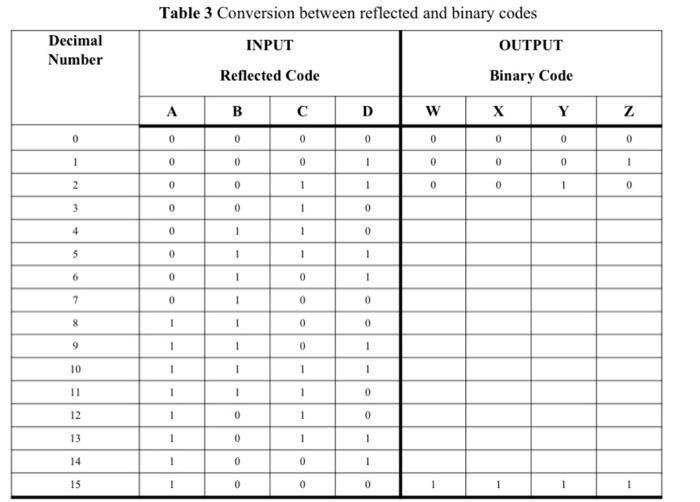
Conversion from one binary code to another is common in digital systems. In this part of the experiment we need to use Verilog code to design a combinational logic circuit with four inputs and four outputs that converts a 4-bit reflected code number into the equivalent 4-bit binary number. The truth table of the required conversion circuit is shown in Table 3. Copy the table and complete the output section.
The conversion circuit can be realized with Exclusive-OR only as shown in Error: Reference source not found. Implement and check the proper operation of the circuit in Error: Reference source not found using your FPGA board.
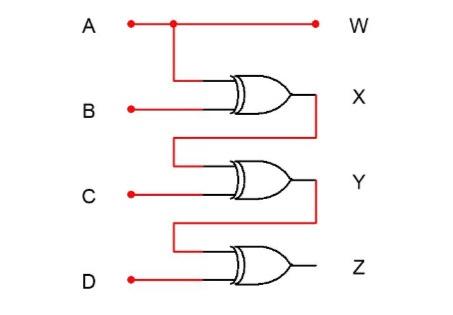
Figure 4: Reflected to BCD code circuit
Show your codes, simulation results and screenshots of 3 testing cases in your report with your comments.
Assignments:
1- Explain briefly the advantages of using binary codes other than pure binary to represent decimal numbers in a digital system.
2- Write the pure binary and the BCD representations of the following decimal numbers: 14, 25, and 99.
3- Seven-segment-LED displays are either common-cathode or common-anode, explain the difference between the two types.
4- State the main characteristics and advantages of gray coding.
Decimal Number Table 3 Conversion between reflected and binary codes INPUT OUTPUT Reflected Code Binary Code A B D W X Y N 0 0 0 0 0 0 0 0 0 1 0 0 0 1 0 0 0 1 2 0 0 1 1 0 0 1 0 3 0 0 0 4 0 1 0 5 0 1 1 1 6 0 1 0 1 7 0 1 0 0 8 1 1 0 0 9 1 0 1 10 1 1 1 1 11 1 1 1 0 12 0 1 0 13 0 1 1 14 0 0 1 15 0 0 0 A W B Y > > N
Step by Step Solution
There are 3 Steps involved in it
1 Expert Approved Answer
Step: 1 Unlock

Question Has Been Solved by an Expert!
Get step-by-step solutions from verified subject matter experts
Step: 2 Unlock
Step: 3 Unlock
 Study Help