







Question: TASK 2 - Structural Loads on Tower Section Based on the configuration and specifications of the tower crane, a structural model is defined with the
TASK Structural Loads on Tower Section
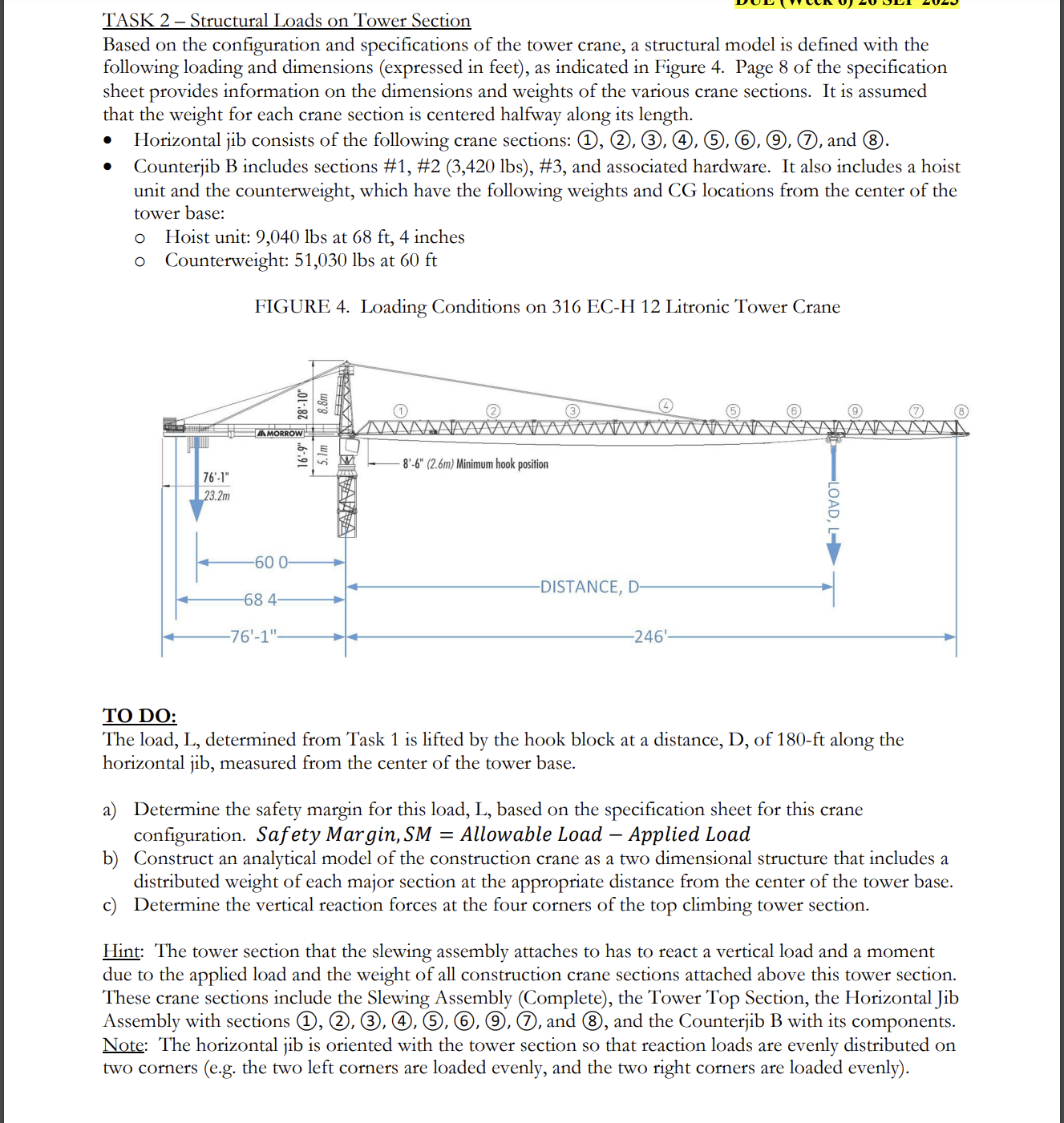
Based on the configuration and specifications of the tower crane, a structural model is defined with the following loading and dimensions expressed in feet as indicated in Figure Page of the specification sheet provides information on the dimensions and weights of the various crane sections. It is assumed that the weight for each crane section is centered halfway along its length.
Horizontal jib consists of the following crane sections: and
Counterjib B includes sections # # lbs # and associated hardware. It also includes a hoist unit and the counterweight, which have the following weights and CG locations from the center of the tower base:
Hoist unit: lbs at inches
Counterweight: at ft
FIGURE Loading Conditions on ECH Litronic Tower Crane
TO DO:
The load, L determined from Task is lifted by the hook block at a distance, D of along the horizontal jib, measured from the center of the tower base.
a Determine the safety margin for this load, L based on the specification sheet for this crane configuration. Safety Margin, Allowable Load Applied Load
b Construct an analytical model of the construction crane as a two dimensional structure that includes a distributed weight of each major section at the appropriate distance from the center of the tower base.
c Determine the vertical reaction forces at the four corners of the top climbing tower section.
Hint: The tower section that the slewing assembly attaches to has to react a vertical load and a moment due to the applied load and the weight of all construction crane sections attached above this tower section. These crane sections include the Slewing Assembly Complete the Tower Top Section, the Horizontal Jib Assembly with sections and and the Counterjib B with its components. Note: The horizontal jib is oriented with the tower section so that reaction loads are evenly distributed on two corners eg the two left corners are loaded evenly, and the two right corners are loaded evenly
Step by Step Solution
There are 3 Steps involved in it
1 Expert Approved Answer
Step: 1 Unlock

Question Has Been Solved by an Expert!
Get step-by-step solutions from verified subject matter experts
Step: 2 Unlock
Step: 3 Unlock
 Study Help