







Question: TASK 5 (total 30 marks): ASCII (American Standard Code for Information Interchange) is the most common character encoding format for text data in computers and
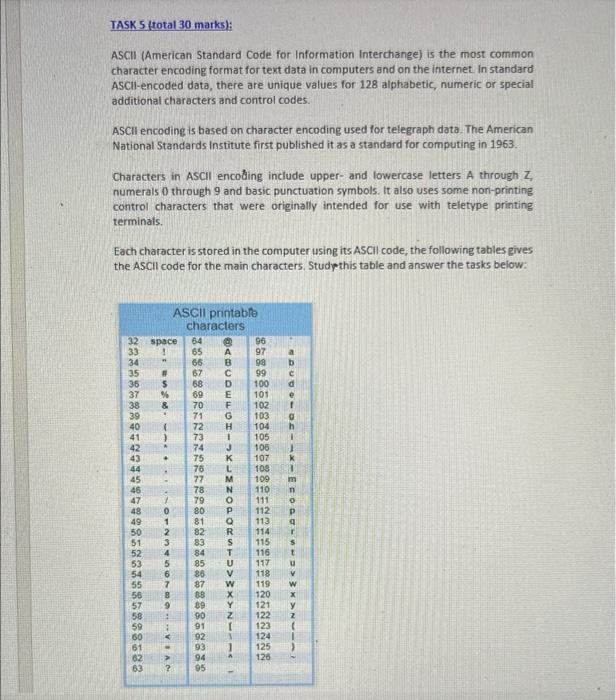
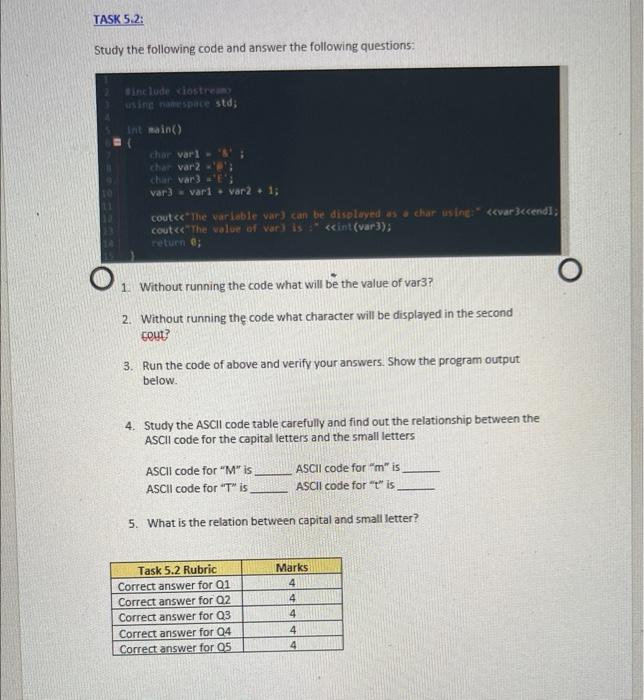
TASK 5 (total 30 marks): ASCII (American Standard Code for Information Interchange) is the most common character encoding format for text data in computers and on the internet. In standard Ascil-encoded data, there are unique values for 128 alphabetic, numeric or special additional characters and control codes. ASCIl encoding is based on character encoding used for telegraph data. The American National Standards Institute first published it as a standard for computing in 1963. Characters in ASCil encoding include upper- and lowercase letters A through Z, numerals 0 through 9 and basic punctuation symbols. It also uses some non-printing control characters that were originally intended for use with teletype printing terminals. Each character is stored in the computer using its ASCll code, the following tables gives the Ascll code for the main characters. Studpthis table and answer the tasks below: Study the following code and answer the following questions: 1. Without running the code what will be the value of var3? 2. Without running the code what character will be displayed in the second feut? 3. Run the code of above and verify your answers. Show the program output below. 4. Study the ASCII code table carefully and find out the relationship between the ASCll code for the capital letters and the small letters ASCll code for "M" is ASCil code for " m " is ASCll code for " T " is ASCll code for " t " is 5. What is the relation between capital and small letter
Step by Step Solution
There are 3 Steps involved in it

Get step-by-step solutions from verified subject matter experts
 Study Help