Question: TASK C: Based on the Introduction Section of a published research article given below, answer the following questions. 1. What is the problem(s) that is
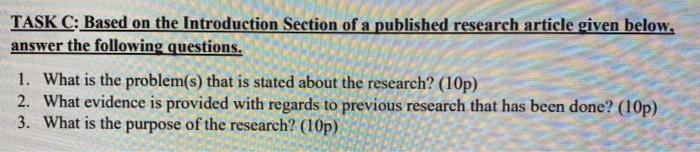
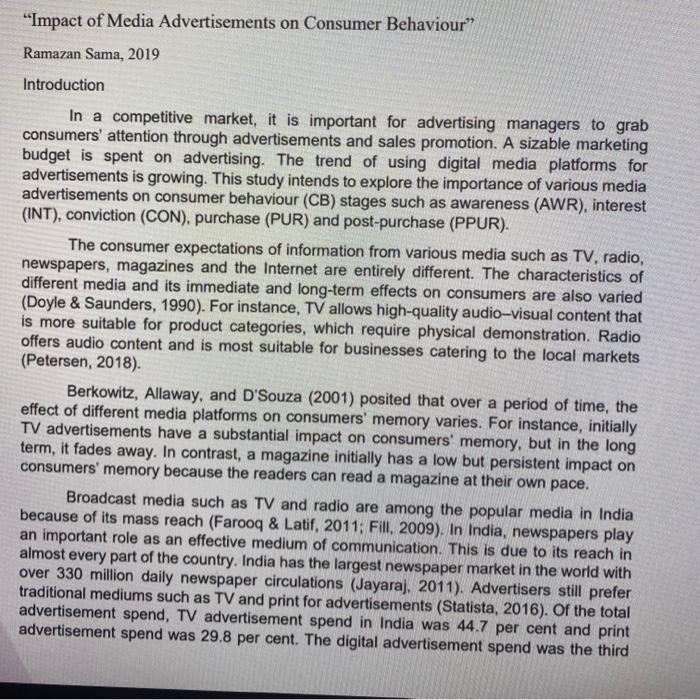
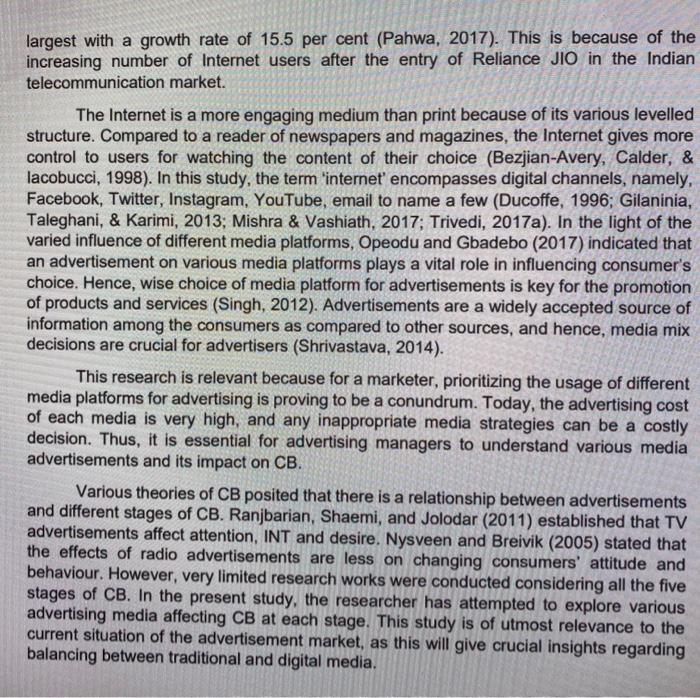
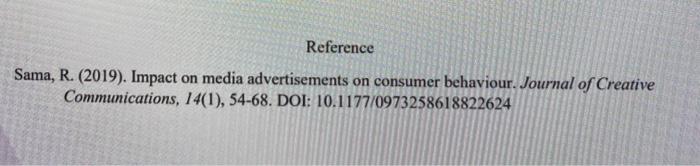
TASK C: Based on the Introduction Section of a published research article given below, answer the following questions. 1. What is the problem(s) that is stated about the research? (10p) 2. What evidence is provided with regards to previous research that has been done? (10p) 3. What is the purpose of the research? (10p) "Impact of Media Advertisements on Consumer Behaviour" Ramazan Sama, 2019 Introduction In a competitive market, it is important for advertising managers to grab consumers' attention through advertisements and sales promotion. A sizable marketing budget is spent on advertising. The trend of using digital media platforms for advertisements is growing. This study intends to explore the importance of various media advertisements on consumer behaviour (CB) stages such as awareness (AWR), interest (INT), conviction (CON). purchase (PUR) and post-purchase (PPUR). The consumer expectations of information from various media such as TV, radio, newspapers, magazines and the Internet are entirely different. The characteristics of different media and its immediate and long-term effects on consumers are also varied (Doyle & Saunders, 1990). For instance, TV allows high-quality audio-visual content that is more suitable for product categories, which require physical demonstration. Radio offers audio content and is most suitable for businesses catering to the local markets (Petersen, 2018). Berkowitz, Allaway, and D'Souza (2001) posited that over a period of time, the effect of different media platforms on consumers' memory varies. For instance, initially TV advertisements have a substantial impact on consumers' memory, but in the long term, it fades away. In contrast, a magazine initially has a low but persistent impact on consumers' memory because the readers can read a magazine at their own pace. Broadcast media such as TV and radio are among the popular media in India because of its mass reach (Farooq & Latif, 2011: Fill, 2009). In India, newspapers play an important role as an effective medium of communication. This is due to its reach in almost every part of the country. India has the largest newspaper market in the world with over 330 million daily newspaper circulations (Jayaraj, 2011). Advertisers still prefer traditional mediums such as TV and print for advertisements (Statista, 2016). Of the total advertisement spend, TV advertisement spend in India was 44.7 per cent and print advertisement spend was 29.8 per cent. The digital advertisement spend was the third largest with a growth rate of 15.5 per cent (Pahwa, 2017). This is because of the increasing number of Internet users after the entry of Reliance Jio in the Indian telecommunication market. The Internet is a more engaging medium than print because of its various levelled structure. Compared to a reader of newspapers and magazines, the Internet gives more control to users for watching the content of their choice (Bezjian-Avery, Calder, & lacobucci, 1998). In this study, the term 'internet' encompasses digital channels, namely, Facebook, Twitter, Instagram, YouTube, email to name a few (Ducoffe, 1996; Gilaninia, Taleghani, & Karimi, 2013; Mishra & Vashiath, 2017, Trivedi, 2017a). In the light of the varied influence of different media platforms, Opeodu and Gbadebo (2017) indicated that an advertisement on various media platforms plays a vital role in influencing consumer's choice. Hence, wise choice of media platform for advertisements is key for the promotion of products and services (Singh, 2012). Advertisements are a widely accepted source of information among the consumers as compared to other sources, and hence, media mix decisions are crucial for advertisers (Shrivastava, 2014). This research is relevant because for a marketer, prioritizing the usage of different media platforms for advertising is proving to be a conundrum. Today, the advertising cost of each media is very high, and any inappropriate media strategies can be a costly decision. Thus, it is essential for advertising managers to understand various media advertisements and its impact on CB. Various theories of CB posited that there is a relationship between advertisements and different stages of CB. Ranjbarian, Shaemi, and Jolodar (2011) established that TV advertisements affect attention, INT and desire. Nysveen and Breivik (2005) stated that the effects of radio advertisements are less on changing consumers' attitude and behaviour. However, very limited research works were conducted considering all the five stages of CB. In the present study, the researcher has attempted to explore various advertising media affecting CB at each stage. This study is of utmost relevance to the current situation of the advertisement market, as this will give crucial insights regarding balancing between traditional and digital media. Reference Sama, R. (2019). Impact on media advertisements on consumer behaviour. Journal of Creative Communications, 14(1), 54-68. DOI: 10.1177/0973258618822624 TASK C: Based on the Introduction Section of a published research article given below, answer the following questions. 1. What is the problem(s) that is stated about the research? (10p) 2. What evidence is provided with regards to previous research that has been done? (10p) 3. What is the purpose of the research? (10p) "Impact of Media Advertisements on Consumer Behaviour" Ramazan Sama, 2019 Introduction In a competitive market, it is important for advertising managers to grab consumers' attention through advertisements and sales promotion. A sizable marketing budget is spent on advertising. The trend of using digital media platforms for advertisements is growing. This study intends to explore the importance of various media advertisements on consumer behaviour (CB) stages such as awareness (AWR), interest (INT), conviction (CON). purchase (PUR) and post-purchase (PPUR). The consumer expectations of information from various media such as TV, radio, newspapers, magazines and the Internet are entirely different. The characteristics of different media and its immediate and long-term effects on consumers are also varied (Doyle & Saunders, 1990). For instance, TV allows high-quality audio-visual content that is more suitable for product categories, which require physical demonstration. Radio offers audio content and is most suitable for businesses catering to the local markets (Petersen, 2018). Berkowitz, Allaway, and D'Souza (2001) posited that over a period of time, the effect of different media platforms on consumers' memory varies. For instance, initially TV advertisements have a substantial impact on consumers' memory, but in the long term, it fades away. In contrast, a magazine initially has a low but persistent impact on consumers' memory because the readers can read a magazine at their own pace. Broadcast media such as TV and radio are among the popular media in India because of its mass reach (Farooq & Latif, 2011: Fill, 2009). In India, newspapers play an important role as an effective medium of communication. This is due to its reach in almost every part of the country. India has the largest newspaper market in the world with over 330 million daily newspaper circulations (Jayaraj, 2011). Advertisers still prefer traditional mediums such as TV and print for advertisements (Statista, 2016). Of the total advertisement spend, TV advertisement spend in India was 44.7 per cent and print advertisement spend was 29.8 per cent. The digital advertisement spend was the third largest with a growth rate of 15.5 per cent (Pahwa, 2017). This is because of the increasing number of Internet users after the entry of Reliance Jio in the Indian telecommunication market. The Internet is a more engaging medium than print because of its various levelled structure. Compared to a reader of newspapers and magazines, the Internet gives more control to users for watching the content of their choice (Bezjian-Avery, Calder, & lacobucci, 1998). In this study, the term 'internet' encompasses digital channels, namely, Facebook, Twitter, Instagram, YouTube, email to name a few (Ducoffe, 1996; Gilaninia, Taleghani, & Karimi, 2013; Mishra & Vashiath, 2017, Trivedi, 2017a). In the light of the varied influence of different media platforms, Opeodu and Gbadebo (2017) indicated that an advertisement on various media platforms plays a vital role in influencing consumer's choice. Hence, wise choice of media platform for advertisements is key for the promotion of products and services (Singh, 2012). Advertisements are a widely accepted source of information among the consumers as compared to other sources, and hence, media mix decisions are crucial for advertisers (Shrivastava, 2014). This research is relevant because for a marketer, prioritizing the usage of different media platforms for advertising is proving to be a conundrum. Today, the advertising cost of each media is very high, and any inappropriate media strategies can be a costly decision. Thus, it is essential for advertising managers to understand various media advertisements and its impact on CB. Various theories of CB posited that there is a relationship between advertisements and different stages of CB. Ranjbarian, Shaemi, and Jolodar (2011) established that TV advertisements affect attention, INT and desire. Nysveen and Breivik (2005) stated that the effects of radio advertisements are less on changing consumers' attitude and behaviour. However, very limited research works were conducted considering all the five stages of CB. In the present study, the researcher has attempted to explore various advertising media affecting CB at each stage. This study is of utmost relevance to the current situation of the advertisement market, as this will give crucial insights regarding balancing between traditional and digital media. Reference Sama, R. (2019). Impact on media advertisements on consumer behaviour. Journal of Creative Communications, 14(1), 54-68. DOI: 10.1177/0973258618822624









 Study Help