







Question: Task: Communicating change can be difficult. Describe the challenges and your recommended strategies to communicate difficult messages to an organization in times of change. (In
Task: Communicating change can be difficult. Describe the challenges and your recommended strategies to communicate difficult messages to an organization in times of change.
(In your answer, be sure to reference chapter 8 and cite examples from the case to support your answer.)
Read the case study and materials provided to answer
Case study:
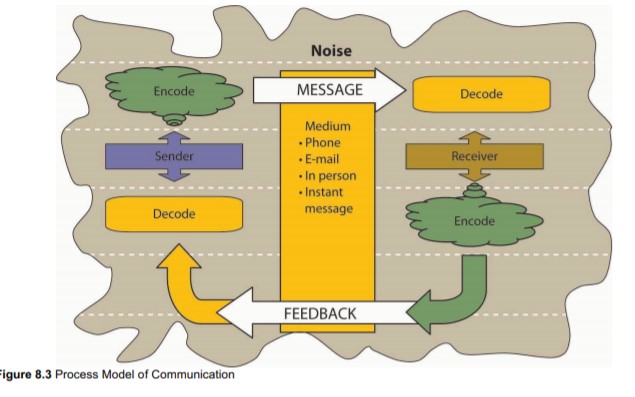

Abstract The case revolves around a change initiative introduced in the Indian division of a US-based organization operating in the field of building and composite glass materials. The case has been written from the perspective of Sreenath, who has recently joined as the country head, and has identified four pertinent changes as part of his aggressive growth strategy. The proposed changes pertain to shift in market focus, reorganization of the sales and marketing vertical, revised targets, and revised compensation structure with increase in variable pay. Sreenath's meeting with his core team regarding the proposed changes indicates that he is likely to face resistance during change implementation. The case draws attention to the salience of communication practices surrounding change, and highlights the need to attend to employee perspective during change. Case It seemed like an opportunity of a lifetime for Sreenath, when he was asked to head back to India and take up the position of the country head of Sentinal Sciences Corporation. He had moved to the US for his undergraduate degree, stayed on to complete his Master's from Purdue in Material Engineering and then joined Sentinel Sciences Corporation, headquartered in Albany, New York. Sentinel was one of the leading companies focusing on building material systems, ranging from insulation to roofing shingles, and glass composite materials with varied applications for markets related to transportation, electronics and wind energy. Unlike his batch-mates and peers, Sreenath had chosen to stay with the same organization for the last eight years, and now, it seemed as if his loyalty, hardwork and commitment was going to pay off. He had been handpicked by the core management team to drive business growth in the Indian sub-continent. The opportunity could not have come at a better time. Sreenath and his wife Roopa had been contemplating a move back to India for the last year or so. Their daughter, Arpita, was almost three, and they both wanted to raise her in India so that she could understand the culture and be close to the rest of the family members. Both Sreenath and Roopa had grown up surrounded by their extended family, and wanted the same experience for Arpita. This position would not only help them with the transition, but also cement his position in the company. Moving Back Home: Taking Charge The India team was small but well-established, with a decent trajectory of growth, but nothing too extraordinary. The current country head, Kuldeep Bhatti, was being promoted and would take up a leadership role in the Asia Pacific team. He would move to Singapore, and speculation had been rife these last few weeks about who would take his place in India. There had been some strong contenders, including Drupad Vaid, the current head of the Sales and Marketing team. Drupad had been with the organization for the last six years, and was an industry veteran. Sreenath had been a bit worried about how Drupad would react to his promotion, but his concerns were diminished when Drupad texted him to congratulate him for the position. A subsequent conversation between the two had been warm and engaging. They had met several times earlier, during company events and award functions, and though they could not be categorized as friends, Sreenath had always found Drupad to be balanced and sensible in his overall approach. India's corporate office was fairly small - about sixty employees in total. The business itself was not that large to begin with, but Sreenath had a mandate to expand it aggressively. This was not going to be easy, since the market had become increasingly competitive over the years, with the US and Chinese players focusing their energies in India. At the same time, the industry was projected to post robust growth, and with the rightstrategy, Sreenath knew he would be able to meet the global leadership's expectations. He took his time to understand the team and their approach to business. The organization was fairly decentralized, and the global office had vested most decision-making powers with the respective regions. He realized quickly that Kuldeep had developed close personal relationships with most of the senior leaders. He was advised by both Kuldeep and Drupad that the 'US style of management' would not work in India. They suggested: Yaar, even if you need to micro manage, do it in a way that makes people feel you are trying to help them out. Transactional, business-like approach doesn't work here. They have to respect you but at the same time, they should feel you are like their family. Four-Point Agenda for Change Approximately three months after Sreenath took over as the country head, he called for a meeting with the top leadership team. Sreenath was planning to propose a four-point agenda during the meeting - broaden Sentinel's target segment, revise sales targets and revenue projections, increase the variable component in the compensation package, and bring about some changes in the structure of Sentinel's sales and marketing division. To ensure that everyone kept an open mind regarding the proposed changes, Sreenath was deliberately ambiguous in the way he framed the agenda - it was communicated as a 'discussion regarding future growth avenues and the annual sales projections.' Of the eight team members attending the meeting, Sreenath was anticipating some amount of support from the Rishab Sood (Operations) and Naren Vaidya (R&D), both of whom had expressed views that seemed to be in sync with his own thoughts. The rest of the functions - HR, Admin, Finance and Accounts, Sales and Marketing would probably need some time before they got on board with his plan. Up until Sreenath's arrival, Sentinal India had focused primarily on institutional clients. However, a market study commissioned by Kuldeep Bhatti before he shifted to the Asia Pacific team made it clear that in order to grow, Sentinel India needed to broaden its focus and allocate some of their resources in getting government businesses. Kuldeep, for some reason, had made no move to act upon the report despite having had it in his possession for eight months. When asked why, he had laughed it off with an inane comment about how Sreenath was better equipped and therefore destined to turn the India business around. The first order of change, according to Sreenath, was to broaden the focus and also include government businesses. This would expand their market and allow them to increase their revenues. The planning and forecasting process typically began in August in the US, and was finalized by the end of October. In India, however, Sreenath realized that the forecasting had begun in August and ended in September, the month of his arrival. During the handover, Kuldeep had shared the numbers with a parting shot, "Of course, you are the boss now. Take a look and once you give your approval, they can update it in the system." After a discussion with the HR head, Ranjit Sinha, Sreenath realized that the timeline for forecasting had deviated from the usual pattern. India's planning process typically began much later and was completed around November. After an extensive consultation with Kuldeep (who seemed to understand Sreenath's viewpoint after the initial surprise wore off), he revised the targets. He knew it would ruffle a few feathers in the meeting, but the change was needed. He sensed the need to push the team harder and get them to aim for a bigger share of the pie. His meetings with the regional teams in Chennai and Delhi had highlighted the need to strengthen their presence in those areas, especially Delhi. As with most organizations, the best team members operated out of the headquarters, in Mumbai. With increased focus on the government related businesses, Sreenath felt the need to shift at least two of the six assistant vice presidents and few of their reportees i.e. relationship managers, to Delhi. He also wanted Drupad to spend a few days in Delhi each week. This was the second change Sreenath wanted to propose. The third change was the need to bring in a greater variable component in the pay structure. This was a significant departure from the current pay structure and Sreenath knew he would face resistance on that front. He had met Ranjit and Vishwas Kale (CFO) separately, to understand how this could be handled. The change would be gradual, and would take over a year to finalize, but Sreenath felt it was the right step for the organization. Sentinel was stagnating; the employees seemed to be a bit too comfortable with their dailyroutine. The attrition rate in the organization was the lowest for mid and high-level executives. It was almost as if once they became relationship managers, nobody left. The annual raise and bonuses were almost predictable and the team seemed to lack drive and ambition. Sreenath was hoping that change in their pay structure would motivate them to work harder. The final change, and one that Sreenath knew would cause significant heartburn to Drupad, was the need to bring in some new talent to head the marketing team. Traditionally, Sentinel India did not have a separate marketing team - a significant departure from how the rest of the countries functioned. Drupad took great pride in what he called "doing the work of two for the salary of one,"and Sreenath's conversations with all five marketing team members had revealed that all of them seemed happy with their scope of activities. Announcing the Change The meeting lasted much longer than the scheduled time. Almost all the proposed changes were opposed by the team leaders, albeit the manner differed. Some expressed shock and insisted that these changes were being implemented in a hasty manner. Others were more cautious in their approach, but suggested that Sreenath spend some more time understanding the Indian market before making any decisions. Drupad, of course, was the most vocal of the lot and questioned both the need to bring in government business as well as the need for a new marketing head. He objected, saying: Nobody gets a share of these infrastructure and defence projects overnight. Having the state or central government as a client will mean devoting a significant amount of time in creating relationships that ultimately may not even yield results. Their requirements are different; so are the payment processes. Sanjay Dev, who headed fibre glass material, continued the argument: No one doubts the potential in this area. Yes, of course there's a market to be tapped. But then there's also potential in retail segment. And yet we haven't pursued it, for a very good reason. The margins would be low and it would take forever to generate significant revenues. The effort does not justify the cost. It is the same argument with government businesses. If we get lucky, we may land a major contract. But that is a big 'if. To which, Sreenath retorted, "Except that I don't want us to bank on luck." He went on to say. I expect us to get that business because we are good. Sure, it will be tough initially and we may not make significant headway in the first few months, or even the first year. But this can be a game changer. These are big opportunities that we are letting go, year after year - and for what? The way Sreenath saw it, the team just did not want to get out of their comfort zone. He knew government business was tough to get and required a significant effort. But that is what everyone was getting paid for, including him. The problem seemed to stem from their complacency. He had the same problem with Drupad's marketing team. They provided some amount of support in terms of basic digital engagement and client relationship handling, but that was about it. Sentinel needed to work towards becoming thought leaders in the industry and use social media for greater stakeholder engagement, but his conversations had revealed that the marketing team was completely clueless regarding these initiatives. The bottom line was, the marketing team needed to do much more than the bare minimum work Drupad was putting in. "No wonder he was not made the country head," Sreenath thought. The issue of relocation to Delhi was not discussed in detail. Vertical heads for composite glass and building materials did not feel the need to move their teams. Our people have developed strong relationships with their clients in Maharashtra. The Mumbai business is five times that of Delhi. We have more people here because we need more people in Mumbai. Shifting two or three of them in Delhi will create an imbalance. Even if we do decide to focus on government businesses, tillthings move, we don't need more than one strong member in that city. Sreenath decided it was best not to push the issue further at that time and changed the topic. He would circle back to it later. The last item on the agenda - the decision regarding compensation structure - was covered quickly. Except for a handful of executives who had probably heard some murmurings through grapevine, others seemed to be truly shocked at the announcement. Of course, there were no specifics to discuss at that time, and therefore Sreenath framed it as "something we should actively think about and implement." He brought the meeting to a close with the following words, You have been with the organization for a long time, and know the market better than anyone else. I have full faith in you and would love to hear your thoughts about the proposed changes. I would welcome all input, including what you perceive to be problematic about my future plans. Nothing is set in stone. I will make my decisions only after my consultations with you. Team work is the most important thing here - we need to work together to achieve our targets. I am with you every step of the way, and I hope to have your support as well. At the end of the meeting, Sreenath realized that his anxiety was higher than what he had experienced at the beginning of the meeting. He knew the meeting would be a tough one, and was expecting resistance. He had been worried about their reaction. But the meeting had not gone as badly as he as expected; it could have been worse. He ought to have been relieved that the announcements were finally made, but somehow he could not shake off his feelings of discomfort. http://dx.doi.org/10.4135/9781529753066Noise Encode MESSAGE Decode Medium . Phone Sender . E-mail Receiver . In person . Instant Decode message Encode FEEDBACK Figure 8.3 Process Model of CommunicationCommunication is vital to organisations. Poor communication is prevalent between senders and receivers. Communication fulfills three functions within organisations, including coordination, the transmission of information, and sharing emotions and feelings. Noise can disrupt or distort communication
Step by Step Solution
There are 3 Steps involved in it

Get step-by-step solutions from verified subject matter experts
 Study Help