Question: Task:- using the written warning document, write up yourself, an employee or your boss. Keep the following notes in mind when completing documents: Performance Evaluation
Task:- using the written warning document, write up yourself, an employee or your boss.
Keep the following notes in mind when completing documents:
Performance Evaluation Tips:
1. Issue at least once per year
2. Be objective - don't be afraid of confrontation (note: if done correctly there should be no need for a confrontation
3. Nothing on the evaluation should be a surprise
4. Be aware of biases - be honest (Halo/Horns Effect)
5. Be descriptive and provide examples
6. If any part of the evaluation needs improvement, give guidance on how you are going to ensure the employee's success
7. Follow-up. Just because the evaluation is complete, doesn't mean you should not check on the employee's progress.
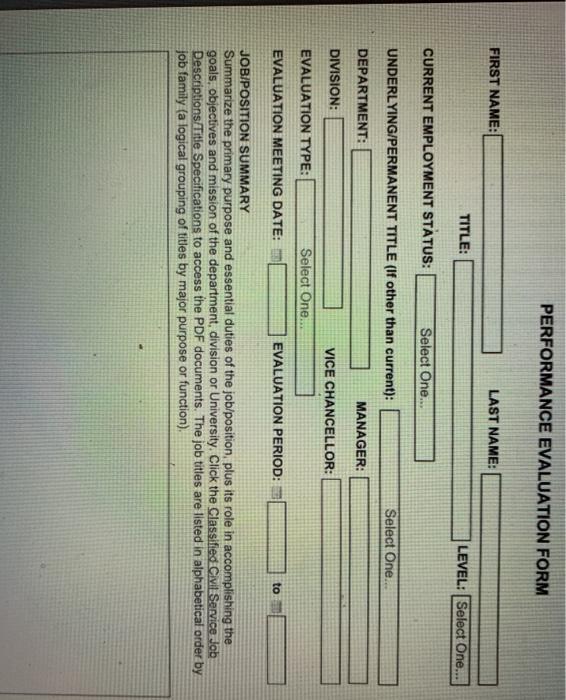
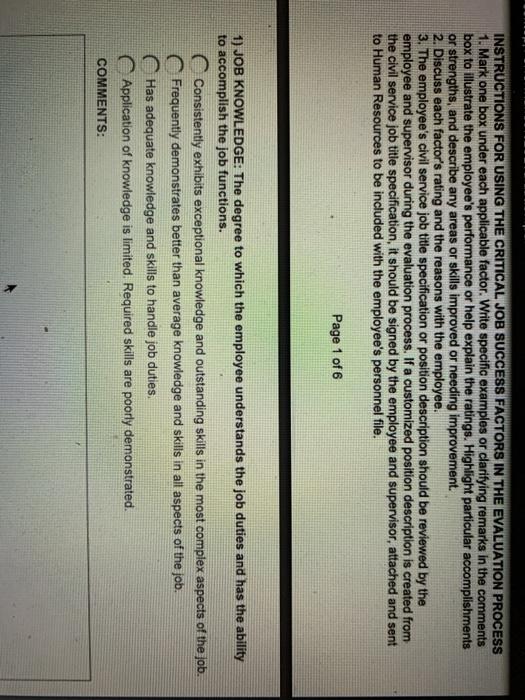
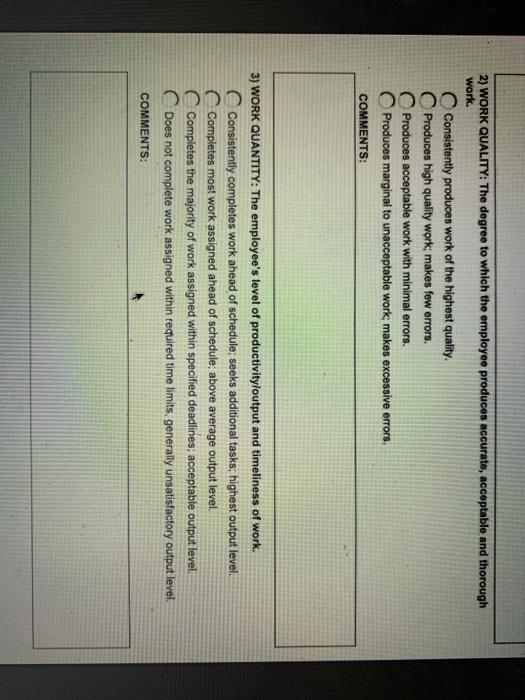
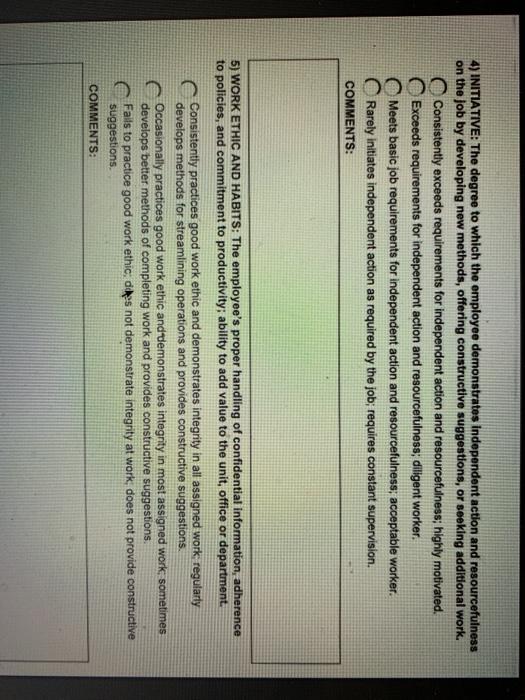
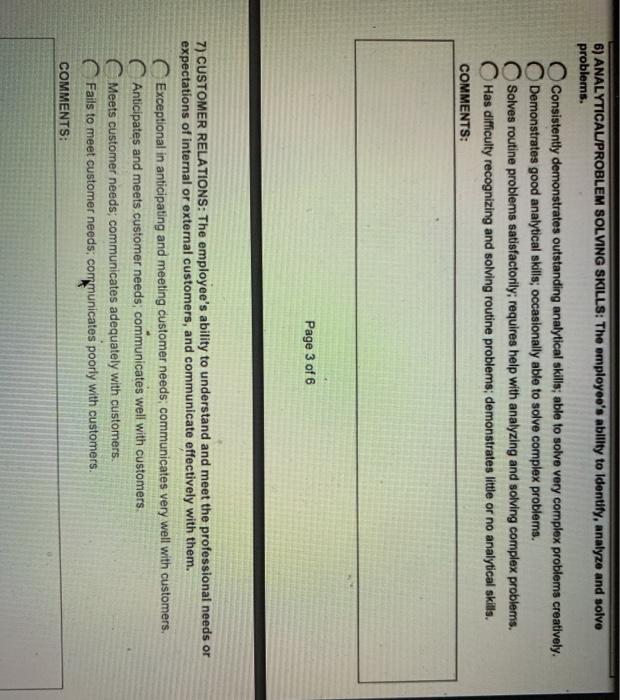
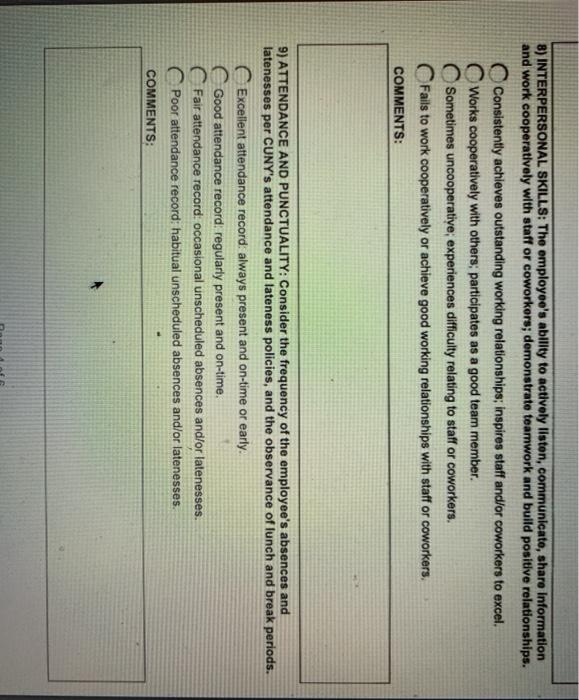
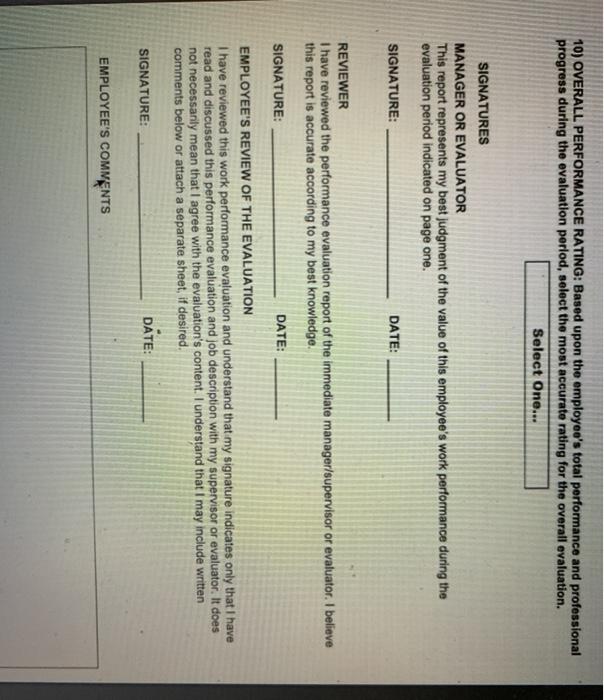
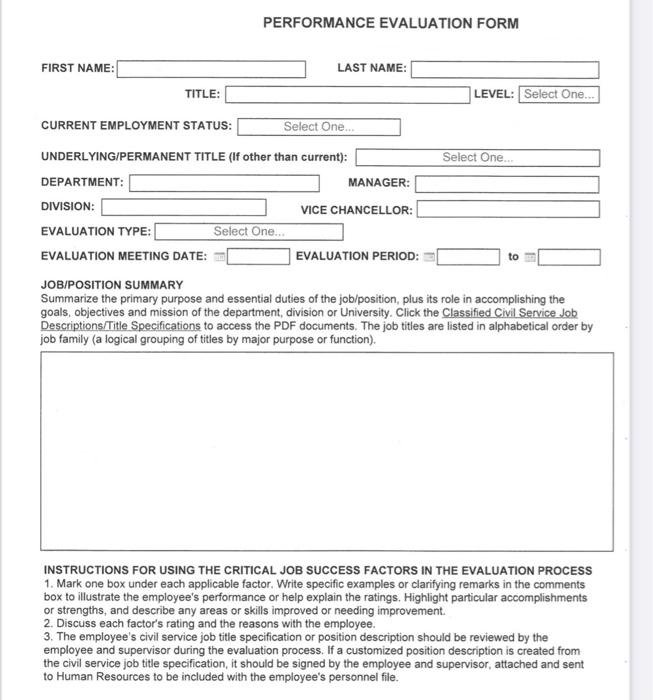
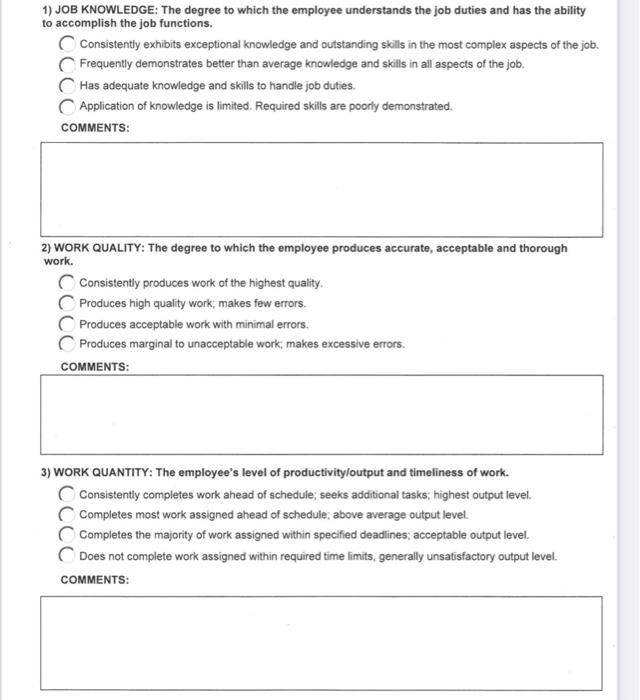
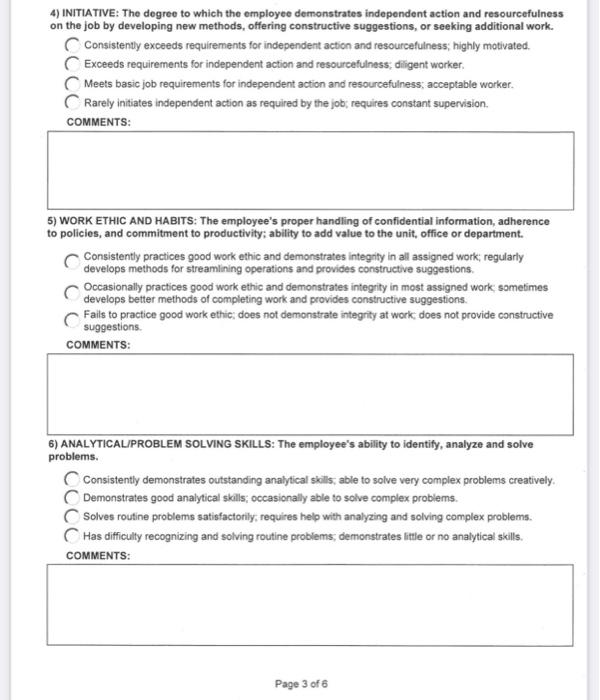
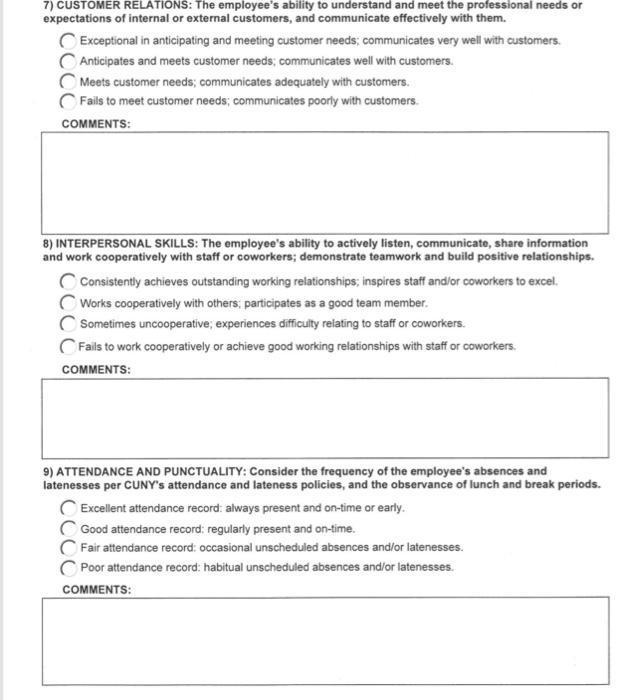
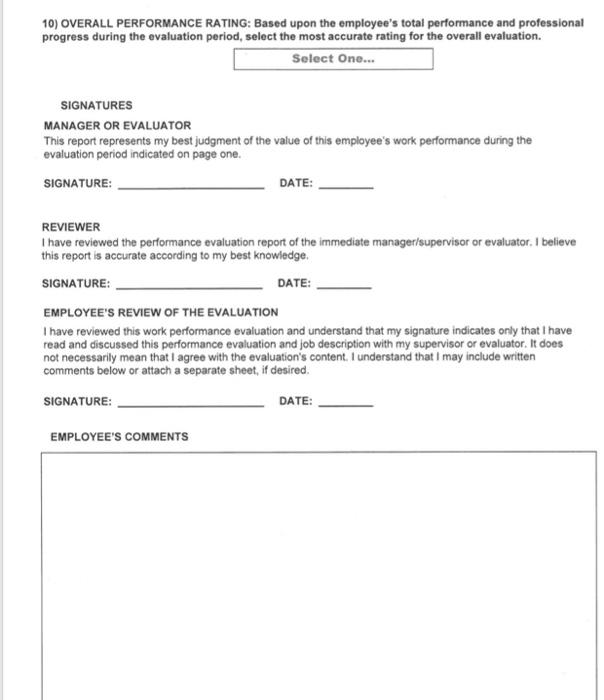
PERFORMANCE EVALUATION FORM FIRST NAME: LAST NAME: TITLE: LEVEL: Select One... CURRENT EMPLOYMENT STATUS: Select One.. UNDERLYING/PERMANENT TITLE (If other than current): Select One.. DEPARTMENT: MANAGER: DIVISION: VICE CHANCELLOR: Select One... EVALUATION TYPE: EVALUATION MEETING DATE: EVALUATION PERIOD: to JOB/POSITION SUMMARY Summarize the primary purpose and essential duties of the job/position plus its role in accomplishing the goals, objectives and mission of the department, division or University. Click the Classified Civil Service Job Descriptions Title Specifications to access the PDF documents. The job titles are listed in alphabetical order by job family (a logical grouping of titles by major purpose or function), INSTRUCTIONS FOR USING THE CRITICAL JOB SUCCESS FACTORS IN THE EVALUATION PROCESS 1. Mark one box under each applicable factor. Write specific examples or clarifying remarks in the comments box to illustrate the employee's performance or help explain the ratings. Highlight particular accomplishments or strengths, and describe any areas or skills improved or needing improvement. 2. Discuss each factor's rating and the reasons with the employee. 3. The employee's civil service job title specification or position description should be reviewed by the employee and supervisor during the evaluation process. If a customized position description is created from the civil service job title specification, it should be signed by the employee and supervisor, attached and sent to Human Resources to be included with the employee's personnel file. Page 1 of 6 1) JOB KNOWLEDGE: The degree to which the employee understands the job duties and has the ability to accomplish the job functions. Consistently exhibits exceptional knowledge and outstanding skills in the most complex aspects of the job. Frequently demonstrates better than average knowledge and skills in all aspects of the job. Has adequate knowledge and skills to handle job duties, Application of knowledge is limited. Required skills are poorly demonstrated. COMMENTS: 2) WORK QUALITY: The degree to which the employee produces accurate, acceptable and thorough work. Consistently produces work of the highest quality Produces high quality work; makes few errors. Produces acceptable work with minimal errors. Produces marginal to unacceptable work, makes excessive errors. COMMENTS: 3) WORK QUANTITY: The employee's level of productivity/output and timeliness of work. Consistently completes work ahead of schedule; seeks additional tasks; highest output level. Completes most work assigned ahead of schedule, above average output level. Completes the majority of work assigned within specified deadlines, acceptable output level. Does not complete work assigned within required time limits, generally unsatisfactory output level. COMMENTS: 4) INITIATIVE: The degree to which the employee demonstrates independent action and resourcefulness on the job by developing new methods, offering constructive suggestions, or seeking additional work. Consistently exceeds requirements for independent action and resourcefulness; highly motivated. Exceeds requirements for independent action and resourcefulness; diligent worker. Meets basic job requirements for independent action and resourcefulness, acceptable worker. Rarely initiates independent action as required by the job; requires constant supervision. COMMENTS: 5) WORK ETHIC AND HABITS: The employee's proper handling of confidential information, adherence to policies, and commitment to productivity; ability to add value to the unit, office or department. Consistently practices good work ethic and demonstrates integrity in all assigned work, regularly develops methods for streamlining operations and provides constructive suggestions. o Occasionally practices good work ethic and demonstrates integrity in most assigned work, sometimes develops better methods of completing work and provides constructive suggestions. Falls to practice good work ethic, des not demonstrate integrity at work, does not provide constructive suggestions COMMENTS: 6) ANALYTICAL PROBLEM SOLVING SKILLS: The employee's ability to identify, analyze and solve problems. Consistently demonstrates outstanding analytical skills; able to solve very complex problems creatively Demonstrates good analytical skills; occasionally able to solve complex problems. Solves routine problems satisfactorily; requires help with analyzing and solving complex problems. Has difficulty recognizing and solving routine problems; demonstrates little or no analytical skills, COMMENTS: Page 3 of 6 7) CUSTOMER RELATIONS: The employee's ability to understand and meet the professional needs or expectations of internal or external customers, and communicate effectively with them. Exceptional in anticipating and meeting customer needs, communicates very well with customers Anticipates and meets customer needs communicates well with customers. Meets customer needs, communicates adequately with customers. Fails to meet customer needs, communicates poorly with customers. COMMENTS: 8) INTERPERSONAL SKILLS: The employee's ability to actively liston, communicato, share Information and work cooperatively with staff or coworkers; demonstrate teamwork and build positive relationships. Consistently achieves outstanding working relationships; inspires staff and/or coworkers to excel. Works cooperatively with others; participates as a good team member. Sometimes uncooperative; experiences difficulty relating to staff or coworkers. Fails to work cooperatively or achieve good working relationships with staff or coworkers, COMMENTS: 9) ATTENDANCE AND PUNCTUALITY: Consider the frequency of the employee's absences and latenesses per CUNY's attendance and lateness policies, and the observance of lunch and break periods. Excellent attendance record, always present and on-time or early: Good attendance record, regularly present and on-time. Fair attendance records occasional unscheduled absences and/or latenesses. Poor attendance record: habitual unscheduled absences and/or latenesses. COMMENTS: 10) OVERALL PERFORMANCE RATING: Based upon the employee's total performance and professional progress during the evaluation period, select the most accurate rating for the overall evaluation. Select One... SIGNATURES MANAGER OR EVALUATOR This report represents my best judgment of the value of this employee's work performance during the evaluation period indicated on page one. SIGNATURE: DATE: REVIEWER I have reviewed the performance evaluation report of the immediate manager/supervisor or evaluator. I believe this report is accurate according to my best knowledge. SIGNATURE: DATE: EMPLOYEE'S REVIEW OF THE EVALUATION I have reviewed this work performance evaluation and understand that my signature indicates only that I have read and discussed this performance evaluation and job description with my supervisor or evaluator. It does not necessarily mean that I agree with the evaluation's content. I understand that I may include written comments below or attach a separate sheet, if desired. SIGNATURE: DATE: EMPLOYEE'S COMMENTS PERFORMANCE EVALUATION FORM FIRST NAME: LAST NAME: TITLE: LEVEL: Select One.... CURRENT EMPLOYMENT STATUS: Select One.. UNDERLYING/PERMANENT TITLE (If other than current): Select One... DEPARTMENT: MANAGER: DIVISION: VICE CHANCELLOR: EVALUATION TYPE: Select One.. EVALUATION MEETING DATE: EVALUATION PERIOD: JOB/POSITION SUMMARY Summarize the primary purpose and essential duties of the job/position, plus its role in accomplishing the goals, objectives and mission of the department, division or University. Click the Classified Civil Service Job Descriptions/Title Specifications to access the PDF documents. The job titles are listed in alphabetical order by job family (a logical grouping of titles by major purpose or function). to INSTRUCTIONS FOR USING THE CRITICAL JOB SUCCESS FACTORS IN THE EVALUATION PROCESS 1. Mark one box under each applicable factor. Write specific examples or clarifying remarks in the comments box to illustrate the employee's performance or help explain the ratings. Highlight particular accomplishments or strengths, and describe any areas or skills improved or needing improvement 2. Discuss each factor's rating and the reasons with the employee. 3. The employee's civil service job title specification or position description should be reviewed by the employee and supervisor during the evaluation process. If a customized position description is created from the civil service job title specification, it should be signed by the employee and supervisor, attached and sent to Human Resources to be included with the employee's personnel file. 1) JOB KNOWLEDGE: The degree to which the employee understands the job duties and has the ability to accomplish the job functions. Consistently exhibits exceptional knowledge and outstanding skills in the most complex aspects of the job. Frequently demonstrates better than average knowledge and skills in all aspects of the job. Has adequate knowledge and skills to handle job duties. Application of knowledge is limited. Required skills are poorly demonstrated. COMMENTS: 2) WORK QUALITY: The degree to which the employee produces accurate, acceptable and thorough work. Consistently produces work of the highest quality. Produces high quality work, makes few errors. Produces acceptable work with minimal errors. Produces marginal to unacceptable work, makes excessive errors. COMMENTS: 3) WORK QUANTITY: The employee's level of productivity output and timeliness of work. Consistently completes work ahead of schedule; seeks additional tasks; highest output level. Completes most work assigned ahead of schedule; above average output level Completes the majority of work assigned within specified deadlines, acceptable output level. Does not complete work assigned within required time limits, generally unsatisfactory output level. COMMENTS: 4) INITIATIVE: The degree to which the employee demonstrates independent action and resourcefulness on the job by developing new methods, offering constructive suggestions, or seeking additional work. Consistently exceeds requirements for independent action and resourcefulness; highly motivated. Exceeds requirements for independent action and resourcefulness, diligent worker. Meets basic job requirements for independent action and resourcefulness, acceptable worker. Rarely initiates independent action as required by the job, requires constant supervision COMMENTS: 5) WORK ETHIC AND HABITS: The employee's proper handling of confidential information, adherence to policies, and commitment to productivity; ability to add value to the unit, office or department. Consistently practices good work ethic and demonstrates integrity in all assigned work; regularly develops methods for streamlining operations and provides constructive suggestions, Occasionally practices good work ethic and demonstrates integrity in most assigned work sometimes develops better methods of completing work and provides constructive suggestions Fails to practice good work ethic; does not demonstrate integrity at work does not provide constructive suggestions COMMENTS: 6) ANALYTICAL/PROBLEM SOLVING SKILLS: The employee's ability to identify, analyze and solve problems. Consistently demonstrates outstanding analytical skills, able to solve very complex problems creatively, Demonstrates good analytical skills; occasionally able to solve complex problems. Solves routine problems satisfactorily, requires help with analyzing and solving complex problems. Has difficulty recognizing and solving routine problems, demonstrates litle or no analytical skills. COMMENTS: Page 3 of 6 7) CUSTOMER RELATIONS: The employee's ability to understand and meet the professional needs or expectations of internal or external customers, and communicate effectively with them. Exceptional in anticipating and meeting customer needs; communicates very well with customers. Anticipates and meets customer needs, communicates well with customers. Meets customer needs; communicates adequately with customers. Fails to meet customer needs; communicates poorly with customers COMMENTS: 8) INTERPERSONAL SKILLS: The employee's ability to actively listen, communicate, share information and work cooperatively with staff or coworkers; demonstrate teamwork and build positive relationships. Consistently achieves outstanding working relationships; inspires staff and/or coworkers to excel. Works cooperatively with others, participates as a good team member. Sometimes uncooperative; experiences difficulty relating to staff or coworkers. Fails to work cooperatively or achieve good working relationships with staff or coworkers. COMMENTS: 9) ATTENDANCE AND PUNCTUALITY: Consider the frequency of the employee's absences and latenesses per CUNY's attendance and lateness policies, and the observance of lunch and break periods. Excellent attendance record always present and on-time or early. Good attendance record: regularly present and on-time. Fair attendance record: occasional unscheduled absences and/or latenesses. Poor attendance record: habitual unscheduled absences and/or latenesses. COMMENTS: 10) OVERALL PERFORMANCE RATING: Based upon the employee's total performance and professional progress during the evaluation period, select the most accurate rating for the overall evaluation. Select One... SIGNATURES MANAGER OR EVALUATOR This report represents my best judgment of the value of this employee's work performance during the evaluation period indicated on page one. SIGNATURE: DATE: REVIEWER I have reviewed the performance evaluation report of the immediate manager/supervisor or evaluator. I believe this report is accurate according to my best knowiedge. SIGNATURE: DATE: EMPLOYEE'S REVIEW OF THE EVALUATION I have reviewed this work performance evaluation and understand that my signature indicates only that I have read and discussed this performance evaluation and job description with my supervisor or evaluator. It does not necessarily mean that I agree with the evaluation's content. I understand that I may include written comments below or attach a separate sheet, if desired SIGNATURE: DATE: EMPLOYEE'S COMMENTS









 Study Help