







Question: Tasks: - Read the attached case study as the source of your assignment. Identify eight forms of wastes. - Identify Constraints of the process -
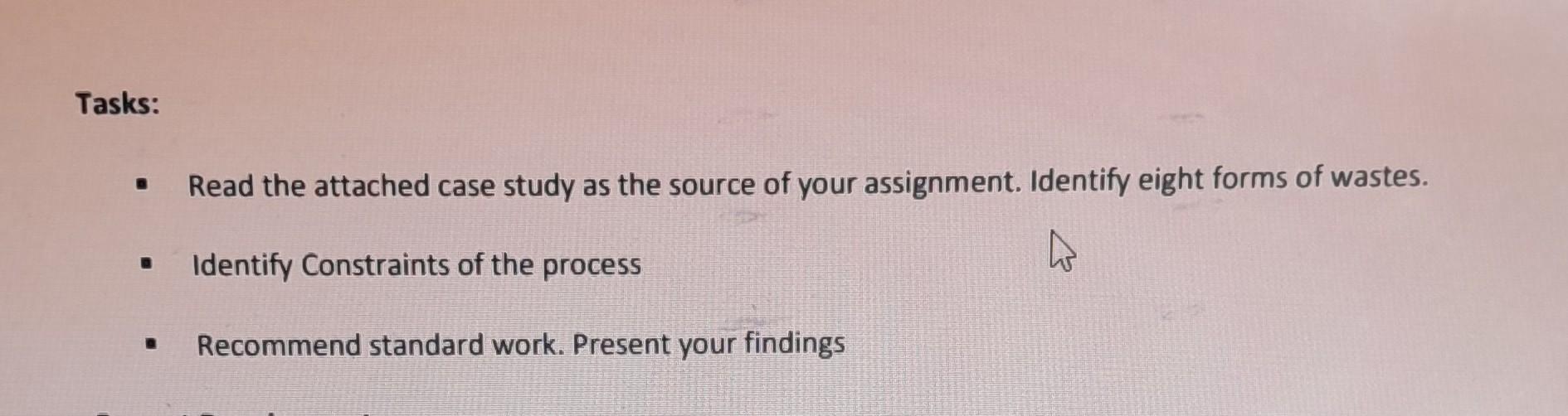
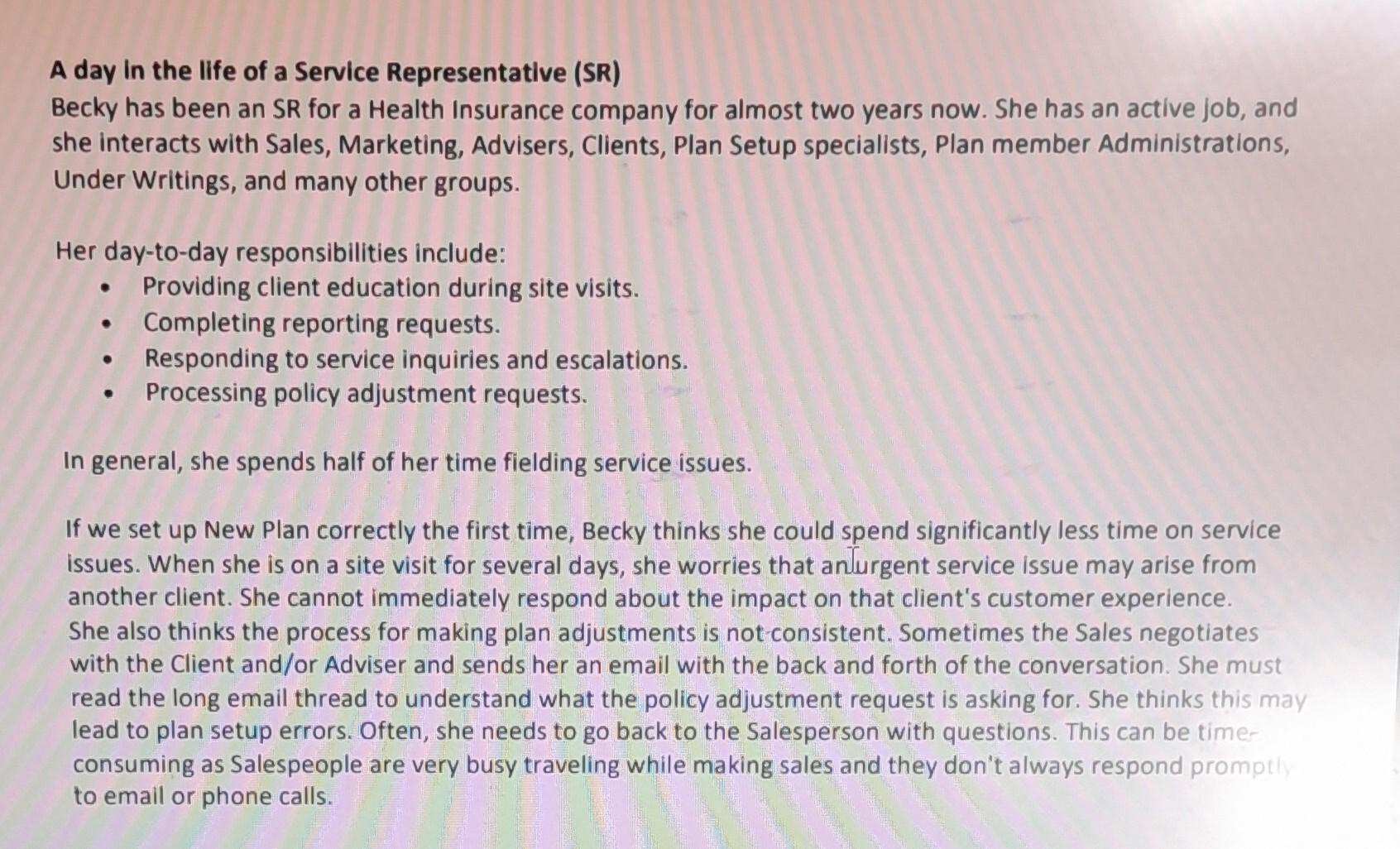
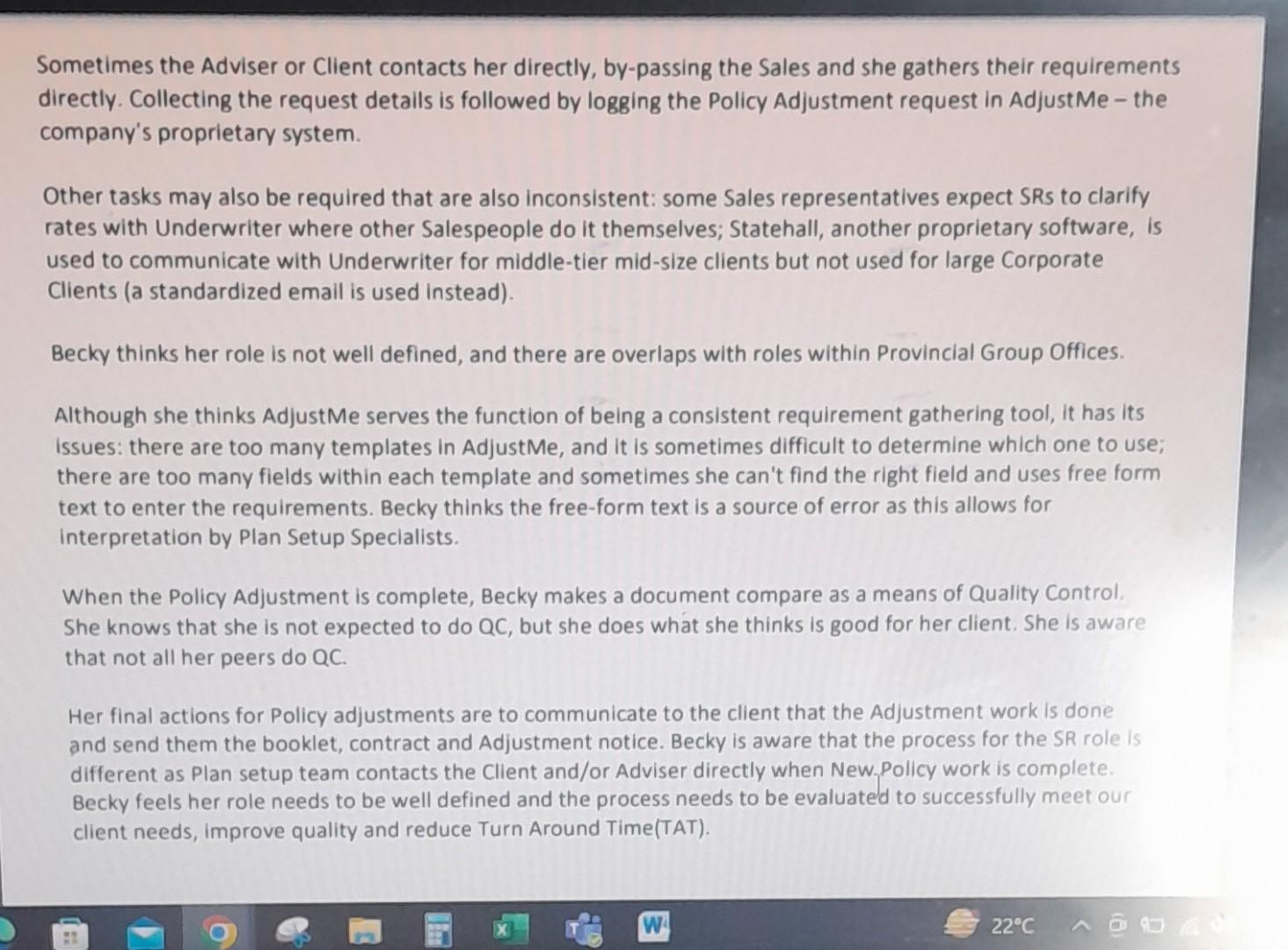
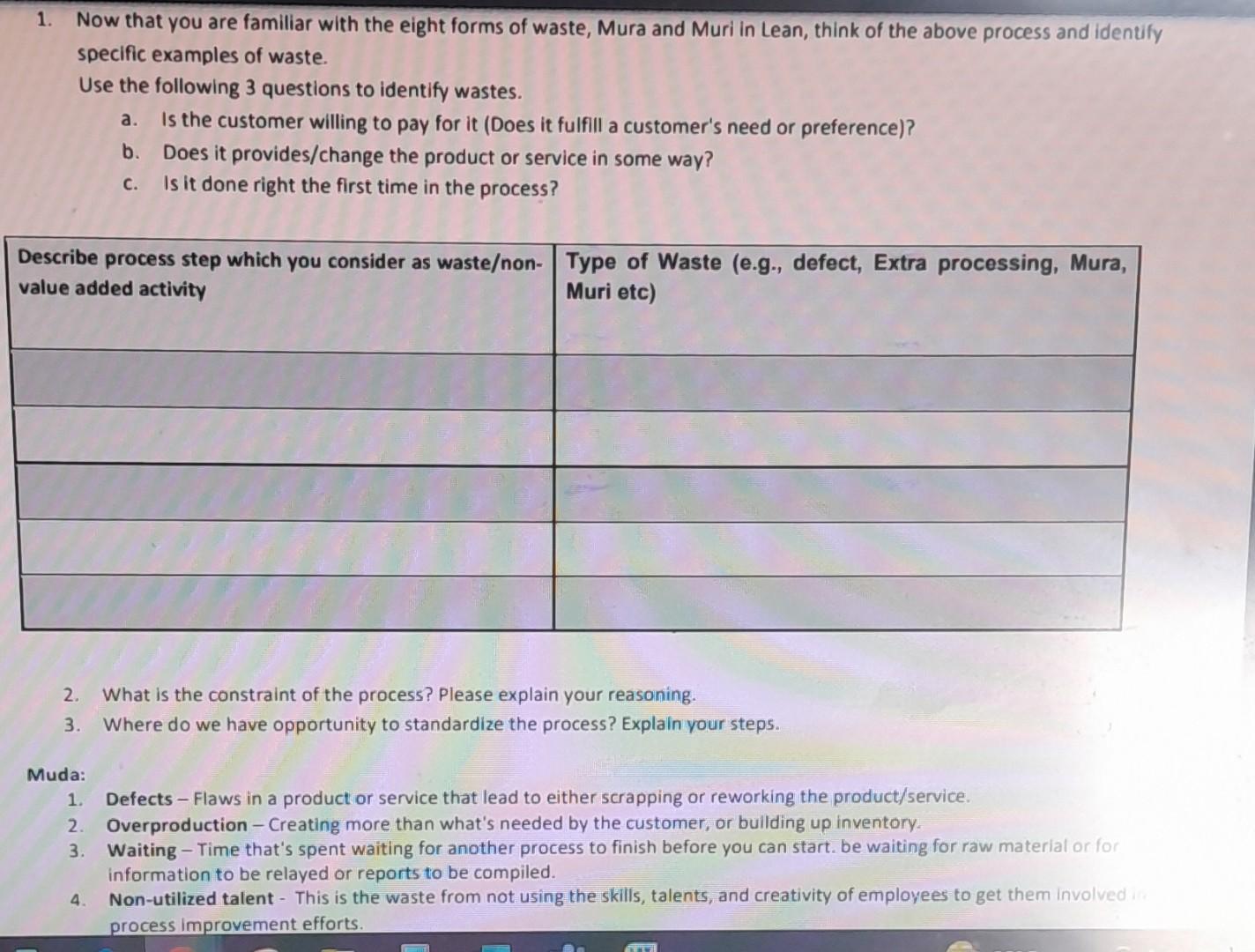
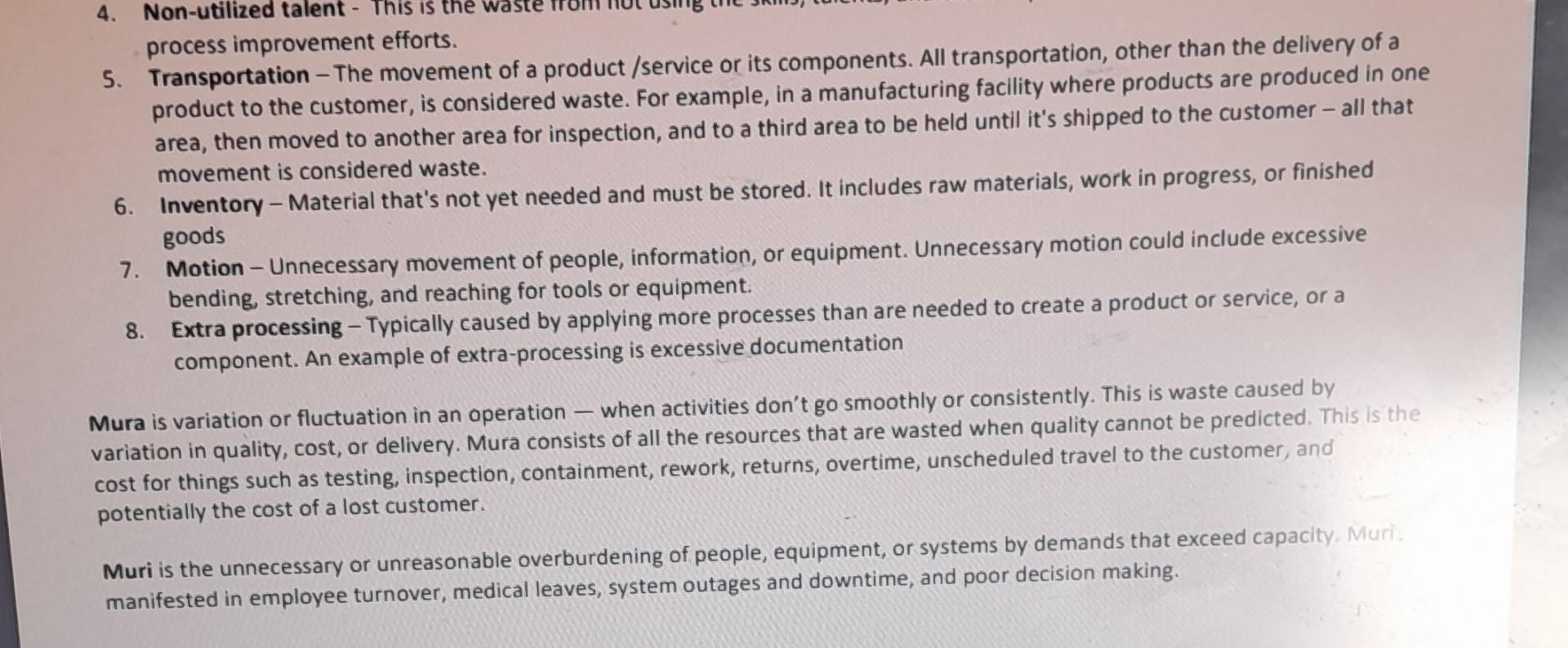
Tasks: - Read the attached case study as the source of your assignment. Identify eight forms of wastes. - Identify Constraints of the process - Recommend standard work. Present your findings A day in the life of a Service Representative (SR) Becky has been an SR for a Health Insurance company for almost two years now. She has an active job, and she interacts with Sales, Marketing, Advisers, Clients, Plan Setup specialists, Plan member Administrations, Under Writings, and many other groups. Her day-to-day responsibilities include: - Providing client education during site visits. - Completing reporting requests. - Responding to service inquiries and escalations. - Processing policy adjustment requests. In general, she spends half of her time fielding service issues. If we set up New Plan correctly the first time, Becky thinks she could spend significantly less time on service issues. When she is on a site visit for several days, she worries that anlurgent service issue may arise from another client. She cannot immediately respond about the impact on that client's customer experience. She also thinks the process for making plan adjustments is not consistent. Sometimes the Sales negotiates with the Client and/or Adviser and sends her an email with the back and forth of the conversation. She must read the long email thread to understand what the policy adjustment request is asking for. She thinks this may lead to plan setup errors. Often, she needs to go back to the Salesperson with questions. This can be timeconsuming as Salespeople are very busy traveling while making sales and they don't always respond promptl. to email or phone calls. Sometimes the Adviser or Client contacts her directly, by-passing the Sales and she gathers their requirements directly. Collecting the request details is followed by logging the Policy Adjustment request in AdjustMe - the company's proprietary system. Other tasks may also be required that are also inconsistent: some Sales representatives expect SRs to clarify rates with Underwriter where other Salespeople do it themselves; Statehall, another proprietary software, is used to communicate with Underwriter for middle-tier mid-size clients but not used for large Corporate Clients (a standardized email is used instead). Becky thinks her role is not well defined, and there are overlaps with roles within Provincial Group Offices. Although she thinks AdjustMe serves the function of being a consistent requirement gathering tool, it has its issues: there are too many templates in AdjustMe, and it is sometimes difficult to determine which one to use; there are too many fields within each template and sometimes she can't find the right field and uses free form text to enter the requirements. Becky thinks the free-form text is a source of error as this allows for interpretation by Plan Setup Specialists. When the Policy Adjustment is complete, Becky makes a document compare as a means of Quality Control. She knows that she is not expected to do QC, but she does what she thinks is good for her client. She is aware that not all her peers do QC. Her final actions for Policy adjustments are to communicate to the client that the Adjustment work is done and send them the booklet, contract and Adjustment notice. Becky is aware that the process for the SR role is different as Plan setup team contacts the Client and/or Adviser directly when New. Pollcy work is complete. Becky feels her role needs to be well defined and the process needs to be evaluated to successfully meet our client needs, improve quality and reduce Turn Around Time(TAT). 1. Now that you are familiar with the eight forms of waste, Mura and Muri in Lean, think of the above process and identify specific examples of waste. Use the following 3 questions to identify wastes. a. Is the customer willing to pay for it (Does it fulfill a customer's need or preference)? b. Does it provides/change the product or service in some way? c. Is it done right the first time in the process? 2. What is the constraint of the process? Please explain your reasoning. 3. Where do we have opportunity to standardize the process? Explain your steps. Muda: 1. Defects - Flaws in a product or service that lead to either scrapping or reworking the product/service. 2. Overproduction - Creating more than what's needed by the customer, or bullding up inventory. 3. Waiting - Time that's spent waiting for another process to finish before you can start. be waiting for raw material or for information to be relayed or reports to be compiled. 4. Non-utilized talent - This is the waste from not using the skills, talents, and creativity of employees to get them involved process improvement efforts. process improvement efforts. 5. Transportation - The movement of a product /service or its components. All transportation, other than the delivery of a product to the customer, is considered waste. For example, in a manufacturing facility where products are produced in one area, then moved to another area for inspection, and to a third area to be held until it's shipped to the customer - all that movement is considered waste. 6. Inventory - Material that's not yet needed and must be stored. It includes raw materials, work in progress, or finished goods 7. Motion - Unnecessary movement of people, information, or equipment. Unnecessary motion could include excessive bending, stretching, and reaching for tools or equipment. 8. Extra processing - Typically caused by applying more processes than are needed to create a product or service, or a component. An example of extra-processing is excessive documentation Mura is variation or fluctuation in an operation - when activities don't go smoothly or consistently. This is waste caused by variation in quality, cost, or delivery. Mura consists of all the resources that are wasted when quality cannot be predicted. This is the cost for things such as testing, inspection, containment, rework, returns, overtime, unscheduled travel to the customer, and potentially the cost of a lost customer. Muri is the unnecessary or unreasonable overburdening of people, equipment, or systems by demands that exceed capacity. Muri. manifested in employee turnover, medical leaves, system outages and downtime, and poor decision making
Step by Step Solution
There are 3 Steps involved in it

Get step-by-step solutions from verified subject matter experts
 Study Help