







Question: Temporary current assets are those assets that are Multiple Choice Capital assets. Semi-permanent. Self-liquidating Permanent assets When retained earnings are not sufficient to cover the
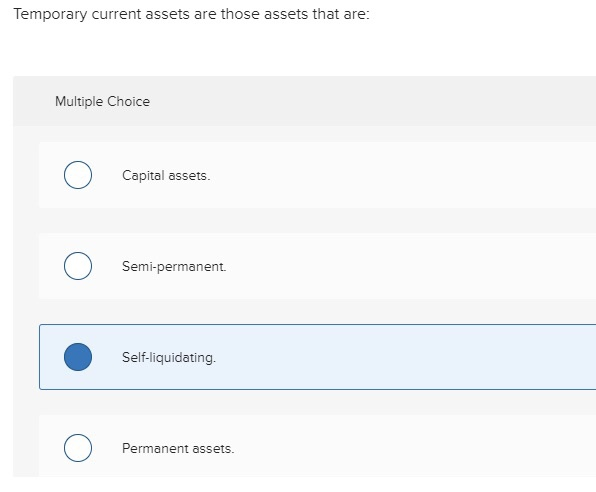
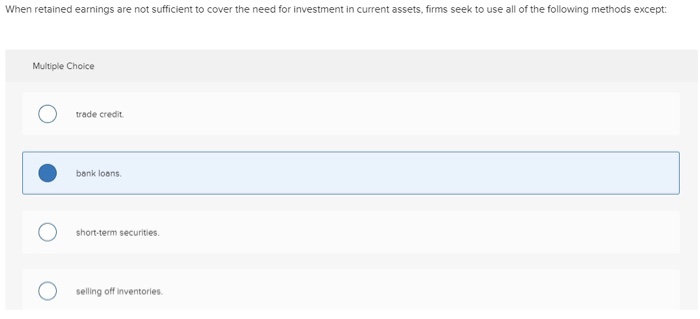
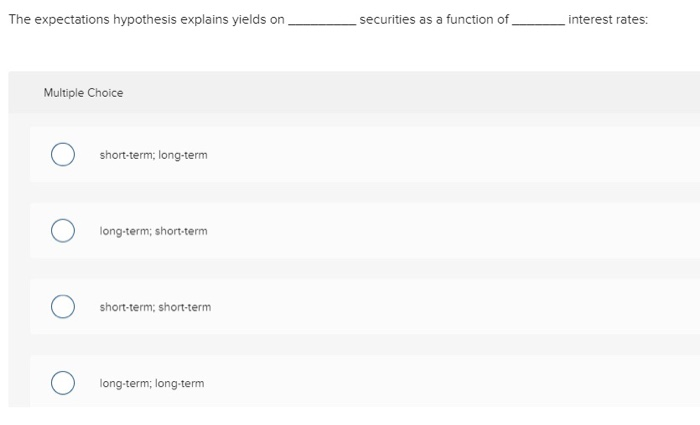
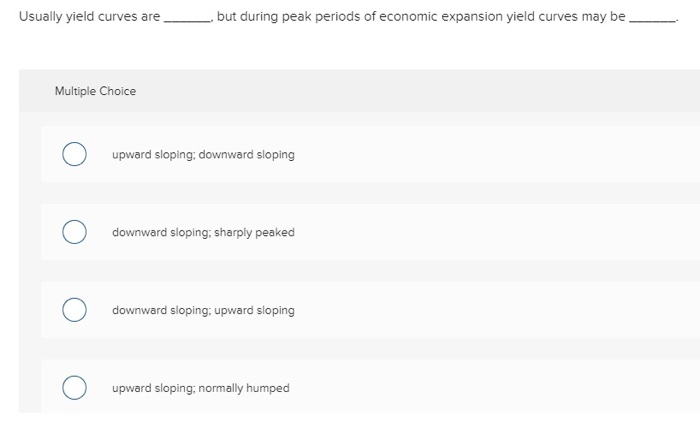
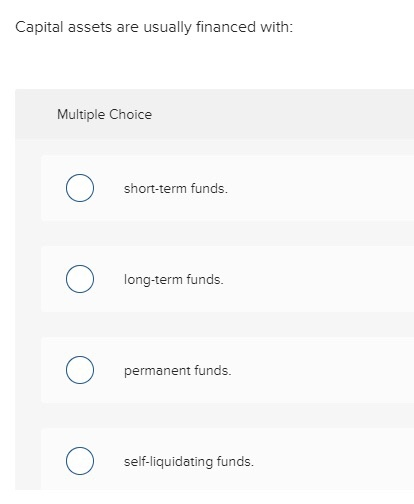
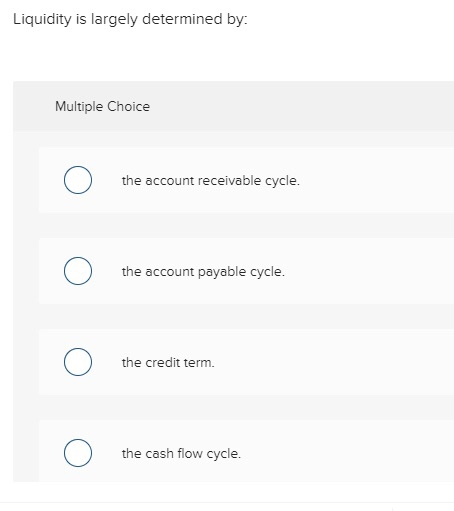
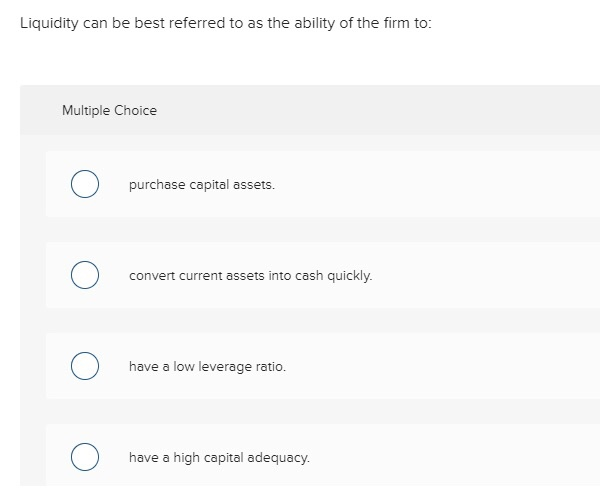
Temporary current assets are those assets that are Multiple Choice Capital assets. Semi-permanent. Self-liquidating Permanent assets When retained earnings are not sufficient to cover the need for investment in current assets, firms seek to use all of the following methods except: Multiple Choice trade credit bank loans short-term securities. selling off inventories Usually yield curves arebut during peak periods of economic expansion yield curves may be Multiple Choice upward sloping, downward sloping downward sloping: sharply peaked downward sloping; upward sloping upward sloping, normally humped Capital assets are usually financed with Multiple Choice short-term funds. long-term funds. permanent funds self-liquidating funds Liquidity is largely determined by: Multiple Choice the account receivable cycle. the account payable cycle. the credit term. the cash flow cycle. Liquidity can be best referred to as the ability of the firm to Multiple Choice purchase capital assets. convert current assets into cash quickly have a low leverage ratio have a high capital adequacy
Step by Step Solution
There are 3 Steps involved in it

Get step-by-step solutions from verified subject matter experts
 Study Help