







Question: that he was...wrestling with two problems. - What were those two problems? - What advice would you share for answering those two problems - Review
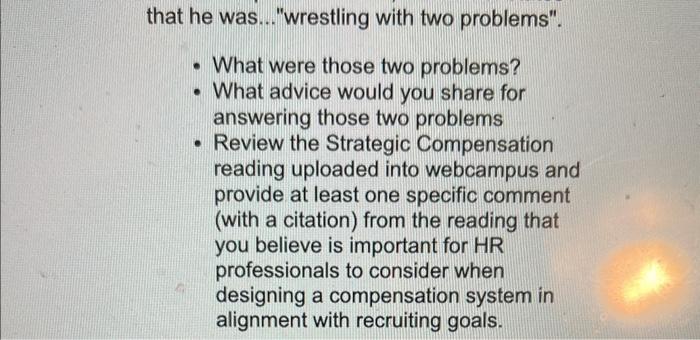
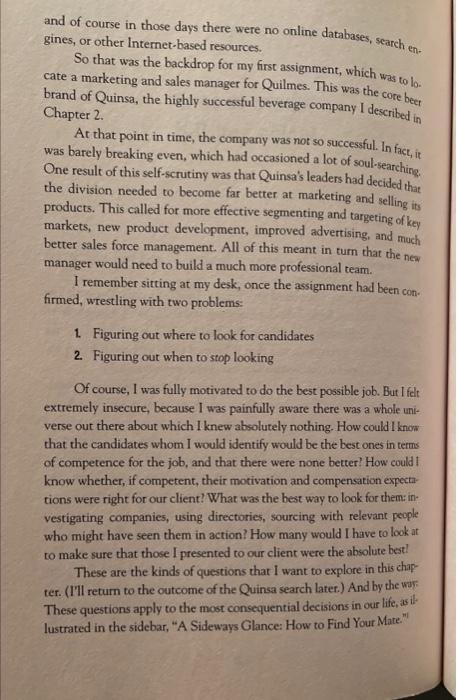
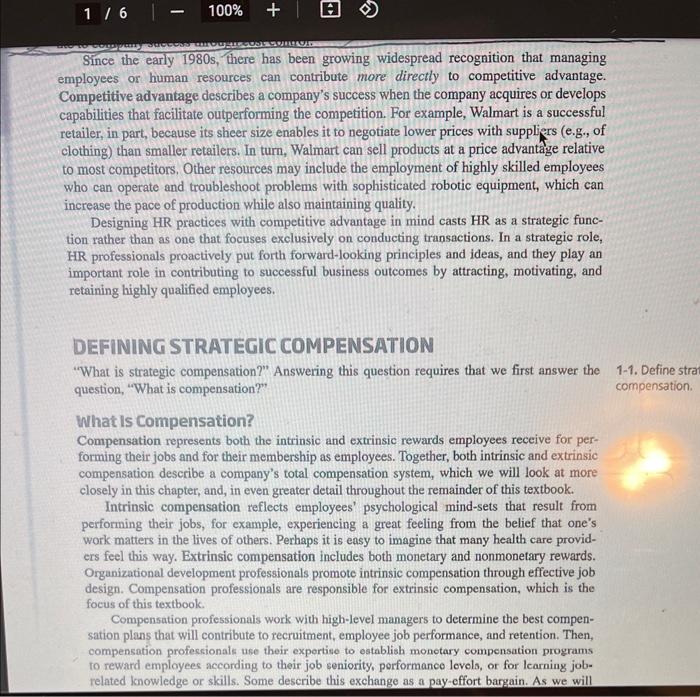
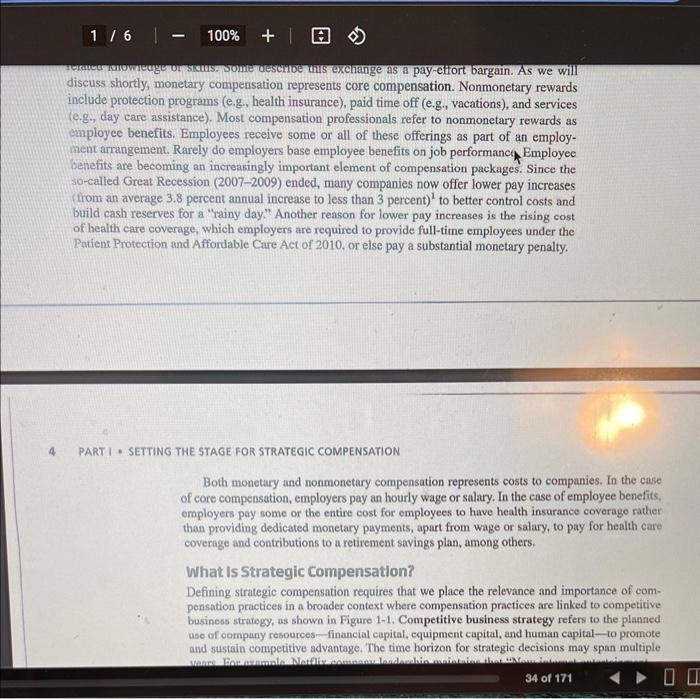
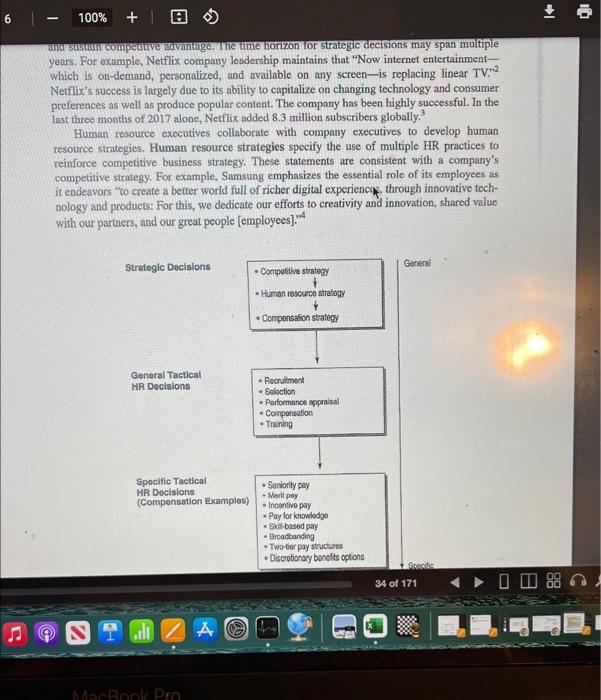
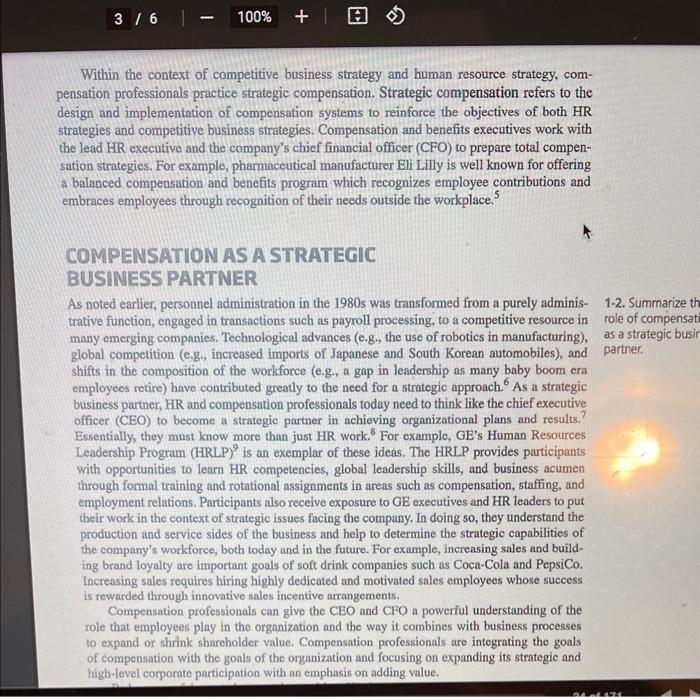
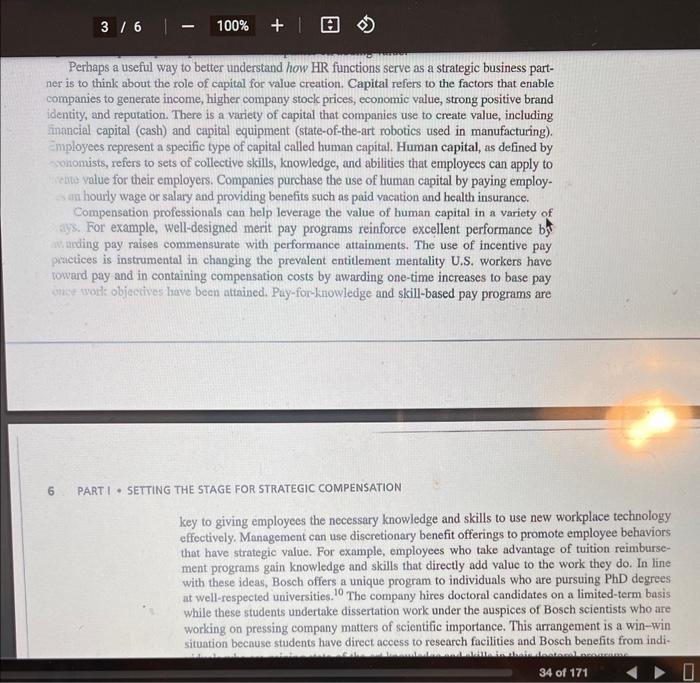
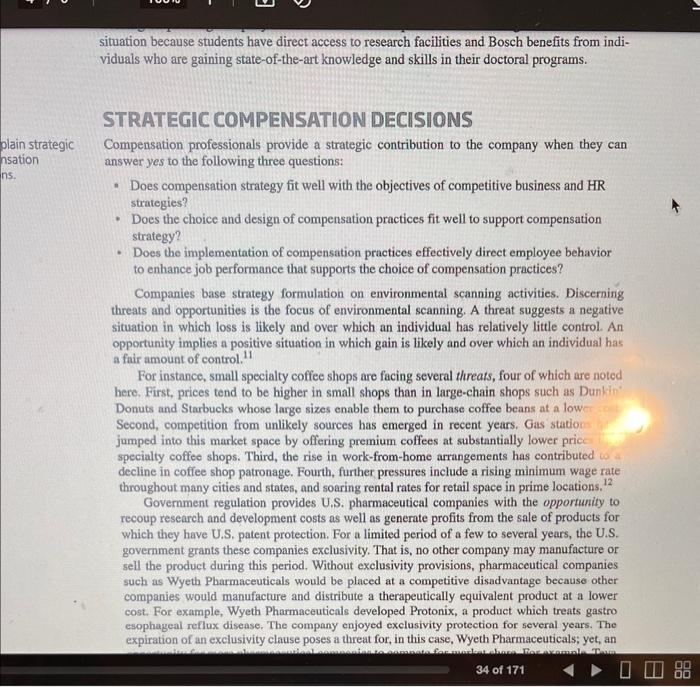
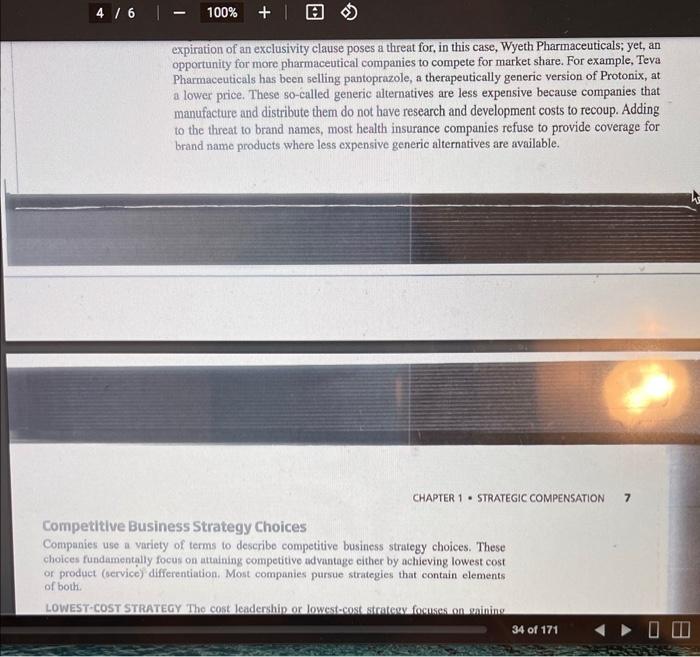
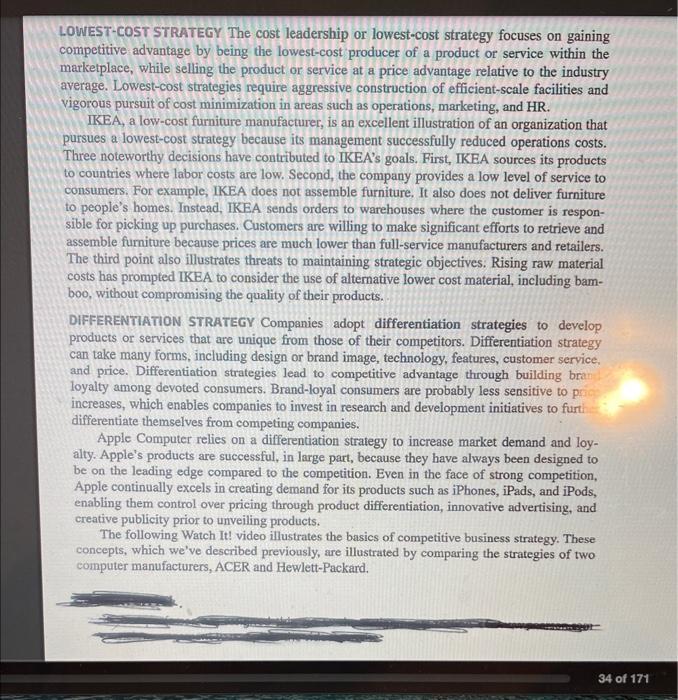
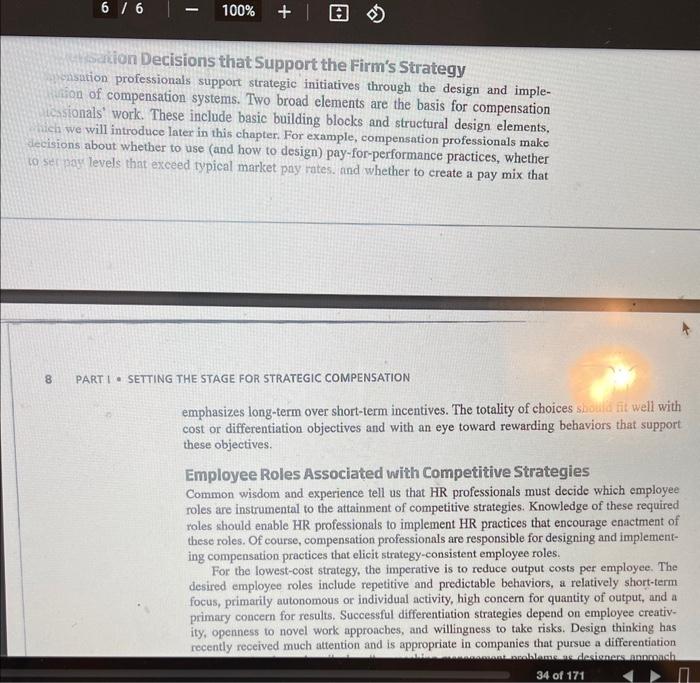
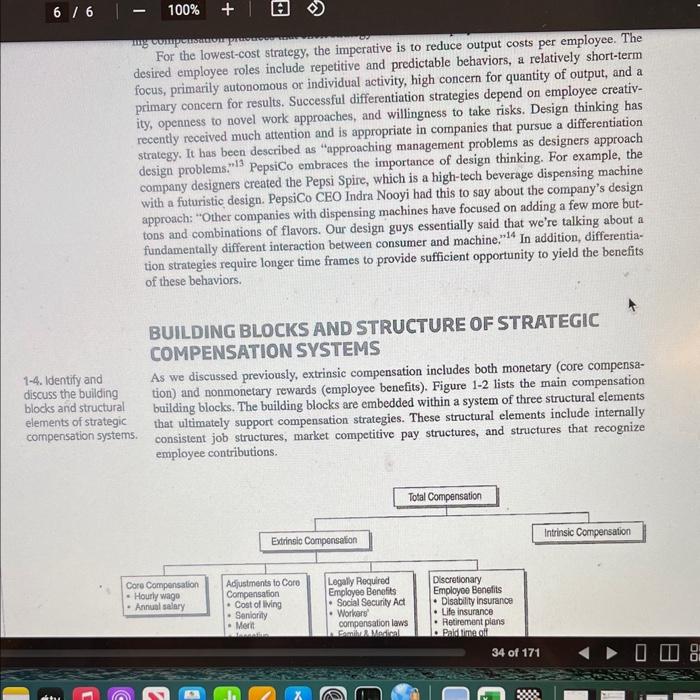
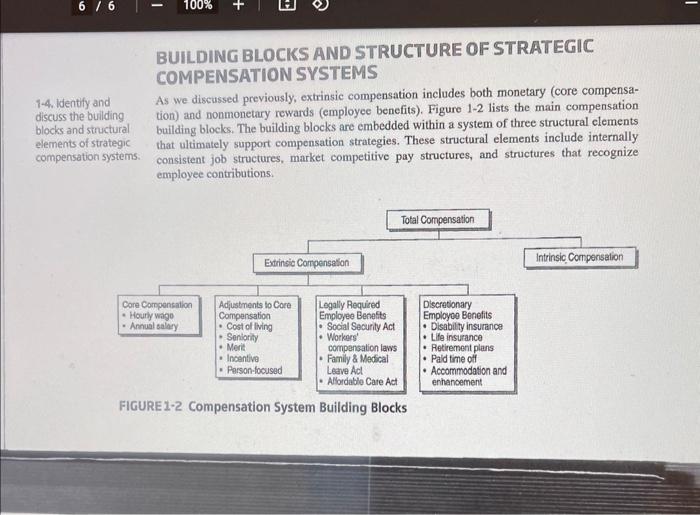
that he was..."wrestling with two problems". - What were those two problems? - What advice would you share for answering those two problems - Review the Strategic Compensation reading uploaded into webcampus and provide at least one specific comment (with a citation) from the reading that you believe is important for HR professionals to consider when designing a compensation system in alignment with recruiting goals. and of course in those days there were no online databases, search en gines, or other lntemet-based resources. So that was the backdrop for my first assignment, which was to lo. cate a marketing and sales manager for Quilmes. This was the core beet brand of Quinsa, the highly successful beverage company I described in Chapter 2. At that point in time, the company was not so successful. In fact, it was barely breaking even, which had occasioned a lot of soul-searching. One result of this self-scrutiny was that Quinsa's leaders had decided that the division needed to become far better at marketing and selling its products. This called for more effective segmenting and targeting of key markets, new product development, improved advertising, and much better sales force management. All of this meant in turn that the new manager would need to build a much more professional team. I remember sitting at my desk, once the assignment had been con. firmed, wrestling with two problems: 1. Figuring out where to look for candidates 2. Figuring out when to stop looking Of course, I was fully motivated to do the best possible job. But I felt extremely insecure, because I was painfully aware there was a whole universe out there about which Iknew absolutely nothing. How could 1 know that the candidates whom I would identify would be the best ones in terms of competence for the job, and that there were none better? How could I know whether, if competent, their motivation and compensation expectrtions were right for our client? What was the best way to look for them: investigating companies, using directories, sourcing with relevant people who might have seen them in action? How many would I have to look at to make sure that those I presented to our client were the absolute best? These are the kinds of questions that I want to explore in this chapter. (I'll return to the outcome of the Quinsa search later.) And by the war: These questions apply to the most consequential decisions in our life, as it lustrated in the sidebar, "A Sideways Glance: How to Find Yout Mate." Since the early 1980 s, there has been growing widespread recognition that managing employees or human resources can contribute more directly to competitive advantage. Competitive advantage describes a company's success when the company acquires or develops capabilities that facilitate outperforming the competition. For example, Walmart is a successfu] retailer, in part, because its sheer size enables it to negotiate lower prices with suppliers (e.g., of clothing) than smaller retailers. In turn, Walmart can sell products at a price advantage relative to most competitors, Other resources may include the employment of highly skilled employees who can operate and troubleshoot problems with sophisticated robotic equipment, which can increase the pace of production while also maintaining quality. Designing HR practices with competitive advantage in mind casts HR as a strategic function rather than as one that focuses exclusively on conducting transactions. In a strategic role, HR professionals proactively put forth forward-looking principles and ideas, and they play an important role in contributing to successful business outcomes by attracting, motivating, and retaining highly qualified employees. DEFININGSTRATEGIC COMPENSATION "What is strategic compensation?" Answering this question requires that we first answer the 1-1. Define stra question, "What is compensation?" compensation. What Is Compensation? Compensation represents both the intrinsic and extrinsic rewards employees receive for performing their jobs and for their membership as employees. Together, both intrinsic and extrinsic compensation describe a company's total compensation system, which we will look at more closely in this chapter, and, in even greater detail throughout the remainder of this textbook. Intrinsic compensation reflects employees' psychological mind-sets that result from performing their jobs, for example, experiencing a great feeling from the belief that one's work matters in the lives of others. Perhaps it is easy to imagine that many health care providers feel this way. Extrinsic compensation includes both monetary and nonmonetary rewards. Organizational development professionals promote intrinsic compensation through effective job design. Compensation professionals are responsible for extrinsic compensation, which is the focus of this textbook. Compensation professionals work with high-level managers to determine the best compensation plans that will contribute to recruitment, employee job performance, and retention. Then, compensation profecsionals use their exportise to establish monetary compensation programs to reward employees according to their job seniority, porformance levels, or for lcarning jobrelated lnowledge or skills. Some describe this exchange as a pay-effort bargain. As we will remaled inownedgh ot staws. some descinoe tils exchange as a pay-effort bargain. As we will discuss shortly, monetary compensation represents core compensation. Nonmonetary rewards include protection programs (e.g., health insurance), paid time off (e.g., vacations), and services (e.g., day care assistance). Most compensation professionals refer to nonmonetary rewards as omployee benefits. Employees receive some or all of these offerings as part of an employment arrangement. Rarely do employers base employee benefits on job performanci Employee benefits are becoming an increasingly important element of compensation packages. Since the so-called Great Recession (2007-2009) ended, many companies now offer lower pay increases (trom an average 3.8 percent annual increase to less than 3 percent) 1 to better control costs and build cash reserves for a "rainy day." Another reason for lower pay increases is the rising cost of health care coverage, which employers are required to provide full-time employees under the Patient Protection and Affordable Care Act of 2010, or else pay a substantial monetary penalty. 4 PART I - SETTING THE STAGE FOR STRATEGIC COMPENSATION Both monetary and nonmonetary compensation represents costs to companies. In the case of core compensation, employers pay an hourly wage or salary. In the case of employee benefits, employers pay nome or the entire cost for employees to have health insurance coverage rather than providing dedicated monetary payments, apart from wage or salary, to pay for health care coverage and contributions to a retirement savings plan, among others. What Is Strategic Compensation? Defining strategic compensation requires that we place the relevance and importance of compensation practices in a broader context where compensation practices are linked to competitive business strategy, as shown in Figure 1-1. Competitive business strategy refers to the planned use of company rosources - financial capital, cquipment capital, and human capital - to promote and sustain competitive advantage. The time horizon for strategic decisions may span multiple ant sustan compeatuve advannoge. the time borizon for strategic decisions may span multiple years. For example, Netflix company leadership maintains that "Now internet entertainmentwhich is on-demand, personalized, and available on any screen-is replacing linear TV.: 2 Netflix's success is largely due to its ability to capitalize on changing technology and consumer preferences as well as produce popular content. The company has been highly successful. In the last three months of 2017 alone, Netflix added 8.3 million subscribers globally. 3 Human resource executives collaborate with company executives to develop human resource strategies. Human resource strategies specify the use of multiple HR practices to reinforce competitive business strategy. These statements are consistent with a company's competitive strategy. For example, Samsung emphasizes the essential role of its employees as it endeavors "to create a better worid full of richer digital experience. through innovative technology and products: For this, we dedicate our efforts to creativity and innovation, shared value with our partners, and our great people [employees]. Within the context of competitive business strategy and human resource strategy, compensation professionals practice strategic compensation. Strategic compensation refers to the design and implementation of compensation systems to reinforce the objectives of both HR strategies and competitive business strategies. Compensation and benefits executives work with the lead HR executive and the company's chief financial officer (CFO) to prepare total compensation strategies. For examplo, pharmaceutical manufacturer Eli Lilly is well known for offering a balanced compensation and benefits program which recognizes employee contributions and embraces employees through recognition of their needs outside the workplace. 5 COMPENSATION AS A STRATEGIC BUSINESS PARTNER As noted earlier, personnel administration in the 1980s was transformed from a purely adminis- 1-2. Summarize th trative function, engaged in transactions such as payroll processing, to a competitive resource in role of compensati many emerging companies. Technological advances (e.g, the use of robotics in manufacturing), as a strategic busi global competition (e.g., increased imports of Japanese and South Korean automobiles), and partner. shifts in the composition of the workforce (e.g., a gap in leadership as many baby boom era employees retire) have contributed greatly to the need for a strategic approach. 6 As a strategic business partner, HR and compensation professionals today need to think like the chief executive officer (CEO) to become a strategic partner in achieving organizational plans and results.? Essentially, they must know more than just HR work. 8 For example, GE's Human Resources Leadership Program (HRLP) 9 is an exemplar of these ideas. The HRLP provides participants with opportunities to learn HR competencies, global leadership skills, and business acumen through formal training and rotational assignments in areas such as compensation, staffing, and employment relations. Participants also receive exposure to GE executives and HR leaders to put their work in the context of strategic issues facing the company. In doing so, they understand the production and service sides of the business and help to determine the strategic capabilities of the company's workforce, both today and in the future. For example, increasing sales and building brand loyalty are important goals of soft drink companies such as Coca-Cola and PepsiCo. Increasing sales requires hiring highly dedicated and motivated sales employees whose success is rewarded through innovative sales incentive arrangements. Compensation professionals can give the CEO and CFO a powerful understanding of the role that employees play in the organization and the way it combines with business processes to expand or shrink shareholder value. Compensation professionals are integrating the goals of compensation with the goals of the organization and focusing on expanding its strategic and high-level corporate participation with an emphasis on adding value. Perhaps a useful way to better understand how HR functions serve as a strategic business partner is to think about the role of capital for value creation. Capital refers to the factors that enable companies to generate income, higher company stock prices, economic value, strong positive brand identity, and reputation. There is a variety of capital that companies use to create value, including annancial capital (cash) and capital equipment (state-of-the-art robotics used in manufacturing). - mployees represent a specific type of capital called human capital. Human capital, as defined by conomists, refers to sets of collective skills, knowledge, and abilities that employees can apply to ieitu value for their employers. Companies purchase the use of human capital by paying employsun hourly wage or salary and providing benefits such as paid vacation and health insurance. Compensation professionals can help leverage the value of human capital in a variety of ays. For example, well-designed merit pay programs reinforce excellent performance by Wirding pay raises commensurate with performance attainments. The use of incentive pay practices is instrumental in changing the prevalent entitlement mentality U.S. workers have woward pay and in containing compensation costs by awarding one-time increases to base pay whcy woad: objectives have been attained. Pay-for-knowledge and skill-based pay programs are 6. PART I - SETTING THE STAGE FOR STRATEGIC COMPENSATION key to giving employees the necessary knowledge and skills to use new workplace technology effectively. Management can use discretionary benefit offerings to promote employee behaviors that have strategic value. For example, employees who take advantage of tuition reimbursement programs gain knowledge and skills that directly add value to the work they do. In line with these ideas, Bosch offers a unique program to individuals who are pursuing PhD degrees at well-respected universities. 10 The company hires doctoral candidates on a limited-term basis while these students undertake dissertation work under the auspices of Bosch scientists who are working on pressing company matters of scientific importance. This arrangement is a win-win situation because students have direct access to research facilities and Bosch benefits from indi- situation because students have direct access to research facilities and Bosch benefits from individuals who are gaining state-of-the-art knowledge and skills in their doctoral programs. STRATEGIC COMPENSATION DECISIONS Compensation professionals provide a strategic contribution to the company when they can answer yes to the following three questions: - Does compensation strategy fit well with the objectives of competitive business and HR strategies? - Does the choice and design of compensation practices fit well to support compensation strategy? - Does the implementation of compensation practices effectively direct employee behavior to enhance job performance that supports the choice of compensation practices? Companies base strategy formulation on environmental scanning activities. Discerning threats and opportunities is the focus of environmental scanning. A threat suggests a negative situation in which loss is likely and over which an individual has relatively little control. An opportunity implies a positive situation in which gain is likely and over which an individual has a fair amount of control. 11 For instance, small specialty coffee shops are facing several threats, four of which are noted here. First, prices tend to be higher in small shops than in large-chain shops such as Dunkin' Donuts and Starbucks whose large sizes enable them to purchase coffee beans at a lowc Second, competition from unlikely sources has emerged in recent years. Gas statio jumped into this market space by offering premium coffees at substantially lower price specialty coffee shops. Third, the rise in work-from-home arrangements has contributed decline in coffee shop patronage. Fourth, further pressures include a rising minimum wage rate throughout many cities and states, and soaring rental rates for retail space in prime locations. 12 Government regulation provides U.S. pharmaceutical companies with the opportunity to recoup research and development costs as well as generate profits from the sale of products for which they have U.S. patent protection. For a limited period of a few to several years, the U.S. government grants these companies exclusivity. That is, no other company may manufacture or sell the product during this period. Without exclusivity provisions, pharmaceutical companies such as Wyeth Pharmaceuticals would be placed at a competitive disadvantage because other companies would manufacture and distribute a therapeutically equivalent product at a lower cost. For example, Wyeth Pharmaceuticals developed Protonix, a product which treats gastro esophageal reflux disease. The company enjoyed exclusivity protection for several years. The expiration of an exclusivity clause poses a threat for, in this case, Wyeth Pharmaceuticals; yet, an expiration of an exclusivity clause poses a threat for, in this case, Wyeth Pharmaceuticals; yet, an opportunity for more pharmaceutical companies to compete for market share. For example, Teva Pharmaceuticals has been selling pantoprazole, a therapeutically generic version of Protonix, at a lower price. These so-called generic alternatives are less expensive because companies that manufacture and distribute them do not have research and development costs to recoup. Adding to the threat to brand names, most health insurance companies refuse to provide coverage for brand name products where less expensive generic alternatives are available. CHAPTER 1 - STRATEGIC COMPENSATION 7 Competive Business Strategy Choices Companies use a variety of terms to describe competitive business strategy choices. These choices fundamentally focus on attaining competitive advantage cither by achieving lowest cost of product (oervice) differentiation. Most companies pursue strategies that contain elements of both. LOWEST-COST STRATEGY The cost leadership or lowestacost strategy focuses-an gaining LOWEST-COST STRATEGY The cost leadership or lowest-cost strategy focuses on gaining competitive advantage by being the lowest-cost producer of a product or service within the marketplace, while selling the product or service at a price advantage relative to the industry average. Lowest-cost strategies require aggressive construction of efficient-scale facilities and vigorous pursuit of cost minimization in areas such as operations, marketing, and HR. IKEA, a low-cost furniture manufacturer, is an excellent illustration of an organization that pursues a lowest-cost strategy because its management successfully reduced operations costs. Three noteworthy decisions have contributed to IKEA's goals. First, IKEA sources its products to countries where labor costs are low. Second, the company provides a low level of service to consumers. For example, IKEA does not assemble furniture. It also does not deliver furniture to people's homes. Instead, IKEA sends orders to warehouses where the customer is responsible for picking up purchases. Customers are willing to make significant efforts to retrieve and assemble fumiture because prices are much lower than full-service manufacturers and retailers. The third point also illustrates threats to maintaining strategic objectives: Rising raw material costs has prompted IKEA to consider the use of alternative lower cost material, including bamboo, without compromising the quality of their products. DIFFERENTIATION STRATEGY Companies adopt differentiation strategies to develop products or services that are unique from those of their competitors. Differentiation strategy can take many forms, including design or brand image, technology, features, customer service. and price. Differentiation strategies lead to competitive advantage through building brat loyalty among devoted consumers. Brand-loyal consumers are probably less sensitive to p: increases, which enables companies to invest in research and development initiatives to furt differentiate themselves from competing companies. Apple Computer relies on a differentiation strategy to increase market demand and loyalty. Apple's products are successful, in large part, because they have always been designed to be on the leading edge compared to the competition. Even in the face of strong competition, Apple continually excels in creating demand for its products such as iPhones, iPads, and iPods, enabling them control over pricing through product differentiation, innovative advertising, and creative publicity prior to unveiling products. The following Watch It! video illustrates the basics of competitive business strategy. These concepts, which we've described previously, are illustrated by comparing the strategies of two computer manufacturers, ACER and Hewlett-Packard. wion Decisions that Support the Firm's Strategy shation professionals support strategic initiatives through the design and implevision of compensation systems. Two broad elements are the basis for compensation itessionals' work. These include basic building blocks and structural design elements, which we will introduce later in this chapter. For example, compensation professionals make wecisions about whether to use (and how to design) pay-for-performance practices, whether to ser say levels that exceed typical market pay rates. and whether to create a pay mix that 8 PARTI - SETTING THE STAGE FOR STRATEGIC COMPENSATION emphasizes long-term over short-term incentives. The totality of choices shouna fit well with cost or differentiation objectives and with an eye toward rewarding behaviors that support these objectives. Employee Roles Associated with Competitive Strategies Common wisdom and experience tell us that HR professionals must decide which employee roles are instrumental to the attainment of competitive strategies. Knowledge of these required roles should enable HR professionals to implement HR practices that encourage enactment of these roles. Of course, compensation professionals are responsible for designing and implementing compensation practices that elicit strategy-consistent employee roles. For the lowest-cost strategy, the imperative is to reduce output costs per employee. The desired employee roles include repetitive and predictable behaviors, a relatively short-term focus, primarily autonomous or individual activity, high concern for quantity of output, and a primary concern for results, Successful differentiation strategies depend on employee creativity, openness to novel work approaches, and willingness to take risks. Design thinking has recently received much attention and is appropriate in companies that pursue a differentiation For the lowest-cost strategy, the imperative is to reduce output costs per employee. Ite desired employee roles include repetitive and predictable behaviors, a relatively short-term focus, primarily autonomous or individual activity, high concern for quantity of output, and a primary concern for results. Successful differentiation strategies depend on employee creativity, openness to novel work approaches, and willingness to take risks. Design thinking has recently received much attention and is appropriate in companies that pursue a differentiation strategy. It has been described as "approaching management problems as designers approach design problems.. PepsiCo embraces the importance of design thinking. For example, the company designers created the Pepsi Spire, which is a high-tech beverage dispensing machine with a futuristic design. PepsiCo CEO Indra Nooyi had this to say about the company's design approach: "Other companies with dispensing machines have focused on adding a few more buttons and combinations of flavors. Our design guys essentially said that we're talking about a fundamentally different interaction between consumer and machine."14 In addition, differentiation strategies require longer time frames to provide sufficient opportunity to yield the benefits of these behaviors. BUILDING BLOCKS AND STRUCTURE OF STRATEGIC COMPENSATION SYSTEMS 1-4. Identify and As we discussed previously, extrinsic compensation includes both monetary (core compensadiscuss the building tion) and nonmonetary rewards (employee benefits). Figure 1-2 lists the main compensation blocks and structural building blocks. The building blocks are embedded within a system of three structural elements elements of strategic that ultimately support compensation strategies. These structural elements include internally compensation systems. consistent job structures, market competitive pay structures, and structures that recognize employee contributions. BUILDING BLOCKS AND STRUCTURE OF STRATEGIC COMPENSATION SYSTEMS 1-4. Identify and As we discussed previously, extrinsic compensation includes both monetary (core compensadiscuss the building tion) and nonmonetary rewards (employee benefits). Figure 1-2 lists the main compensation blocks and structural building blocks. The building blocks are embedded within a system of three structural clements elements of strategic that ultimately support compensation strategies. These structural elements include internally compensation systems. consistent job structures, market competitive pay structures, and structures that recognize employee contributions. that he was..."wrestling with two problems". - What were those two problems? - What advice would you share for answering those two problems - Review the Strategic Compensation reading uploaded into webcampus and provide at least one specific comment (with a citation) from the reading that you believe is important for HR professionals to consider when designing a compensation system in alignment with recruiting goals. and of course in those days there were no online databases, search en gines, or other lntemet-based resources. So that was the backdrop for my first assignment, which was to lo. cate a marketing and sales manager for Quilmes. This was the core beet brand of Quinsa, the highly successful beverage company I described in Chapter 2. At that point in time, the company was not so successful. In fact, it was barely breaking even, which had occasioned a lot of soul-searching. One result of this self-scrutiny was that Quinsa's leaders had decided that the division needed to become far better at marketing and selling its products. This called for more effective segmenting and targeting of key markets, new product development, improved advertising, and much better sales force management. All of this meant in turn that the new manager would need to build a much more professional team. I remember sitting at my desk, once the assignment had been con. firmed, wrestling with two problems: 1. Figuring out where to look for candidates 2. Figuring out when to stop looking Of course, I was fully motivated to do the best possible job. But I felt extremely insecure, because I was painfully aware there was a whole universe out there about which Iknew absolutely nothing. How could 1 know that the candidates whom I would identify would be the best ones in terms of competence for the job, and that there were none better? How could I know whether, if competent, their motivation and compensation expectrtions were right for our client? What was the best way to look for them: investigating companies, using directories, sourcing with relevant people who might have seen them in action? How many would I have to look at to make sure that those I presented to our client were the absolute best? These are the kinds of questions that I want to explore in this chapter. (I'll return to the outcome of the Quinsa search later.) And by the war: These questions apply to the most consequential decisions in our life, as it lustrated in the sidebar, "A Sideways Glance: How to Find Yout Mate." Since the early 1980 s, there has been growing widespread recognition that managing employees or human resources can contribute more directly to competitive advantage. Competitive advantage describes a company's success when the company acquires or develops capabilities that facilitate outperforming the competition. For example, Walmart is a successfu] retailer, in part, because its sheer size enables it to negotiate lower prices with suppliers (e.g., of clothing) than smaller retailers. In turn, Walmart can sell products at a price advantage relative to most competitors, Other resources may include the employment of highly skilled employees who can operate and troubleshoot problems with sophisticated robotic equipment, which can increase the pace of production while also maintaining quality. Designing HR practices with competitive advantage in mind casts HR as a strategic function rather than as one that focuses exclusively on conducting transactions. In a strategic role, HR professionals proactively put forth forward-looking principles and ideas, and they play an important role in contributing to successful business outcomes by attracting, motivating, and retaining highly qualified employees. DEFININGSTRATEGIC COMPENSATION "What is strategic compensation?" Answering this question requires that we first answer the 1-1. Define stra question, "What is compensation?" compensation. What Is Compensation? Compensation represents both the intrinsic and extrinsic rewards employees receive for performing their jobs and for their membership as employees. Together, both intrinsic and extrinsic compensation describe a company's total compensation system, which we will look at more closely in this chapter, and, in even greater detail throughout the remainder of this textbook. Intrinsic compensation reflects employees' psychological mind-sets that result from performing their jobs, for example, experiencing a great feeling from the belief that one's work matters in the lives of others. Perhaps it is easy to imagine that many health care providers feel this way. Extrinsic compensation includes both monetary and nonmonetary rewards. Organizational development professionals promote intrinsic compensation through effective job design. Compensation professionals are responsible for extrinsic compensation, which is the focus of this textbook. Compensation professionals work with high-level managers to determine the best compensation plans that will contribute to recruitment, employee job performance, and retention. Then, compensation profecsionals use their exportise to establish monetary compensation programs to reward employees according to their job seniority, porformance levels, or for lcarning jobrelated lnowledge or skills. Some describe this exchange as a pay-effort bargain. As we will remaled inownedgh ot staws. some descinoe tils exchange as a pay-effort bargain. As we will discuss shortly, monetary compensation represents core compensation. Nonmonetary rewards include protection programs (e.g., health insurance), paid time off (e.g., vacations), and services (e.g., day care assistance). Most compensation professionals refer to nonmonetary rewards as omployee benefits. Employees receive some or all of these offerings as part of an employment arrangement. Rarely do employers base employee benefits on job performanci Employee benefits are becoming an increasingly important element of compensation packages. Since the so-called Great Recession (2007-2009) ended, many companies now offer lower pay increases (trom an average 3.8 percent annual increase to less than 3 percent) 1 to better control costs and build cash reserves for a "rainy day." Another reason for lower pay increases is the rising cost of health care coverage, which employers are required to provide full-time employees under the Patient Protection and Affordable Care Act of 2010, or else pay a substantial monetary penalty. 4 PART I - SETTING THE STAGE FOR STRATEGIC COMPENSATION Both monetary and nonmonetary compensation represents costs to companies. In the case of core compensation, employers pay an hourly wage or salary. In the case of employee benefits, employers pay nome or the entire cost for employees to have health insurance coverage rather than providing dedicated monetary payments, apart from wage or salary, to pay for health care coverage and contributions to a retirement savings plan, among others. What Is Strategic Compensation? Defining strategic compensation requires that we place the relevance and importance of compensation practices in a broader context where compensation practices are linked to competitive business strategy, as shown in Figure 1-1. Competitive business strategy refers to the planned use of company rosources - financial capital, cquipment capital, and human capital - to promote and sustain competitive advantage. The time horizon for strategic decisions may span multiple ant sustan compeatuve advannoge. the time borizon for strategic decisions may span multiple years. For example, Netflix company leadership maintains that "Now internet entertainmentwhich is on-demand, personalized, and available on any screen-is replacing linear TV.: 2 Netflix's success is largely due to its ability to capitalize on changing technology and consumer preferences as well as produce popular content. The company has been highly successful. In the last three months of 2017 alone, Netflix added 8.3 million subscribers globally. 3 Human resource executives collaborate with company executives to develop human resource strategies. Human resource strategies specify the use of multiple HR practices to reinforce competitive business strategy. These statements are consistent with a company's competitive strategy. For example, Samsung emphasizes the essential role of its employees as it endeavors "to create a better worid full of richer digital experience. through innovative technology and products: For this, we dedicate our efforts to creativity and innovation, shared value with our partners, and our great people [employees]. Within the context of competitive business strategy and human resource strategy, compensation professionals practice strategic compensation. Strategic compensation refers to the design and implementation of compensation systems to reinforce the objectives of both HR strategies and competitive business strategies. Compensation and benefits executives work with the lead HR executive and the company's chief financial officer (CFO) to prepare total compensation strategies. For examplo, pharmaceutical manufacturer Eli Lilly is well known for offering a balanced compensation and benefits program which recognizes employee contributions and embraces employees through recognition of their needs outside the workplace. 5 COMPENSATION AS A STRATEGIC BUSINESS PARTNER As noted earlier, personnel administration in the 1980s was transformed from a purely adminis- 1-2. Summarize th trative function, engaged in transactions such as payroll processing, to a competitive resource in role of compensati many emerging companies. Technological advances (e.g, the use of robotics in manufacturing), as a strategic busi global competition (e.g., increased imports of Japanese and South Korean automobiles), and partner. shifts in the composition of the workforce (e.g., a gap in leadership as many baby boom era employees retire) have contributed greatly to the need for a strategic approach. 6 As a strategic business partner, HR and compensation professionals today need to think like the chief executive officer (CEO) to become a strategic partner in achieving organizational plans and results.? Essentially, they must know more than just HR work. 8 For example, GE's Human Resources Leadership Program (HRLP) 9 is an exemplar of these ideas. The HRLP provides participants with opportunities to learn HR competencies, global leadership skills, and business acumen through formal training and rotational assignments in areas such as compensation, staffing, and employment relations. Participants also receive exposure to GE executives and HR leaders to put their work in the context of strategic issues facing the company. In doing so, they understand the production and service sides of the business and help to determine the strategic capabilities of the company's workforce, both today and in the future. For example, increasing sales and building brand loyalty are important goals of soft drink companies such as Coca-Cola and PepsiCo. Increasing sales requires hiring highly dedicated and motivated sales employees whose success is rewarded through innovative sales incentive arrangements. Compensation professionals can give the CEO and CFO a powerful understanding of the role that employees play in the organization and the way it combines with business processes to expand or shrink shareholder value. Compensation professionals are integrating the goals of compensation with the goals of the organization and focusing on expanding its strategic and high-level corporate participation with an emphasis on adding value. Perhaps a useful way to better understand how HR functions serve as a strategic business partner is to think about the role of capital for value creation. Capital refers to the factors that enable companies to generate income, higher company stock prices, economic value, strong positive brand identity, and reputation. There is a variety of capital that companies use to create value, including annancial capital (cash) and capital equipment (state-of-the-art robotics used in manufacturing). - mployees represent a specific type of capital called human capital. Human capital, as defined by conomists, refers to sets of collective skills, knowledge, and abilities that employees can apply to ieitu value for their employers. Companies purchase the use of human capital by paying employsun hourly wage or salary and providing benefits such as paid vacation and health insurance. Compensation professionals can help leverage the value of human capital in a variety of ays. For example, well-designed merit pay programs reinforce excellent performance by Wirding pay raises commensurate with performance attainments. The use of incentive pay practices is instrumental in changing the prevalent entitlement mentality U.S. workers have woward pay and in containing compensation costs by awarding one-time increases to base pay whcy woad: objectives have been attained. Pay-for-knowledge and skill-based pay programs are 6. PART I - SETTING THE STAGE FOR STRATEGIC COMPENSATION key to giving employees the necessary knowledge and skills to use new workplace technology effectively. Management can use discretionary benefit offerings to promote employee behaviors that have strategic value. For example, employees who take advantage of tuition reimbursement programs gain knowledge and skills that directly add value to the work they do. In line with these ideas, Bosch offers a unique program to individuals who are pursuing PhD degrees at well-respected universities. 10 The company hires doctoral candidates on a limited-term basis while these students undertake dissertation work under the auspices of Bosch scientists who are working on pressing company matters of scientific importance. This arrangement is a win-win situation because students have direct access to research facilities and Bosch benefits from indi- situation because students have direct access to research facilities and Bosch benefits from individuals who are gaining state-of-the-art knowledge and skills in their doctoral programs. STRATEGIC COMPENSATION DECISIONS Compensation professionals provide a strategic contribution to the company when they can answer yes to the following three questions: - Does compensation strategy fit well with the objectives of competitive business and HR strategies? - Does the choice and design of compensation practices fit well to support compensation strategy? - Does the implementation of compensation practices effectively direct employee behavior to enhance job performance that supports the choice of compensation practices? Companies base strategy formulation on environmental scanning activities. Discerning threats and opportunities is the focus of environmental scanning. A threat suggests a negative situation in which loss is likely and over which an individual has relatively little control. An opportunity implies a positive situation in which gain is likely and over which an individual has a fair amount of control. 11 For instance, small specialty coffee shops are facing several threats, four of which are noted here. First, prices tend to be higher in small shops than in large-chain shops such as Dunkin' Donuts and Starbucks whose large sizes enable them to purchase coffee beans at a lowc Second, competition from unlikely sources has emerged in recent years. Gas statio jumped into this market space by offering premium coffees at substantially lower price specialty coffee shops. Third, the rise in work-from-home arrangements has contributed decline in coffee shop patronage. Fourth, further pressures include a rising minimum wage rate throughout many cities and states, and soaring rental rates for retail space in prime locations. 12 Government regulation provides U.S. pharmaceutical companies with the opportunity to recoup research and development costs as well as generate profits from the sale of products for which they have U.S. patent protection. For a limited period of a few to several years, the U.S. government grants these companies exclusivity. That is, no other company may manufacture or sell the product during this period. Without exclusivity provisions, pharmaceutical companies such as Wyeth Pharmaceuticals would be placed at a competitive disadvantage because other companies would manufacture and distribute a therapeutically equivalent product at a lower cost. For example, Wyeth Pharmaceuticals developed Protonix, a product which treats gastro esophageal reflux disease. The company enjoyed exclusivity protection for several years. The expiration of an exclusivity clause poses a threat for, in this case, Wyeth Pharmaceuticals; yet, an expiration of an exclusivity clause poses a threat for, in this case, Wyeth Pharmaceuticals; yet, an opportunity for more pharmaceutical companies to compete for market share. For example, Teva Pharmaceuticals has been selling pantoprazole, a therapeutically generic version of Protonix, at a lower price. These so-called generic alternatives are less expensive because companies that manufacture and distribute them do not have research and development costs to recoup. Adding to the threat to brand names, most health insurance companies refuse to provide coverage for brand name products where less expensive generic alternatives are available. CHAPTER 1 - STRATEGIC COMPENSATION 7 Competive Business Strategy Choices Companies use a variety of terms to describe competitive business strategy choices. These choices fundamentally focus on attaining competitive advantage cither by achieving lowest cost of product (oervice) differentiation. Most companies pursue strategies that contain elements of both. LOWEST-COST STRATEGY The cost leadership or lowestacost strategy focuses-an gaining LOWEST-COST STRATEGY The cost leadership or lowest-cost strategy focuses on gaining competitive advantage by being the lowest-cost producer of a product or service within the marketplace, while selling the product or service at a price advantage relative to the industry average. Lowest-cost strategies require aggressive construction of efficient-scale facilities and vigorous pursuit of cost minimization in areas such as operations, marketing, and HR. IKEA, a low-cost furniture manufacturer, is an excellent illustration of an organization that pursues a lowest-cost strategy because its management successfully reduced operations costs. Three noteworthy decisions have contributed to IKEA's goals. First, IKEA sources its products to countries where labor costs are low. Second, the company provides a low level of service to consumers. For example, IKEA does not assemble furniture. It also does not deliver furniture to people's homes. Instead, IKEA sends orders to warehouses where the customer is responsible for picking up purchases. Customers are willing to make significant efforts to retrieve and assemble fumiture because prices are much lower than full-service manufacturers and retailers. The third point also illustrates threats to maintaining strategic objectives: Rising raw material costs has prompted IKEA to consider the use of alternative lower cost material, including bamboo, without compromising the quality of their products. DIFFERENTIATION STRATEGY Companies adopt differentiation strategies to develop products or services that are unique from those of their competitors. Differentiation strategy can take many forms, including design or brand image, technology, features, customer service. and price. Differentiation strategies lead to competitive advantage through building brat loyalty among devoted consumers. Brand-loyal consumers are probably less sensitive to p: increases, which enables companies to invest in research and development initiatives to furt differentiate themselves from competing companies. Apple Computer relies on a differentiation strategy to increase market demand and loyalty. Apple's products are successful, in large part, because they have always been designed to be on the leading edge compared to the competition. Even in the face of strong competition, Apple continually excels in creating demand for its products such as iPhones, iPads, and iPods, enabling them control over pricing through product differentiation, innovative advertising, and creative publicity prior to unveiling products. The following Watch It! video illustrates the basics of competitive business strategy. These concepts, which we've described previously, are illustrated by comparing the strategies of two computer manufacturers, ACER and Hewlett-Packard. wion Decisions that Support the Firm's Strategy shation professionals support strategic initiatives through the design and implevision of compensation systems. Two broad elements are the basis for compensation itessionals' work. These include basic building blocks and structural design elements, which we will introduce later in this chapter. For example, compensation professionals make wecisions about whether to use (and how to design) pay-for-performance practices, whether to ser say levels that exceed typical market pay rates. and whether to create a pay mix that 8 PARTI - SETTING THE STAGE FOR STRATEGIC COMPENSATION emphasizes long-term over short-term incentives. The totality of choices shouna fit well with cost or differentiation objectives and with an eye toward rewarding behaviors that support these objectives. Employee Roles Associated with Competitive Strategies Common wisdom and experience tell us that HR professionals must decide which employee roles are instrumental to the attainment of competitive strategies. Knowledge of these required roles should enable HR professionals to implement HR practices that encourage enactment of these roles. Of course, compensation professionals are responsible for designing and implementing compensation practices that elicit strategy-consistent employee roles. For the lowest-cost strategy, the imperative is to reduce output costs per employee. The desired employee roles include repetitive and predictable behaviors, a relatively short-term focus, primarily autonomous or individual activity, high concern for quantity of output, and a primary concern for results, Successful differentiation strategies depend on employee creativity, openness to novel work approaches, and willingness to take risks. Design thinking has recently received much attention and is appropriate in companies that pursue a differentiation For the lowest-cost strategy, the imperative is to reduce output costs per employee. Ite desired employee roles include repetitive and predictable behaviors, a relatively short-term focus, primarily autonomous or individual activity, high concern for quantity of output, and a primary concern for results. Successful differentiation strategies depend on employee creativity, openness to novel work approaches, and willingness to take risks. Design thinking has recently received much attention and is appropriate in companies that pursue a differentiation strategy. It has been described as "approaching management problems as designers approach design problems.. PepsiCo embraces the importance of design thinking. For example, the company designers created the Pepsi Spire, which is a high-tech beverage dispensing machine with a futuristic design. PepsiCo CEO Indra Nooyi had this to say about the company's design approach: "Other companies with dispensing machines have focused on adding a few more buttons and combinations of flavors. Our design guys essentially said that we're talking about a fundamentally different interaction between consumer and machine."14 In addition, differentiation strategies require longer time frames to provide sufficient opportunity to yield the benefits of these behaviors. BUILDING BLOCKS AND STRUCTURE OF STRATEGIC COMPENSATION SYSTEMS 1-4. Identify and As we discussed previously, extrinsic compensation includes both monetary (core compensadiscuss the building tion) and nonmonetary rewards (employee benefits). Figure 1-2 lists the main compensation blocks and structural building blocks. The building blocks are embedded within a system of three structural elements elements of strategic that ultimately support compensation strategies. These structural elements include internally compensation systems. consistent job structures, market competitive pay structures, and structures that recognize employee contributions. BUILDING BLOCKS AND STRUCTURE OF STRATEGIC COMPENSATION SYSTEMS 1-4. Identify and As we discussed previously, extrinsic compensation includes both monetary (core compensadiscuss the building tion) and nonmonetary rewards (employee benefits). Figure 1-2 lists the main compensation blocks and structural building blocks. The building blocks are embedded within a system of three structural clements elements of strategic that ultimately support compensation strategies. These structural elements include internally compensation systems. consistent job structures, market competitive pay structures, and structures that recognize employee contributions
Step by Step Solution
There are 3 Steps involved in it

Get step-by-step solutions from verified subject matter experts
 Study Help