







Question: The analytics cycle: begins by clearly specifying and structuring the problem. assumes that datasets are already cleanly formatted. does not include the actual data analysis
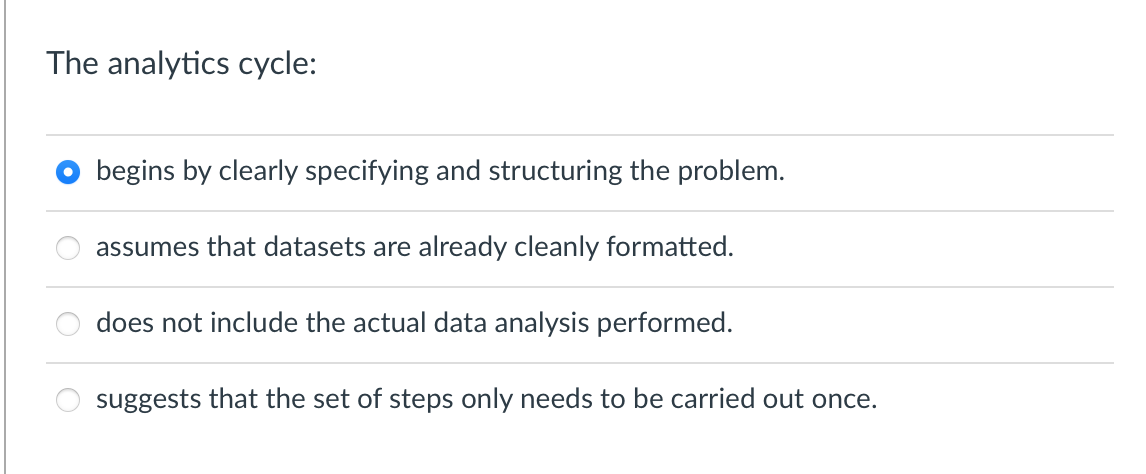
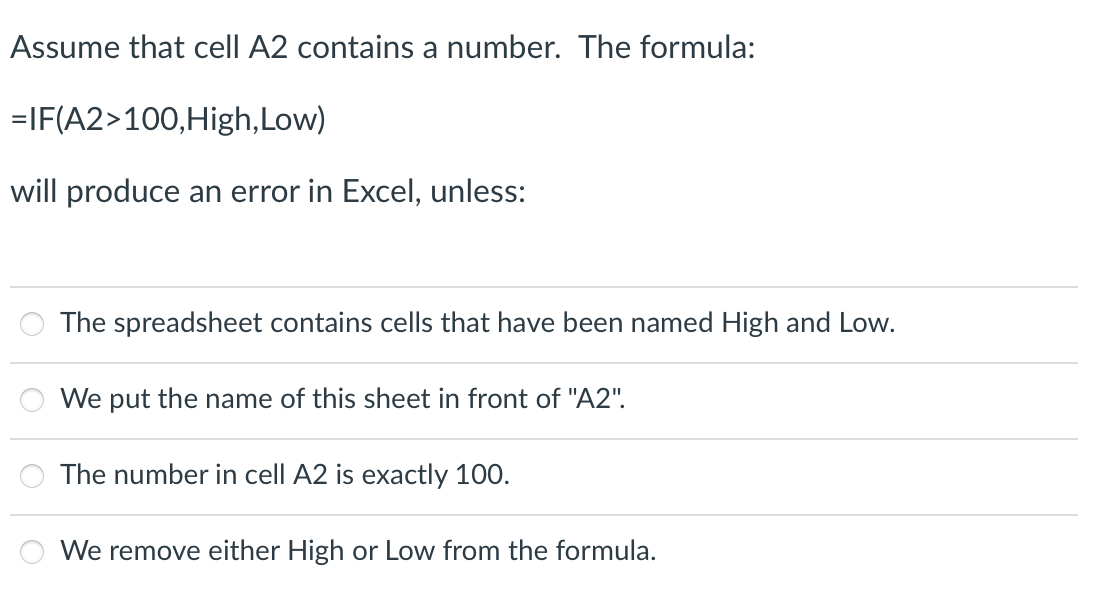
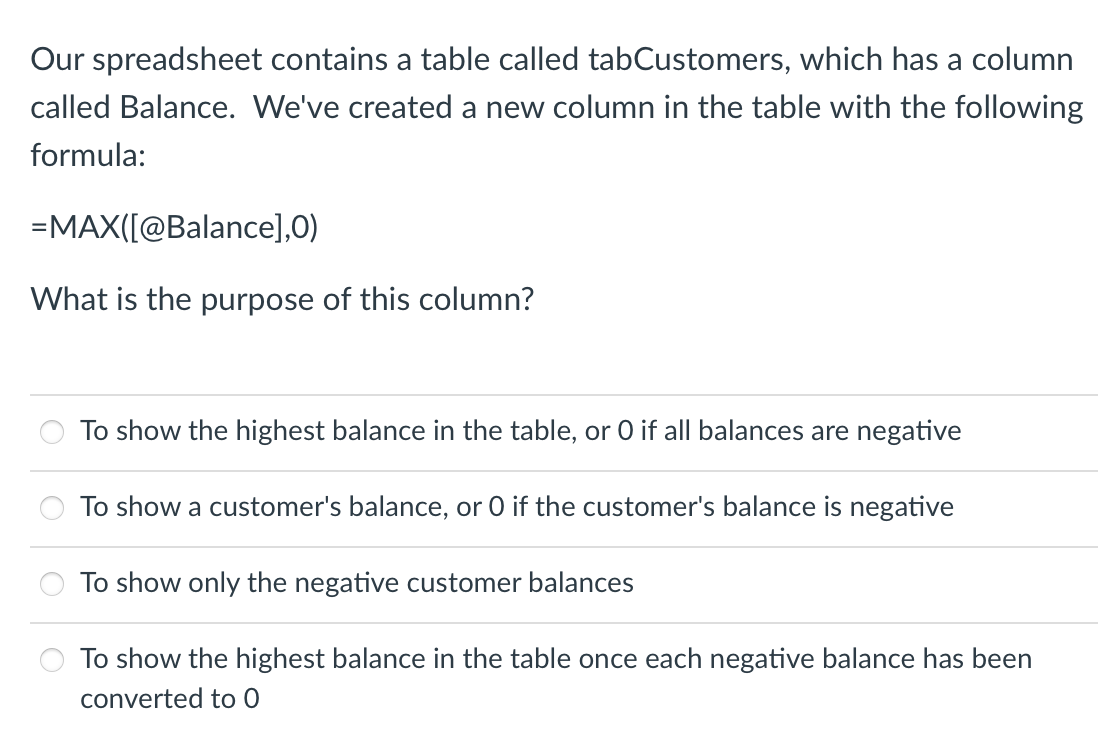
The analytics cycle: begins by clearly specifying and structuring the problem. assumes that datasets are already cleanly formatted. does not include the actual data analysis performed. suggests that the set of steps only needs to be carried out once. Assume that cell A2 contains a number. The formula: =IF(A2>100, High, Low) will produce an error in Excel, unless: The spreadsheet contains cells that have been named High and Low. We put the name of this sheet in front of "A2". The number in cell A2 is exactly 100. We remove either High or Low from the formula. Our spreadsheet contains a table called tabCustomers, which has a column called Balance. We've created a new column in the table with the following formula: =MAX([@Balance],0) What is the purpose of this column? To show the highest balance in the table, or O if all balances are negative To show a customer's balance, or 0 if the customer's balance is negative To show only the negative customer balances 100 To show the highest balance in the table once each negative balance has been converted to O
Step by Step Solution
There are 3 Steps involved in it

Get step-by-step solutions from verified subject matter experts
 Study Help