







Question: The assignment below is based on the case study Sombrero: Proposed Fruit Juice Outlet (only the first 3 pages). Assuming that Moawia takes a favorable
The assignment below is based on the case study "Sombrero: Proposed Fruit Juice Outlet" (only the
first 3 pages). Assuming that Moawia takes a favorable decision to open his outlet, and you serve
as his marketing consultant, please submit the following two sections, 1 (10 pts) & 2 (80 pts).
Once you have read the case in detail begin this assignment.
QUESTION:
1. Prepare a short Executive Summary made of 10 bullet points - from a marketing perspective,
to include key issues and keywords from our course - 1 page (10 points)
2. Bonus - Any other information you may provide within up to 1 page related to this CASE STUDY
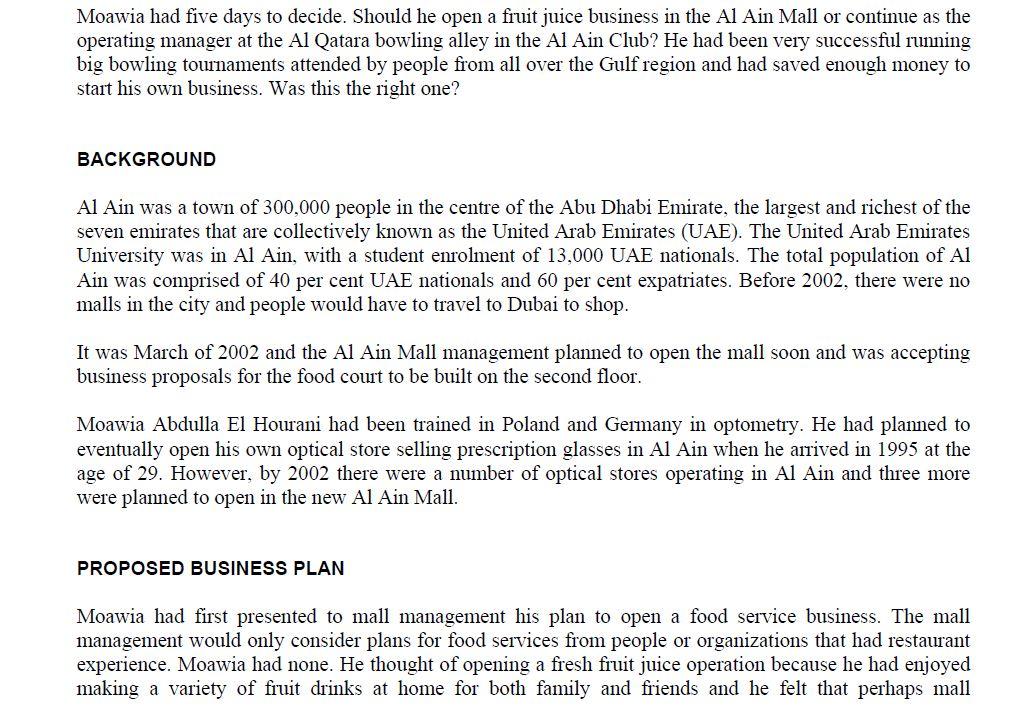
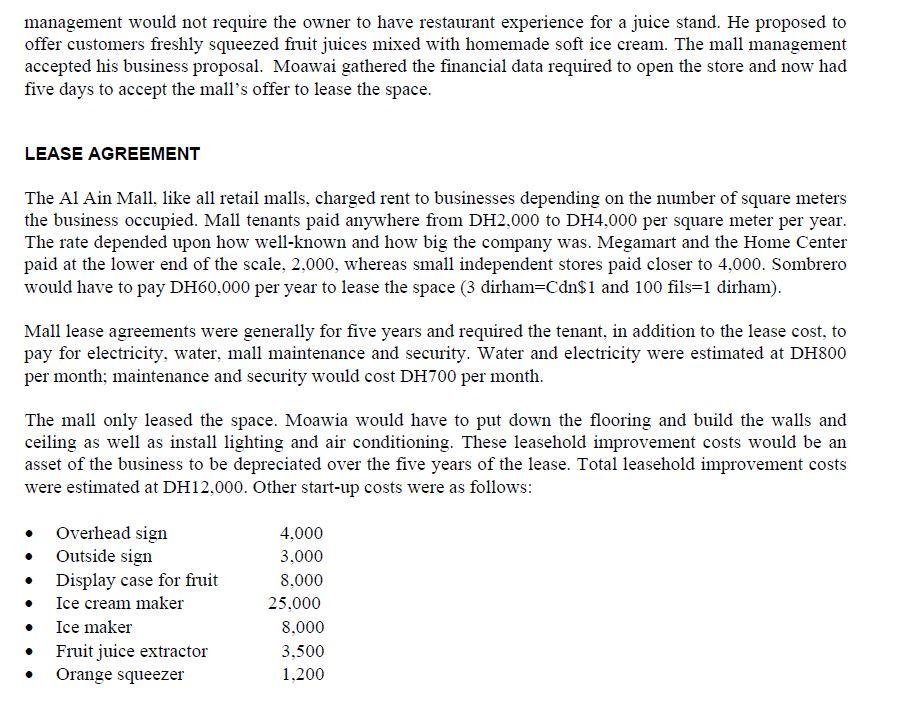
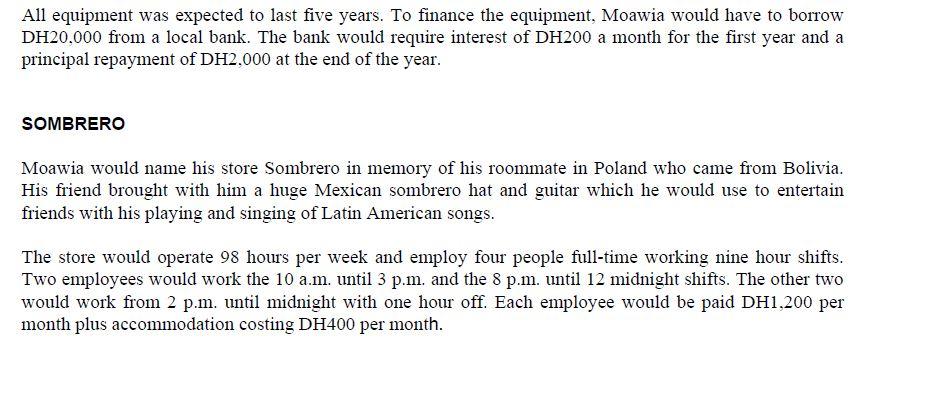
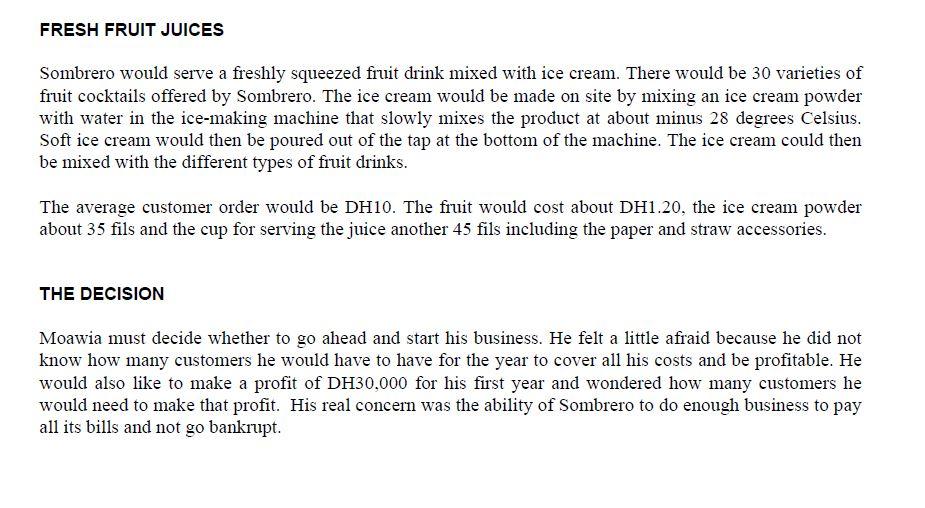
Moawia had five days to decide. Should he open a fruit juice business in the Al Ain Mall or continue as the operating manager at the Al Qatara bowling alley in the Al Ain Club? He had been very successful running big bowling tournaments attended by people from all over the Gulf region and had saved enough money to start his own business. Was this the right one? BACKGROUND Al Ain was a town of 300,000 people in the centre of the Abu Dhabi Emirate, the largest and richest of the seven emirates that are collectively known as the United Arab Emirates (UAE). The United Arab Emirates University was in Al Ain, with a student enrolment of 13,000 UAE nationals. The total population of Al Ain was comprised of 40 per cent UAE nationals and 60 per cent expatriates. Before 2002, there were no malls in the city and people would have to travel to Dubai to shop. It was March of 2002 and the Al Ain Mall management planned to open the mall soon and was accepting business proposals for the food court to be built on the second floor. Moawia Abdulla El Hourani had been trained in Poland and Germany in optometry. He had planned to eventually open his own optical store selling prescription glasses in Al Ain when he arrived in 1995 at the age of 29. However, by 2002 there were a number of optical stores operating in Al Ain and three more were planned to open in the new Al Ain Mall. PROPOSED BUSINESS PLAN Moawia had first presented to mall management his plan to open a food service business. The mall management would only consider plans for food services from people or organizations that had restaurant experience. Moawia had none. He thought of opening a fresh fruit juice operation because he had enjoyed making a variety of fruit drinks at home for both family and friends and he felt that perhaps mall management would not require the owner to have restaurant experience for a juice stand. He proposed to offer customers freshly squeezed fruit juices mixed with homemade soft ice cream. The mall management accepted his business proposal. Moawai gathered the financial data required to open the store and now had five days to accept the mall's offer to lease the space. LEASE AGREEMENT The Al Ain Mall, like all retail malls, charged rent to businesses depending on the number of square meters the business occupied. Mall tenants paid anywhere from DH2,000 to DH4,000 per square meter per year. The rate depended upon how well-known and how big the company was. Megamart and the Home Center paid at the lower end of the scale. 2,000, whereas small independent stores paid closer to 4.000. Sombrero would have to pay DH60,000 per year to lease the space (3 dirham=Cdn$1 and 100 fils=1 dirham). Mall lease agreements were generally for five years and required the tenant, in addition to the lease cost, to pay for electricity, water, mall maintenance and security. Water and electricity were estimated at DH800 per month; maintenance and security would cost DH700 per month. The mall only leased the space. Moawia would have to put down the flooring and build the walls and ceiling as well as install lighting and air conditioning. These leasehold improvement costs would be an asset of the business to be depreciated over the five years of the lease. Total leasehold improvement costs were estimated at DH12,000. Other start-up costs were as follows: . . Overhead sign Outside sign Display case for fruit Ice cream maker Ice maker Fruit juice extractor Orange squeezer 4,000 3.000 8.000 25.000 8,000 3,500 1.200 . FRESH FRUIT JUICES Sombrero would serve a freshly squeezed fruit drink mixed with ice cream. There would be 30 varieties of fruit cocktails offered by Sombrero. The ice cream would be made on site by mixing an ice cream powder with water in the ice-making machine that slowly mixes the product at about minus 28 degrees Celsius. Soft ice cream would then be poured out of the tap at the bottom of the machine. The ice cream could then be mixed with the different types of fruit drinks. The average customer order would be DH10. The fruit would cost about DH1.20, the ice cream powder about 35 fils and the cup for serving the juice another 45 fils including the paper and straw accessories. THE DECISION Moawia must decide whether to go ahead and start his business. He felt a little afraid because he did not know how many customers he would have to have for the year to cover all his costs and be profitable. He would also like to make a profit of DH30,000 for his first year and wondered how many customers he would need to make that profit. His real concern was the ability of Sombrero to do enough business to pay all its bills and not go bankrupt. Moawia had five days to decide. Should he open a fruit juice business in the Al Ain Mall or continue as the operating manager at the Al Qatara bowling alley in the Al Ain Club? He had been very successful running big bowling tournaments attended by people from all over the Gulf region and had saved enough money to start his own business. Was this the right one? BACKGROUND Al Ain was a town of 300,000 people in the centre of the Abu Dhabi Emirate, the largest and richest of the seven emirates that are collectively known as the United Arab Emirates (UAE). The United Arab Emirates University was in Al Ain, with a student enrolment of 13,000 UAE nationals. The total population of Al Ain was comprised of 40 per cent UAE nationals and 60 per cent expatriates. Before 2002, there were no malls in the city and people would have to travel to Dubai to shop. It was March of 2002 and the Al Ain Mall management planned to open the mall soon and was accepting business proposals for the food court to be built on the second floor. Moawia Abdulla El Hourani had been trained in Poland and Germany in optometry. He had planned to eventually open his own optical store selling prescription glasses in Al Ain when he arrived in 1995 at the age of 29. However, by 2002 there were a number of optical stores operating in Al Ain and three more were planned to open in the new Al Ain Mall. PROPOSED BUSINESS PLAN Moawia had first presented to mall management his plan to open a food service business. The mall management would only consider plans for food services from people or organizations that had restaurant experience. Moawia had none. He thought of opening a fresh fruit juice operation because he had enjoyed making a variety of fruit drinks at home for both family and friends and he felt that perhaps mall management would not require the owner to have restaurant experience for a juice stand. He proposed to offer customers freshly squeezed fruit juices mixed with homemade soft ice cream. The mall management accepted his business proposal. Moawai gathered the financial data required to open the store and now had five days to accept the mall's offer to lease the space. LEASE AGREEMENT The Al Ain Mall, like all retail malls, charged rent to businesses depending on the number of square meters the business occupied. Mall tenants paid anywhere from DH2,000 to DH4,000 per square meter per year. The rate depended upon how well-known and how big the company was. Megamart and the Home Center paid at the lower end of the scale. 2,000, whereas small independent stores paid closer to 4.000. Sombrero would have to pay DH60,000 per year to lease the space (3 dirham=Cdn$1 and 100 fils=1 dirham). Mall lease agreements were generally for five years and required the tenant, in addition to the lease cost, to pay for electricity, water, mall maintenance and security. Water and electricity were estimated at DH800 per month; maintenance and security would cost DH700 per month. The mall only leased the space. Moawia would have to put down the flooring and build the walls and ceiling as well as install lighting and air conditioning. These leasehold improvement costs would be an asset of the business to be depreciated over the five years of the lease. Total leasehold improvement costs were estimated at DH12,000. Other start-up costs were as follows: . . Overhead sign Outside sign Display case for fruit Ice cream maker Ice maker Fruit juice extractor Orange squeezer 4,000 3.000 8.000 25.000 8,000 3,500 1.200 . FRESH FRUIT JUICES Sombrero would serve a freshly squeezed fruit drink mixed with ice cream. There would be 30 varieties of fruit cocktails offered by Sombrero. The ice cream would be made on site by mixing an ice cream powder with water in the ice-making machine that slowly mixes the product at about minus 28 degrees Celsius. Soft ice cream would then be poured out of the tap at the bottom of the machine. The ice cream could then be mixed with the different types of fruit drinks. The average customer order would be DH10. The fruit would cost about DH1.20, the ice cream powder about 35 fils and the cup for serving the juice another 45 fils including the paper and straw accessories. THE DECISION Moawia must decide whether to go ahead and start his business. He felt a little afraid because he did not know how many customers he would have to have for the year to cover all his costs and be profitable. He would also like to make a profit of DH30,000 for his first year and wondered how many customers he would need to make that profit. His real concern was the ability of Sombrero to do enough business to pay all its bills and not go bankruptStep by Step Solution
There are 3 Steps involved in it
1 Expert Approved Answer
Step: 1 Unlock

Question Has Been Solved by an Expert!
Get step-by-step solutions from verified subject matter experts
Step: 2 Unlock
Step: 3 Unlock
 Study Help