



Question: The balance sheet information is limited to the data table given in the question. No other data is available to me. I would be very
The balance sheet information is limited to the data table given in the question. No other data is available to me. I would be very grateful if you could help me with it. Thank you very much in advance!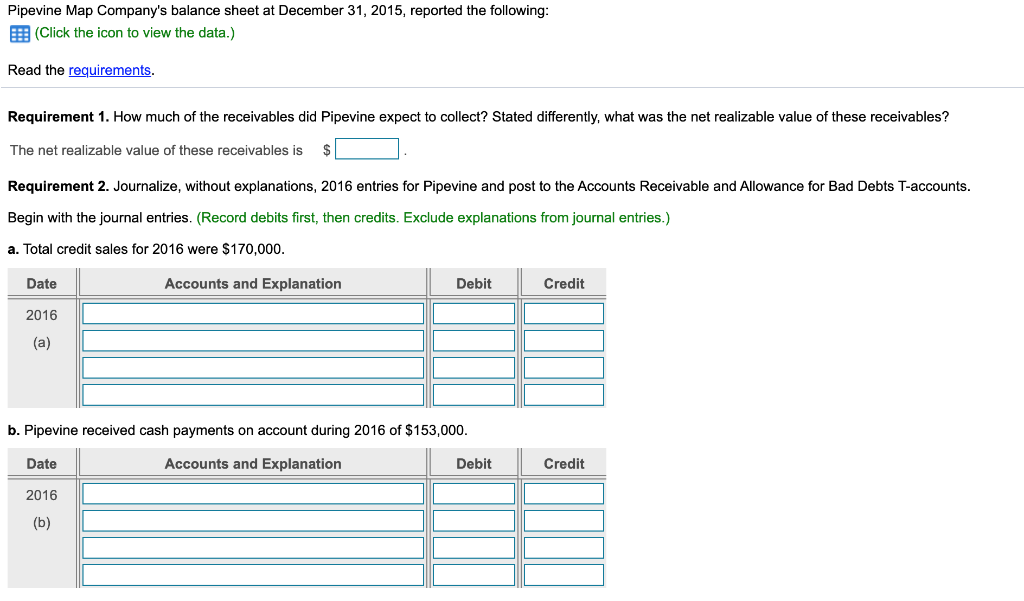
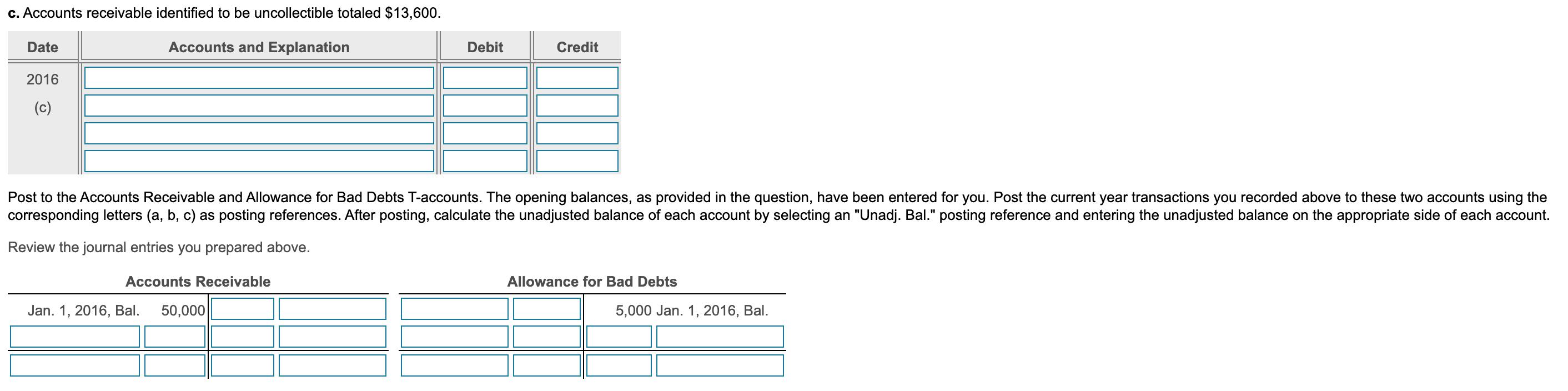
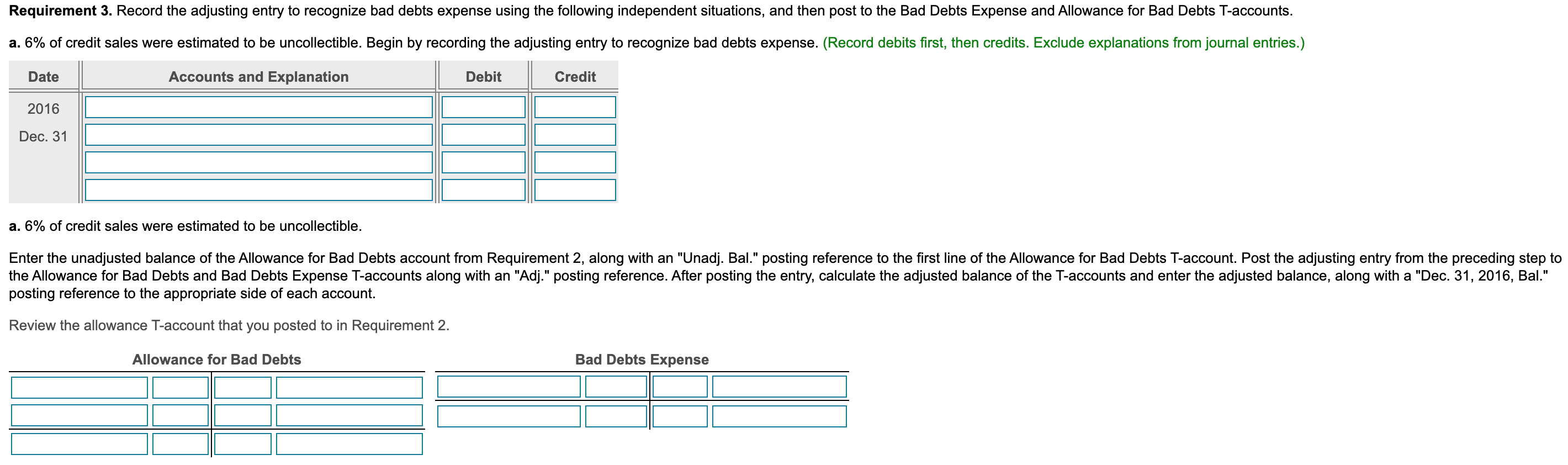
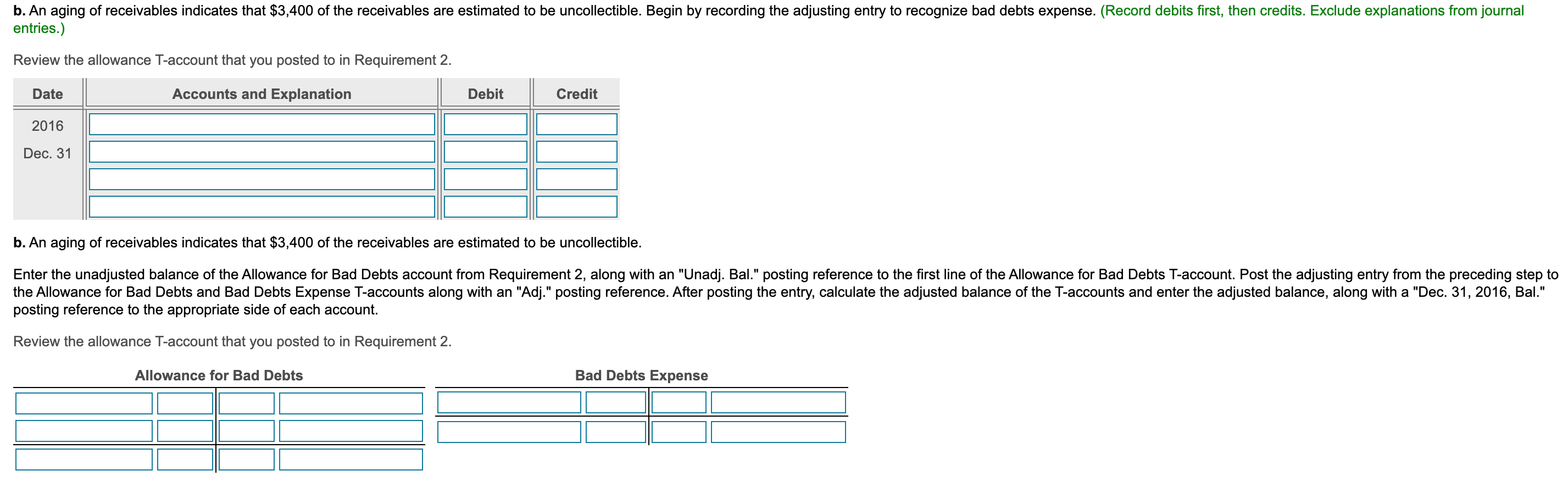
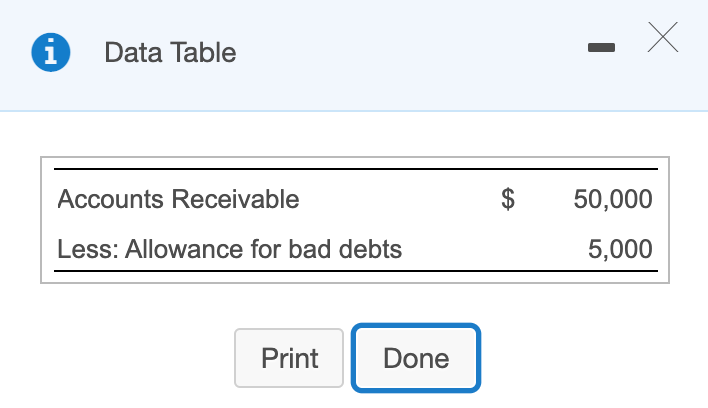
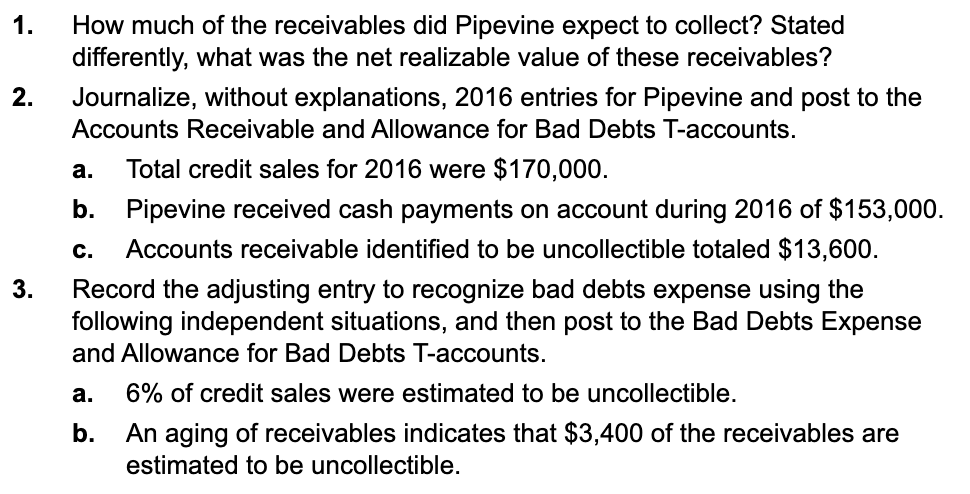
Pipevine Map Company's balance sheet at December 31, 2015, reported the following: (Click the icon to view the data.) Read the requirements. Requirement 1. How much of the receivables did Pipevine expect to collect? Stated differently, what was the net realizable value of these receivables? The net realizable value of these receivables is $ Requirement 2. Journalize, without explanations, 2016 entries for Pipevine and post to the Accounts Receivable and Allowance for Bad Debts T-accounts. Begin with the journal entries. (Record debits first, then credits. Exclude explanations from journal entries.) a. Total credit sales for 2016 were $170,000. Date Accounts and Explanation Debit Credit 2016 (a) b. Pipevine received cash payments on account during 2016 of $153,000. Date Accounts and Explanation Debit Credit 2016 (b) c. Accounts receivable identified to be uncollectible totaled $13,600. Date Accounts and Explanation Debit Credit 2016 (c) Post to the Accounts Receivable and Allowance for Bad Debts T-accounts. The opening balances, as provided in the question, have been entered for you. Post the current year transactions you recorded above to these two accounts using the corresponding letters (a, b, c) as posting references. After posting, calculate the unadjusted balance of each account by selecting an "Unadj. Bal." posting reference and entering the unadjusted balance on the appropriate side of each account. Review the journal entries you prepared above. Accounts Receivable Allowance for Bad Debts Jan. 1, 2016, Bal. 50,000 5,000 Jan. 1, 2016, Bal. Requirement 3. Record the adjusting entry to recognize bad debts expense using the following independent situations, and then post to the Bad Debts Expense and Allowance for Bad Debts T-accounts. a. 6% of credit sales were estimated to be uncollectible. Begin by recording the adjusting entry to recognize bad debts expense. (Record debits first, then credits. Exclude explanations from journal entries.) Date Accounts and Explanation Debit Credit 2016 Dec. 31 a. 6% of credit sales were estimated to be uncollectible. Enter the unadjusted balance of the Allowance for Bad Debts account from Requirement 2, along with an "Unadj. Bal." posting reference to the first line of the Allowance for Bad Debts T-account. Post the adjusting entry from the preceding step to the Allowance for Bad Debts and Bad Debts Expense T-accounts along with an "Adj." posting reference. After posting the entry, calculate the adjusted balance of the T-accounts and enter the adjusted balance, along with a "Dec. 31, 2016, Bal." posting reference to the appropriate side of each account. Review the allowance T-account that you posted to in Requirement 2. Allowance for Bad Debts Bad Debts Expense b. An aging of receivables indicates that $3,400 of the receivables are estimated to be uncollectible. Begin by recording the adjusting entry to recognize bad debts expense. (Record debits first, then credits. Exclude explanations from journal entries.) Review the allowance T-account that you posted to in Requirement 2. Date Accounts and Explanation Debit Credit 2016 Dec. 31 b. An aging of receivables indicates that $3,400 of the receivables are estimated to be uncollectible. Enter the unadjusted balance of the Allowance for Bad Debts account from Requirement 2, along with an "Unadj. Bal." posting reference to the first line of the Allowance for Bad Debts T-account. Post the adjusting entry from the preceding step to the Allowance for Bad Debts and Bad Debts Expense T-accounts along with an "Adj." posting reference. After posting the entry, calculate the adjusted balance of the T-accounts and enter the adjusted balance, along with a "Dec. 31, 2016, Bal." posting reference to the appropriate side of each account. Review the allowance T-account that you posted to in Requirement 2. Allowance for Bad Debts Bad Debts Expense i Data Table X Accounts Receivable $ 50,000 Less: Allowance for bad debts 5,000 Print Done 1. 2. a. C. How much of the receivables did Pipevine expect to collect? Stated differently, what was the net realizable value of these receivables? Journalize, without explanations, 2016 entries for Pipevine and post to the Accounts Receivable and Allowance for Bad Debts T-accounts. Total credit sales for 2016 were $170,000. b. Pipevine received cash payments on account during 2016 of $153,000. Accounts receivable identified to be uncollectible totaled $13,600. Record the adjusting entry to recognize bad debts expense using the following independent situations, and then post to the Bad Debts Expense and Allowance for Bad Debts T-accounts. a. 6% of credit sales were estimated to be uncollectible. b. An aging of receivables indicates that $3,400 of the receivables are estimated to be uncollectible. 3
Step by Step Solution
There are 3 Steps involved in it

Get step-by-step solutions from verified subject matter experts