







Question: The basic mechanism behind how an inkjet printer operates is that drops of ink, each with a radius of r = 2 0 mu
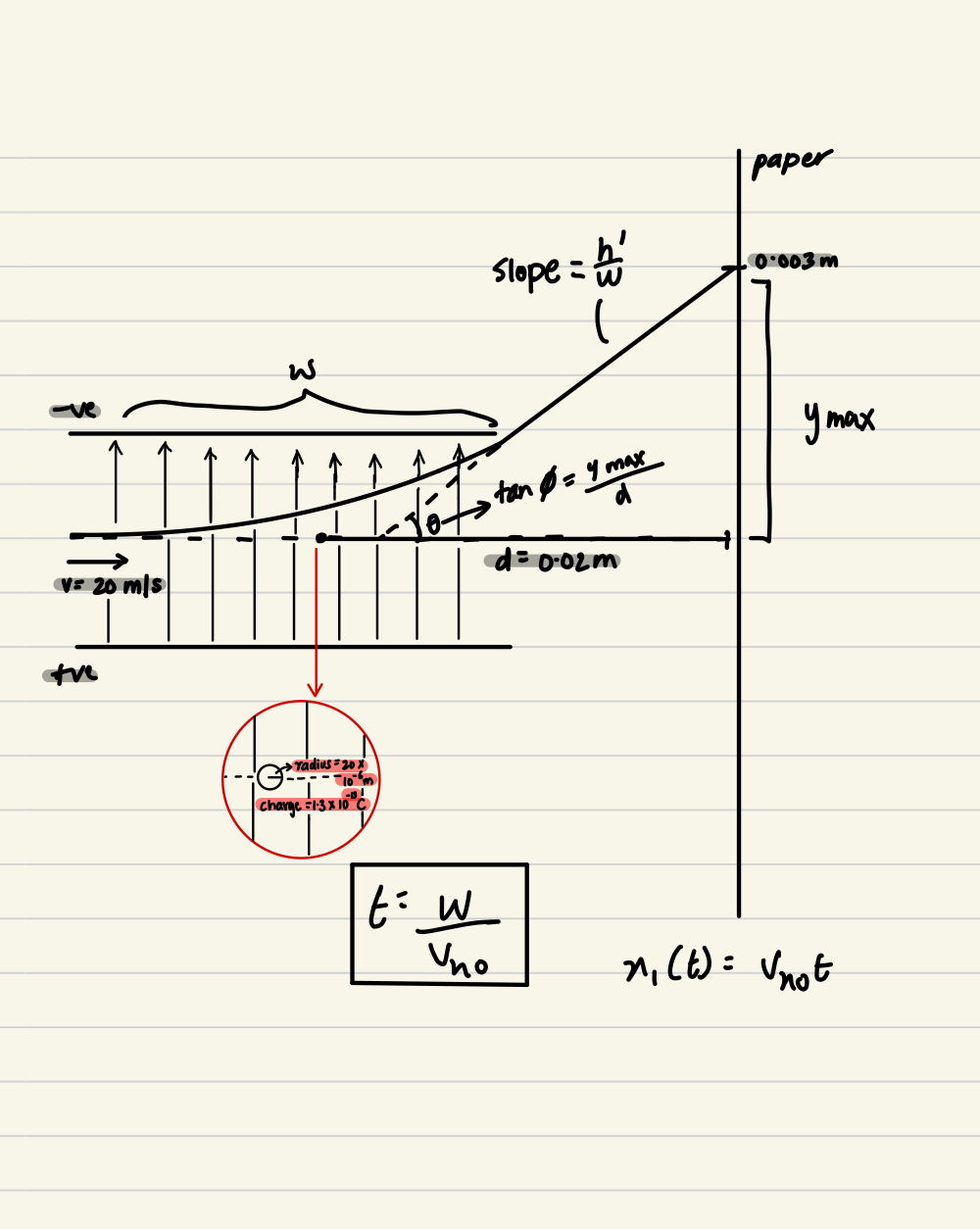
The basic mechanism behind how an inkjet printer operates is that drops of ink, each with a radius of rmu m are charged to qtimes C and sprayed from a nozzle towards the page at an initial speed of ms On the way to the paper, they pass a region with a uniform electric field of magnitude EE between two charged plates which deflects them up or down. Assume that the distance from the centre of the plates to the paper is d cm The maximum height of a letter is mm ie the drops have to be deflected up or down mm What is the maximum electric field strength needed? Start by sketching the situation. Note that there is one piece of information that you will have to estimate.
Step by Step Solution
There are 3 Steps involved in it
1 Expert Approved Answer
Step: 1 Unlock

Question Has Been Solved by an Expert!
Get step-by-step solutions from verified subject matter experts
Step: 2 Unlock
Step: 3 Unlock
 Study Help