



Question: The beginning inventory at Dunne Co. and data on purchases and sales for a three-month period ending June 30 are as follows: Date Transaction Number
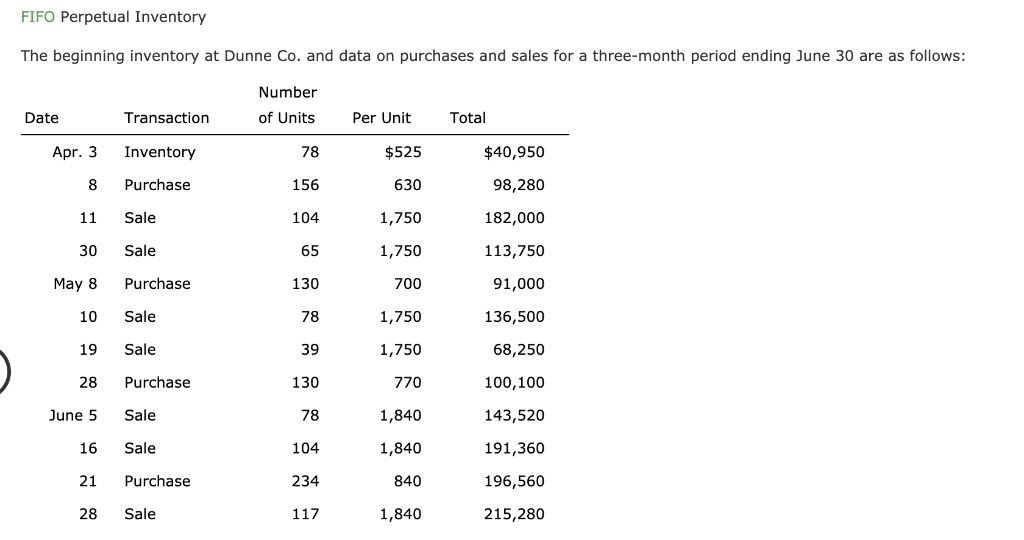
The beginning inventory at Dunne Co. and data on purchases and sales for a three-month period ending June 30 are as follows:
| Date | Transaction | Number of Units | Per Unit | Total | ||||
|---|---|---|---|---|---|---|---|---|
| Apr. 3 | Inventory | 78 | $525 | $40,950 | ||||
| 8 | Purchase | 156 | 630 | 98,280 | ||||
| 11 | Sale | 104 | 1,750 | 182,000 | ||||
| 30 | Sale | 65 | 1,750 | 113,750 | ||||
| May 8 | Purchase | 130 | 700 | 91,000 | ||||
| 10 | Sale | 78 | 1,750 | 136,500 | ||||
| 19 | Sale | 39 | 1,750 | 68,250 | ||||
| 28 | Purchase | 130 | 770 | 100,100 | ||||
| June 5 | Sale | 78 | 1,840 | 143,520 | ||||
| 16 | Sale | 104 | 1,840 | 191,360 | ||||
| 21 | Purchase | 234 | 840 | 196,560 | ||||
| 28 | Sale | 117 | 1,840 | 215,280 | ||||
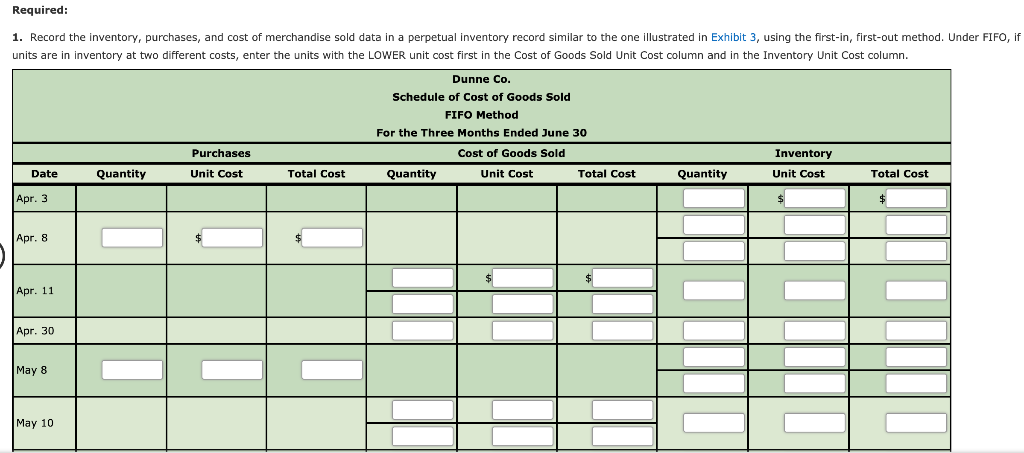
1. Record the inventory, purchases, and cost of merchandise sold data in a perpetual inventory record similar to the one illustrated in Exhibit 3, using the first-in, first-out method. Under FIFO, if units are in inventory at two different costs, enter the units with the LOWER unit cost first in the Cost of Goods Sold Unit Cost column and in the Inventory Unit Cost column.
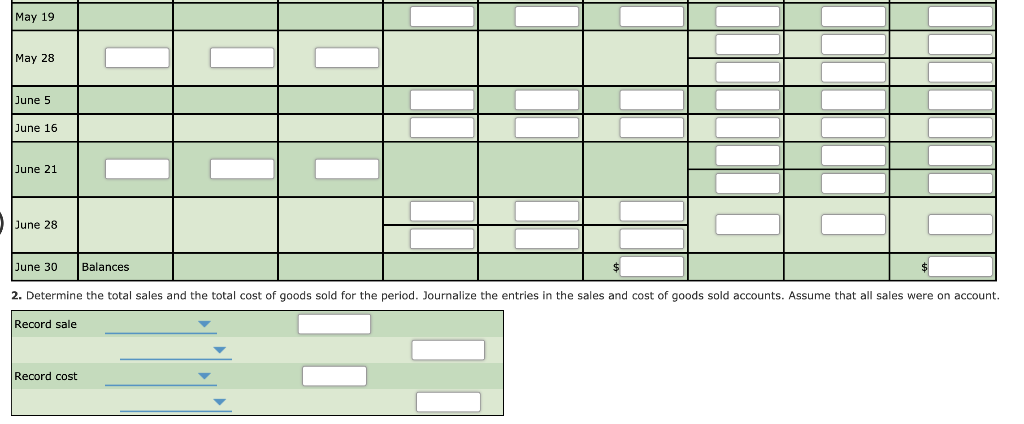
2. Determine the total sales and the total cost of goods sold for the period. Journalize the entries in the sales and cost of goods sold accounts. Assume that all sales were on account.
3. Determine the gross profit from sales for the period.
4. Determine the ending inventory cost as of June 30.
5. Based upon the preceding data, would you expect the ending inventory using the last-in, first-out method to be higher or lower?

I only have one hour to get this HW finished. If an expert can help me answer this I would greatly appreciate it!
FIFO Perpetual Inventory The beginning inventory at Dunne Co. and data on purchases and sales for a three-month period ending June 30 are as follows: Number Transaction Date of Units Per Unit Total Apr. 3 78 Inventory $525 $40,950 156 8 Purchase 630 98,280 11 Sale 104 1,750 182,000 Sale 113,750 30 65 1,750 May 8 Purchase 130 700 91,000 Sale 78 136,500 10 1,750 19 Sale 39 68,250 1,750 28 Purchase 130 770 100,100 143,520 June 5 Sale 78 1,840 Sale 16 104 1,840 191,360 21 Purchase 234 840 196,560 28 Sale 117 1,840 215,280 Required: the one illustrated 1. Record the inventory, purchases, and cost of merchandise sold data in a perpetual inventory record similar Exhibit 3, using the first-in, first-out method. Under FIFO, if the Inventory Unit Cost column. units are in inventory two different costs, enter the units with the LOWER unit cost first in the Cost of Goods Sold Unit Cost column and Dunne Co. Schedule of Cost of Goods Sold FIFO Method For the Three Months Ended June 30 Purchases Cost of Goods Sold Inventory Date Quantity Unit Cost Total Cost Unit Cost Total Cost Quantity Unit Cost Total Cost Quantity Apr. 3 $ $ Apr. 8 $ Apr. 11 Apr. 30 May 8 May 10 May 19 May 28 June 5 June 16 June 21 June 28 June 30 Balances 2. Determine the total sales and the total cost of goods sold for the period. Journalize the entries in the sales and cost of goods sold accounts. Assume that all sales were on account. Record sale Record cost 3. Determine the gross profit from sales for the period $ 4. Determine the ending inventory cost as of June 30 $ 5. Based upon the preceding data, would you expect the ending inventory using the last-in, first-out method to be higher or lower
Step by Step Solution
There are 3 Steps involved in it

Get step-by-step solutions from verified subject matter experts