







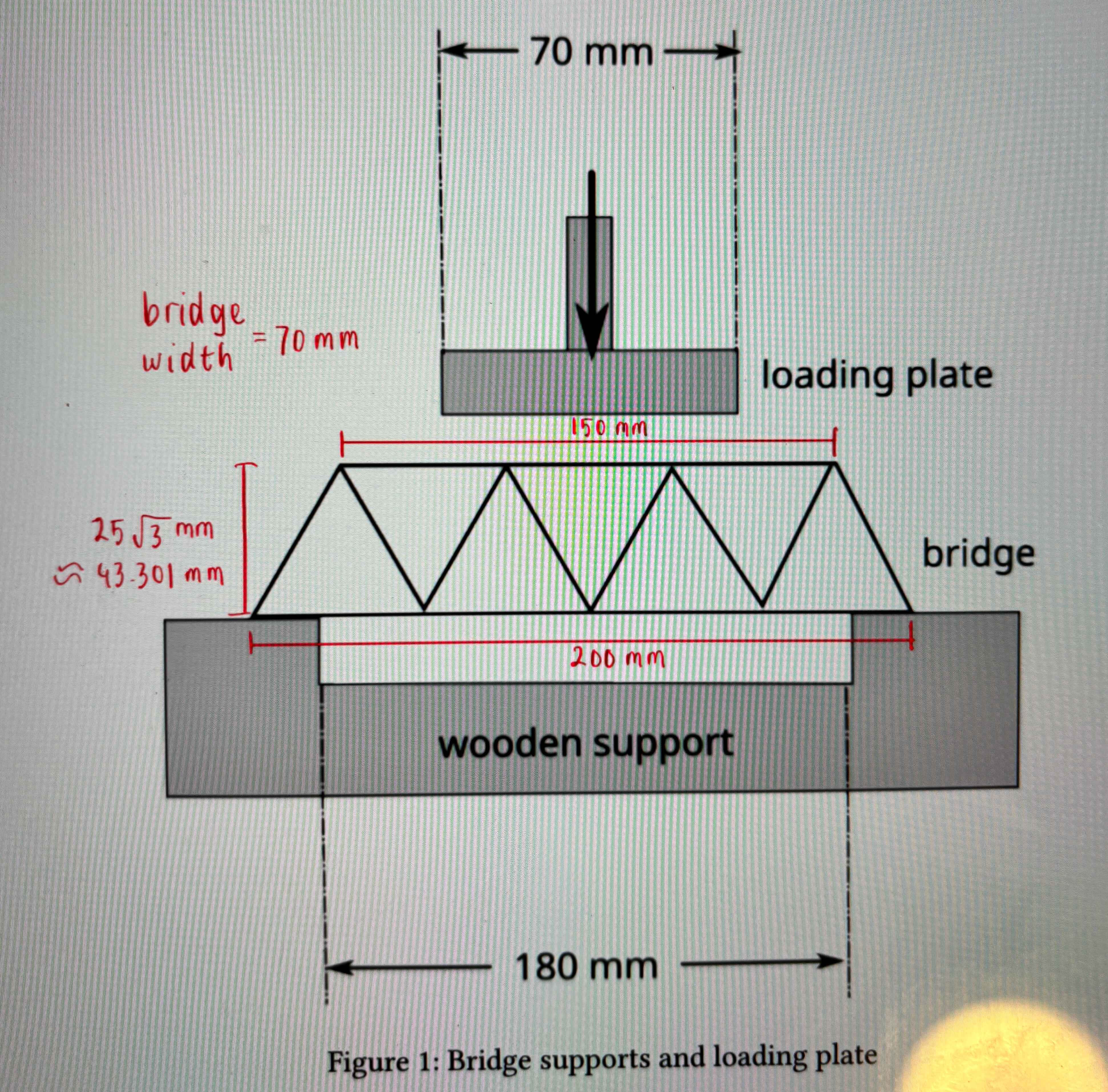
Question: The bridge will support a load applied from above by a loading plate that has a 7 0 mm x 7 0 mm square surface
The bridge will support a load applied from above by a loading plate that has a mm x mm square surface area see Fig. The load will be applied using a Hounsfield universal testing machine fitted
with a jig that can support the bridge from below. The Hounsfield universal testing machine and jig will be used to mechanically test the maximum load of the bridges. The loading plate will be lowered slowly at a speed of mmmin lamination glueing of the balsa to make thicker members is not allowed. Gusset joints are permitted, and the material used should be from the balsa wood supplied. The length of any gusset joints should be less than mm
Each group will be provided with
lengths each of approximately mm of mm square balsa
lengths each length approximately mm of mm square balsa
Bridge Specs:
Top length: mm
Bottom Length: mm
Width: mm
Height: Max mm
QUESTION:
how many xmm and x members we need to build italso try to use the x for the mm and mm parts
Calculate tensilecompressive loads in each member structure support N loadmake a table also including the pieces used as gusset joints
Find maximum loads for each member reasoning Which will fail first?
Step by Step Solution
There are 3 Steps involved in it
1 Expert Approved Answer
Step: 1 Unlock

Question Has Been Solved by an Expert!
Get step-by-step solutions from verified subject matter experts
Step: 2 Unlock
Step: 3 Unlock
 Study Help