







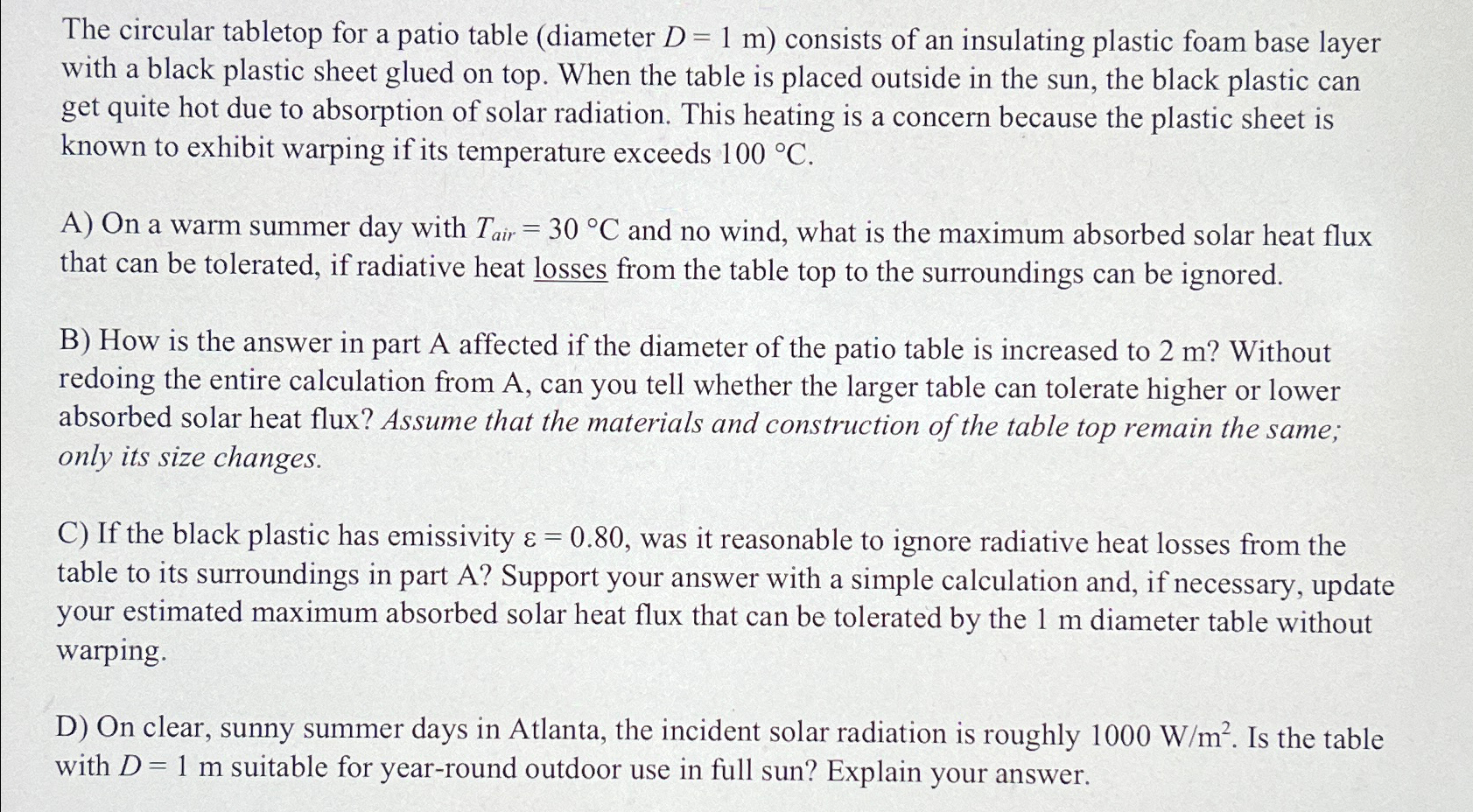
Question: The circular tabletop for a patio table ( diameter D = 1 m ) consists of an insulating plastic foam base layer with a black
The circular tabletop for a patio table diameter consists of an insulating plastic foam base layer with a black plastic sheet glued on top. When the table is placed outside in the sun, the black plastic can get quite hot due to absorption of solar radiation. This heating is a concern because the plastic sheet is known to exhibit warping if its temperature exceeds
A On a warm summer day with and no wind, what is the maximum absorbed solar heat flux that can be tolerated, if radiative heat losses from the table top to the surroundings can be ignored.
B How is the answer in part A affected if the diameter of the patio table is increased to Without redoing the entire calculation from can you tell whether the larger table can tolerate higher or lower absorbed solar heat flux? Assume that the materials and construction of the table top remain the same; only its size changes.
C If the black plastic has emissivity was it reasonable to ignore radiative heat losses from the table to its surroundings in part A Support your answer with a simple calculation and, if necessary, update your estimated maximum absorbed solar heat flux that can be tolerated by the diameter table without warping.
D On clear, sunny summer days in Atlanta, the incident solar radiation is roughly Is the table with suitable for yearround outdoor use in full sun? Explain your answer.
Step by Step Solution
There are 3 Steps involved in it
1 Expert Approved Answer
Step: 1 Unlock

Question Has Been Solved by an Expert!
Get step-by-step solutions from verified subject matter experts
Step: 2 Unlock
Step: 3 Unlock
 Study Help