







Question: The correct answer to the first one is option one. Also, what is the process to solve this type of problem? Any advice and tips
The correct answer to the first one is option one. Also, what is the process to solve this type of problem? Any advice and tips would be much appreciated!! Please answer all parts SHOWING ALL STEPS CLEARLY EXPLAINING THE CONCEPTS and make sure all are 100% correct solutions and do NOT use calculus (integration, Cross product, etc.) to solve any of them. Thank you!
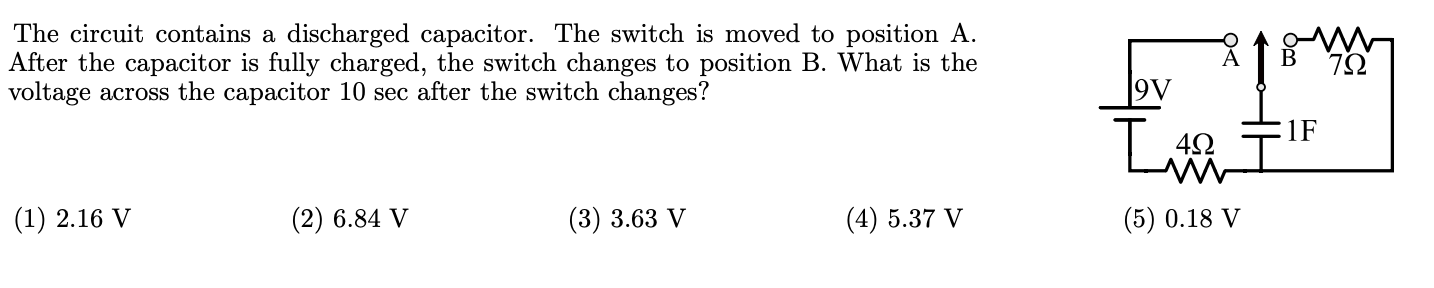
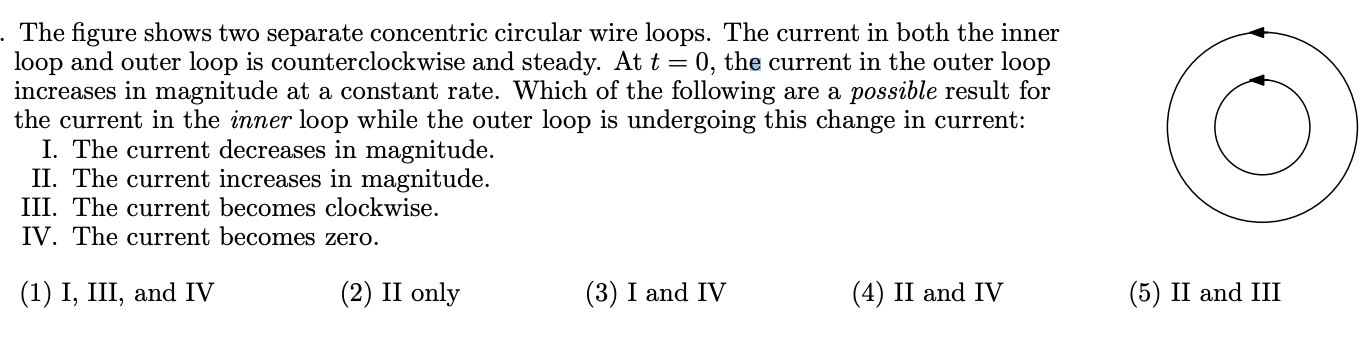
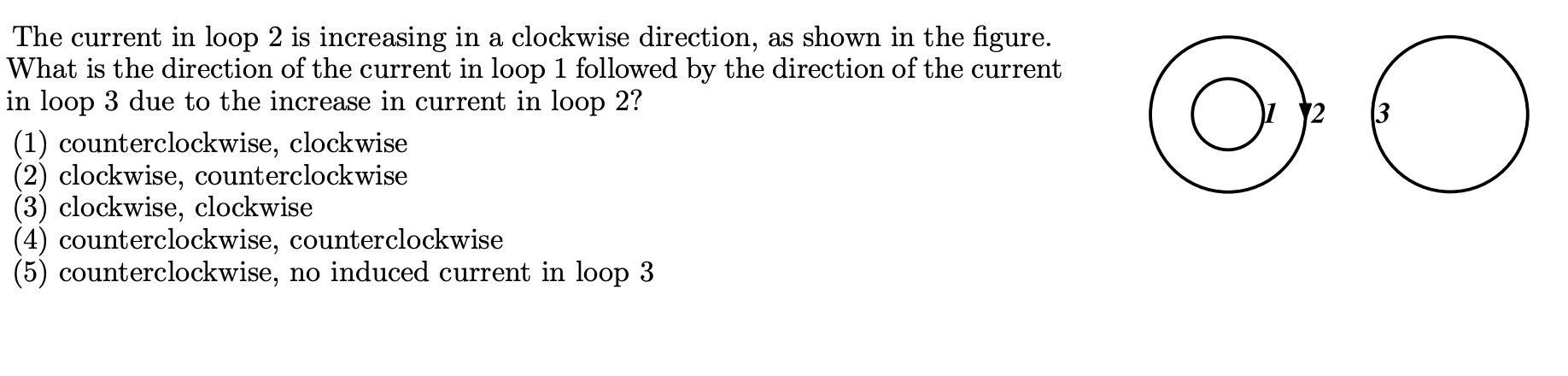
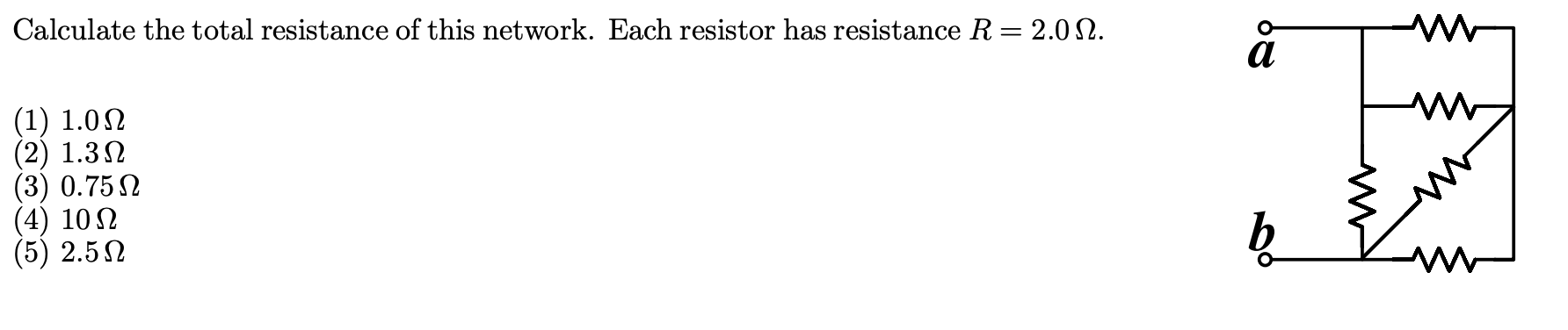
The circuit contains a discharged capacitor. The switch is moved to position A. After the capacitor is fully charged, the switch changes to position B. What is the A B 751 voltage across the capacitor 10 sec after the switch changes? 9V 49 1F (1) 2.16 V (2) 6.84 V (3) 3.63 V (4) 5.37 V (5) 0.18 V . The gure shows two separate concentric circular wire loops. The current in both the inner loop and outer loop is counterclockwise and steady. At t = 0, thl current in the outer loop increases in magnitude at a constant rate. Which of the following are a possible result for the current in the inner loop while the outer loop is undergoing this change in current: I. The current decreases in magnitude. II. The current increases in magnitude. III. The current becomes clockwise. IV. The current becomes zero. (1) I, III, and IV (2) II only (3) I and IV (4) II and IV (5) II and III The current in loop 2 is increasing in a clockwise direction, as shown in the gure. What is the direction of the current in loop 1 followed by the direction of the current in loop 3 due to the increase in current in loop 2? (1) counterclockwise, clockwise (2) clockwise, counterclockwise (3) clockwise, clockwise ) counterclockwise, counterclockwise (5) counterclockwise, no induced current in loop 3 Calculate the total resistance of this network. Each resistor has resistance R = 2.0
Step by Step Solution
There are 3 Steps involved in it

Get step-by-step solutions from verified subject matter experts
 Study Help