



Question: The data for the question is here: 0 49.05 0 0.2 47.088 9.6138 0.4 45.126 18.8352 0.6 43.164 27.6642 0.8 41.202 36.1008 1 39.24 44.145
 The data for the question is here:
| 0 | 49.05 | 0 |
| 0.2 | 47.088 | 9.6138 |
| 0.4 | 45.126 | 18.8352 |
| 0.6 | 43.164 | 27.6642 |
| 0.8 | 41.202 | 36.1008 |
| 1 | 39.24 | 44.145 |
| 1.2 | 37.278 | 51.7968 |
| 1.4 | 35.316 | 59.0562 |
| 1.6 | 33.354 | 65.9232 |
| 1.8 | 31.392 | 72.3978 |
| 2 | 29.43 | 78.48 |
| 2.2 | 27.468 | 84.1698 |
| 2.4 | 25.506 | 89.4672 |
| 2.6 | 23.544 | 94.3722 |
| 2.8 | 21.582 | 98.8848 |
| 3 | 19.62 | 103.005 |
| 3.2 | 17.658 | 106.7328 |
| 3.4 | 15.696 | 110.0682 |
| 3.6 | 13.734 | 113.0112 |
| 3.8 | 11.772 | 115.5618 |
| 4 | 9.81 | 117.72 |
| 4.2 | 7.848 | 119.4858 |
| 4.4 | 5.886 | 120.8592 |
| 4.6 | 3.924 | 121.8402 |
| 4.8 | 1.962 | 122.4288 |
| 5 | 0 | 122.625 |
| 5.2 | -1.962 | 122.4288 |
| 5.4 | -3.924 | 121.8402 |
| 5.6 | -5.886 | 120.8592 |
| 5.8 | -7.848 | 119.4858 |
| 6 | -9.81 | 117.72 |
| 6.2 | -11.772 | 115.5618 |
| 6.4 | -13.734 | 113.0112 |
| 6.6 | -15.696 | 110.0682 |
| 6.8 | -17.658 | 106.7328 |
| 7 | -19.62 | 103.005 |
| 7.2 | -21.582 | 98.8848 |
| 7.4 | -23.544 | 94.3722 |
| 7.6 | -25.506 | 89.4672 |
| 7.8 | -27.468 | 84.1698 |
| 8 | -29.43 | 78.48 |
| 8.2 | -31.392 | 72.3978 |
| 8.4 | -33.354 | 65.9232 |
| 8.6 | -35.316 | 59.0562 |
| 8.8 | -37.278 | 51.7968 |
| 9 | -39.24 | 44.145 |
| 9.2 | -41.202 | 36.1008 |
| 9.4 | -43.164 | 27.6642 |
| 9.6 | -45.126 | 18.8352 |
| 9.8 | -47.088 | 9.6138 |
| 10 | -49.05 | 0 |
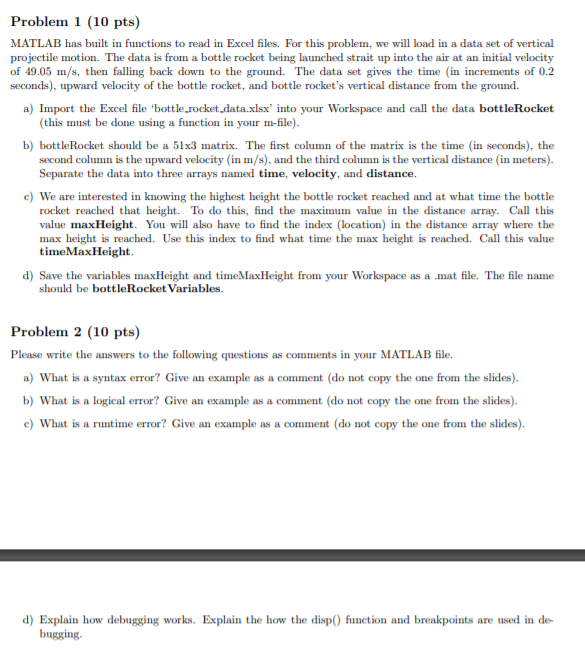
Problem 1 (10 pts) MATLAB has built in functions to read in Excel files. For this problem, we will load in a data set of vertical projectile motion. The data is from a bottle rocket being launched strait up into the air at an initial velocity of 49.05 m/s, then falling back down to the ground. The data set gives the time in increments of 0.2 seconds), upward velocity of the bottle rocket, and bottle rocket's vertical distance from the ground. a) Import the Excel file 'bottle.rocket.data.xlsx' into your Workspace and call the data bottleRocket (this must be done using a function in your m-file). b) bottleRocket should be a 51x3 matrix. The first column of the matrix is the time in seconds), the second column is the upward velocity in m/s), and the third column is the vertical distance in meters). Separate the data into three arrays named time, velocity, and distance. c) We are interested in knowing the highest height the bottle rocket reached and at what time the bottle rocket reached that height. To do this, find the maximum value in the distance array. Call this value maxHeight. You will also have to find the index (location in the distance array where the max height is reached. Use this index to find what time the max height is reached. Call this value time MaxHeight. d) Save the variables maxHeight and timeMax Height from your Workspace as a mat file. The file name should be bottleRocket Variables. Problem 2 (10 pts) Please write the answers to the following questions as comments in your MATLAB file. a) What is a syntax error? Give an example as a comment do not copy the one from the slides). b) What is a logical error? Give an example as a comment (do not copy the one from the slides). c) What is a runtime error? Give an example as a comment (do not copy the one from the slides). d) Explain how debugging works. Explain the how the disp() function and breakpoints are used in de bugging
Step by Step Solution
There are 3 Steps involved in it

Get step-by-step solutions from verified subject matter experts