







Question: The data has been collected in the Microsoft Excel file below. Download the spreadsheet and perform the required analysis to answer the questions below. Do

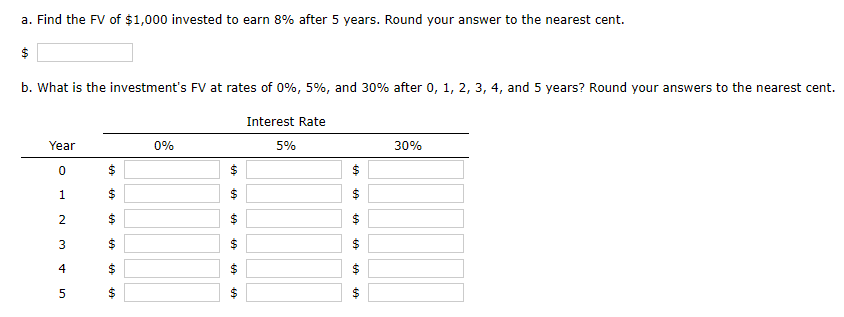
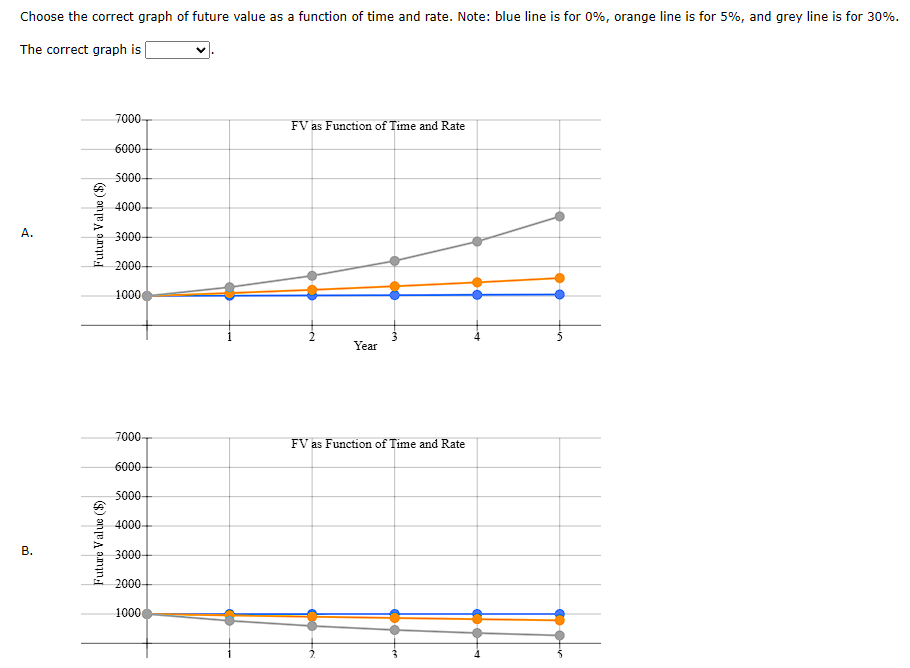
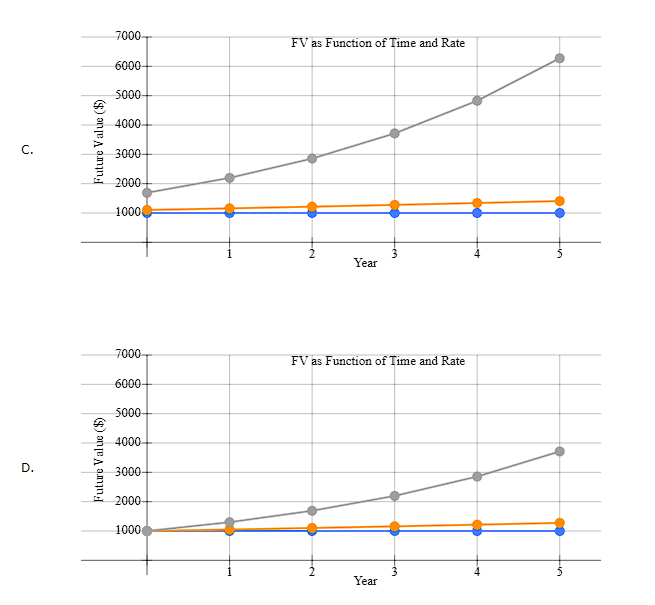
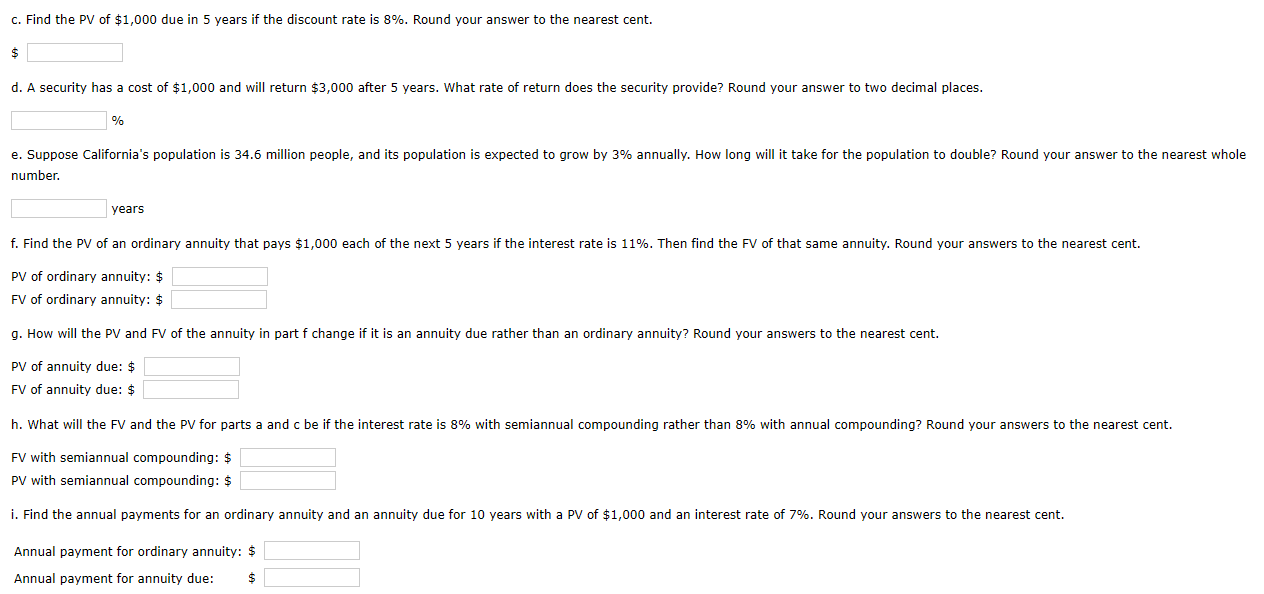
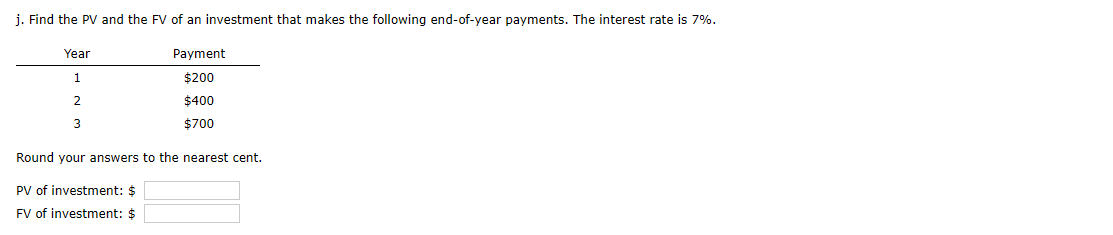
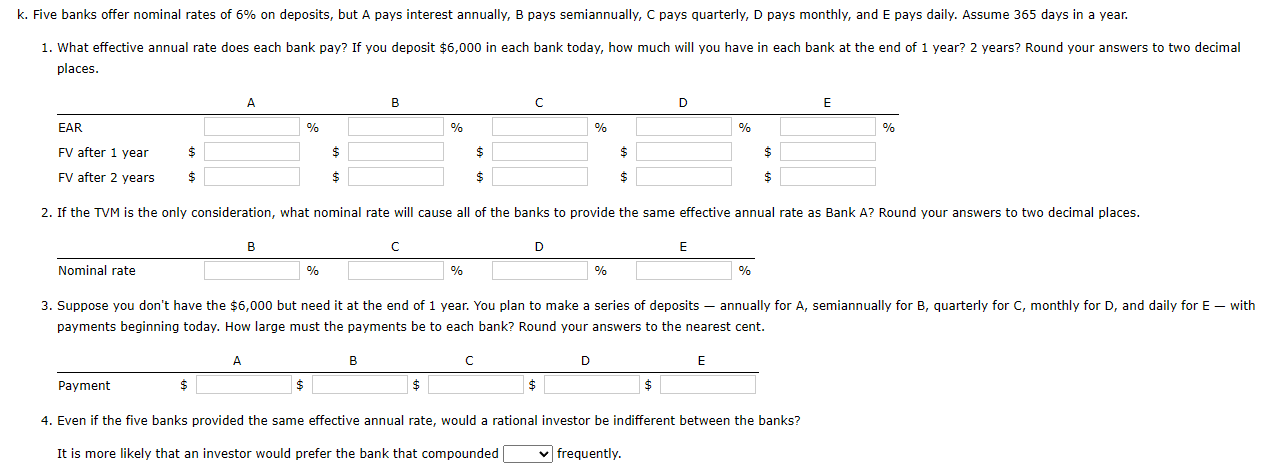
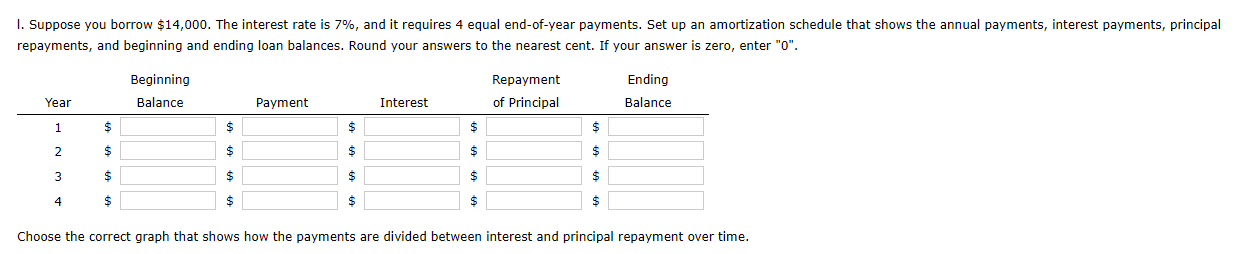
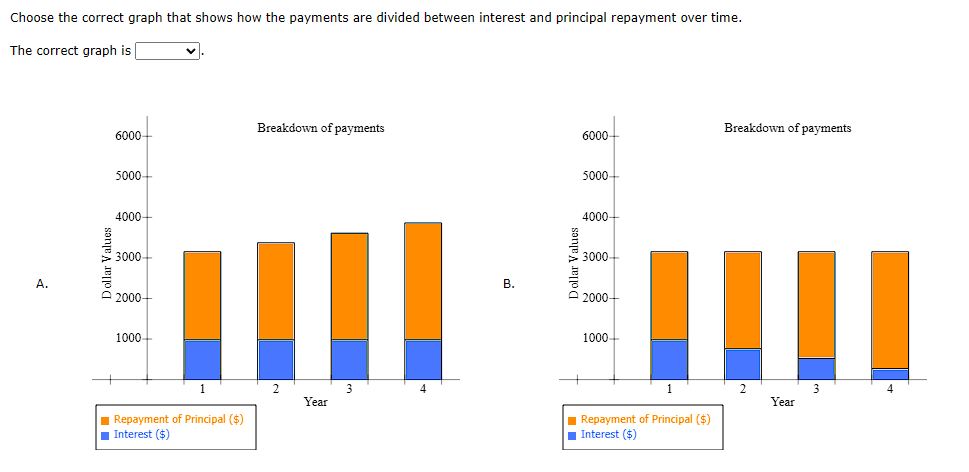
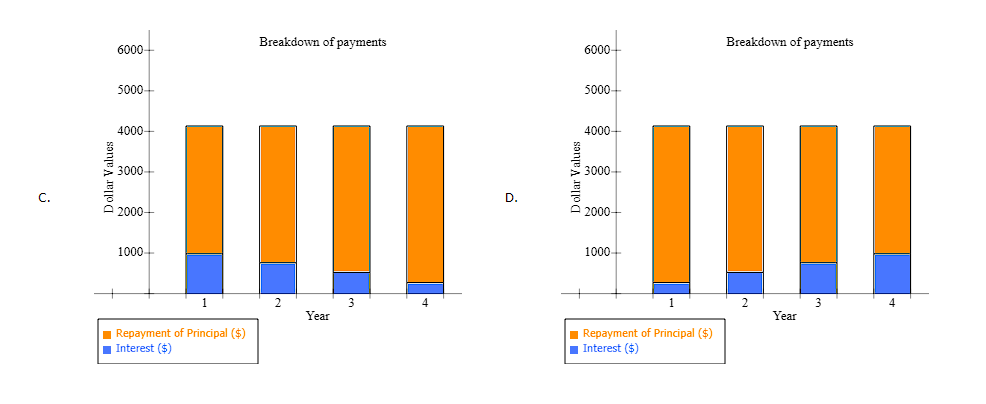
The data has been collected in the Microsoft Excel file below. Download the spreadsheet and perform the required analysis to answer the questions below. Do not round intermediate calculations. Enter your answers as positive values. Choose the correct graph of future value as a function of time and rate. Note: blue line is for 0%, orange line is for 5%, and grey line is for 30%. The correct graph is c. Repayment of Principal (\$) Interest (\$) Repayment of Principal (\$) Interest (\$) a. Find the FV of $1,000 invested to earn 8% after 5 years. Round your answer to the nearest cent. $ b. What is the investment's FV at rates of 0%,5%, and 30% after 0,1,2,3,4, and 5 years? Round your answers to the nearest cent. Choose the correct graph that shows how the payments are divided between interest and principal repayment over time. The correct graph is Round your answers to the nearest cent. PV of investment: \$ FV of investment: $ I. Suppose you borrow $14,000. The interest rate is 7%, and it requires 4 equal end-of-year payments. Set up an amortization schedule that shows the annual payments, interest payments, principal repayments, and beginning and ending loan balances. Round your answers to the nearest cent. If your answer is zero, enter " 0 ". c. Find the PV of $1,000 due in 5 years if the discount rate is 8%. Round your answer to the nearest cent. $ d. A security has a cost of $1,000 and will return $3,000 after 5 years. What rate of return does the security provide? Round your answer to two decimal places. % number. years PV of ordinary annuity: \$ FV of ordinary annuity: \$ g. How will the PV and FV of the annuity in part f change if it is an annuity due rather than an ordinary annuity? Round your answers to the nearest cent. PV of annuity due: \$ FV of annuity due: \$ FV with semiannual compounding: \$ PV with semiannual compounding: \$ Annual payment for ordinary annuity: \$ Annual payment for annuity due: $ places. payments beginning today. How large must the payments be to each bank? Round your answers to the nearest cent. 4. Even if the five banks provided the same effective annual rate, would a rational investor be indifferent between the banks? It is more likely that an investor would prefer the bank that compounded frequently. c. D. The data has been collected in the Microsoft Excel file below. Download the spreadsheet and perform the required analysis to answer the questions below. Do not round intermediate calculations. Enter your answers as positive values. Choose the correct graph of future value as a function of time and rate. Note: blue line is for 0%, orange line is for 5%, and grey line is for 30%. The correct graph is c. Repayment of Principal (\$) Interest (\$) Repayment of Principal (\$) Interest (\$) a. Find the FV of $1,000 invested to earn 8% after 5 years. Round your answer to the nearest cent. $ b. What is the investment's FV at rates of 0%,5%, and 30% after 0,1,2,3,4, and 5 years? Round your answers to the nearest cent. Choose the correct graph that shows how the payments are divided between interest and principal repayment over time. The correct graph is Round your answers to the nearest cent. PV of investment: \$ FV of investment: $ I. Suppose you borrow $14,000. The interest rate is 7%, and it requires 4 equal end-of-year payments. Set up an amortization schedule that shows the annual payments, interest payments, principal repayments, and beginning and ending loan balances. Round your answers to the nearest cent. If your answer is zero, enter " 0 ". c. Find the PV of $1,000 due in 5 years if the discount rate is 8%. Round your answer to the nearest cent. $ d. A security has a cost of $1,000 and will return $3,000 after 5 years. What rate of return does the security provide? Round your answer to two decimal places. % number. years PV of ordinary annuity: \$ FV of ordinary annuity: \$ g. How will the PV and FV of the annuity in part f change if it is an annuity due rather than an ordinary annuity? Round your answers to the nearest cent. PV of annuity due: \$ FV of annuity due: \$ FV with semiannual compounding: \$ PV with semiannual compounding: \$ Annual payment for ordinary annuity: \$ Annual payment for annuity due: $ places. payments beginning today. How large must the payments be to each bank? Round your answers to the nearest cent. 4. Even if the five banks provided the same effective annual rate, would a rational investor be indifferent between the banks? It is more likely that an investor would prefer the bank that compounded frequently. c. D
Step by Step Solution
There are 3 Steps involved in it

Get step-by-step solutions from verified subject matter experts
 Study Help