



Question: The data in this question is used in the next three problems. These questions deal with Miller's (1977) model of the value of the tax
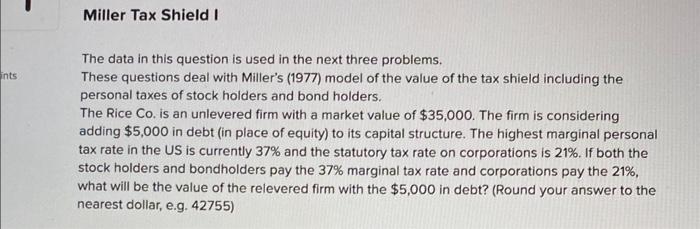
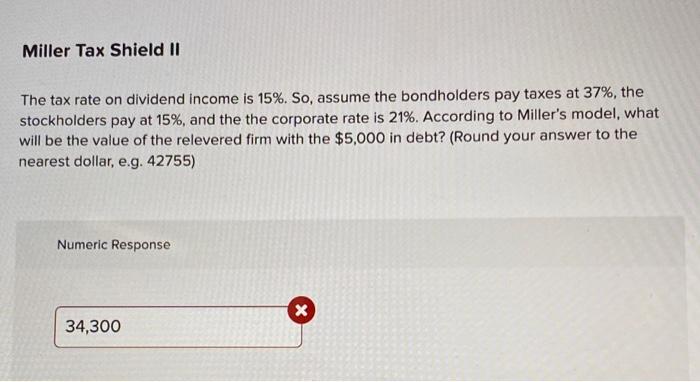
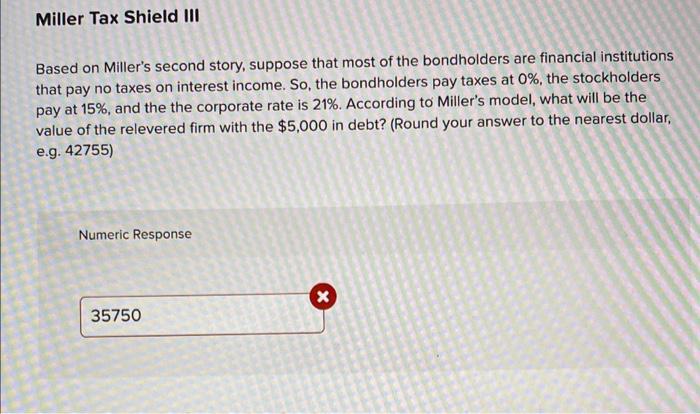
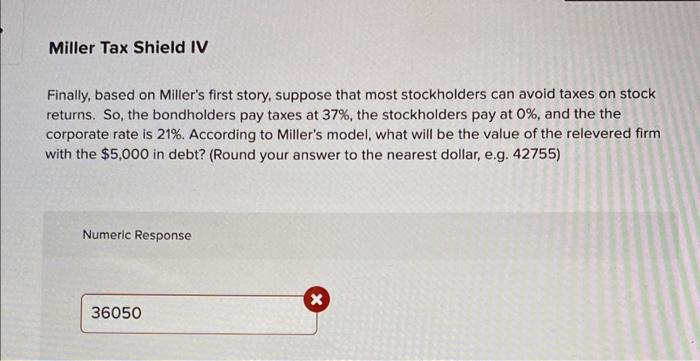
The data in this question is used in the next three problems. These questions deal with Miller's (1977) model of the value of the tax shield including the personal taxes of stock holders and bond holders. The Rice Co. is an unlevered firm with a market value of $35,000. The firm is considering adding $5,000 in debt (in place of equity) to its capital structure. The highest marginal personal tax rate in the US is currently 37% and the statutory tax rate on corporations is 21%. If both the stock holders and bondholders pay the 37% marginal tax rate and corporations pay the 21%, what will be the value of the relevered firm with the $5,000 in debt? (Round your answer to the nearest dollar, e.g. 42755) The tax rate on dividend income is 15%. So, assume the bondholders pay taxes at 37%, the stockholders pay at 15%, and the the corporate rate is 21%. According to Miller's model, what will be the value of the relevered firm with the $5,000 in debt? (Round your answer to the nearest dollar, e.g. 42755) Based on Miller's second story, suppose that most of the bondholders are financial institutions that pay no taxes on interest income. So, the bondholders pay taxes at 0%, the stockholders pay at 15%, and the the corporate rate is 21%. According to Miller's model, what will be the value of the relevered firm with the $5,000 in debt? (Round your answer to the nearest dollar, e.g. 42755) Finally, based on Miller's first story, suppose that most stockholders can avoid taxes on stock returns. So, the bondholders pay taxes at 37%, the stockholders pay at 0%, and the the corporate rate is 21%. According to Miller's model, what will be the value of the relevered firm with the $5,000 in debt? (Round your answer to the nearest dollar, e.g. 42755) Numeric Response
Step by Step Solution
There are 3 Steps involved in it

Get step-by-step solutions from verified subject matter experts