







Question: The diag( ) function has four distinct usages, as can be seen from the documentation using E'diag or help(diag) : 1. x is a matrix,
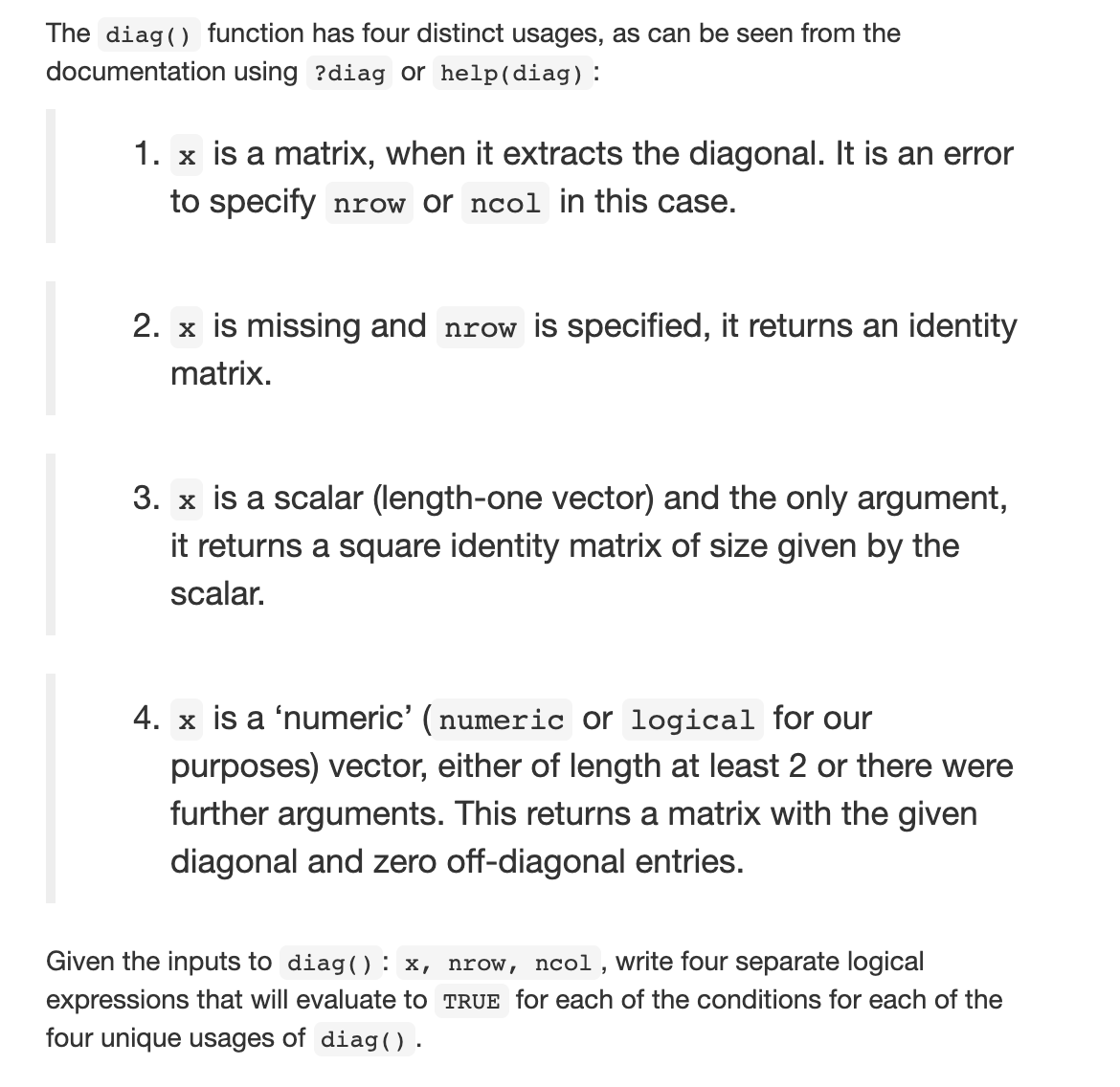
The diag( ) function has four distinct usages, as can be seen from the documentation using E'diag or help(diag) : 1. x is a matrix, when it extracts the diagonal. It is an error to specify nrow or ncol in this case. 2. x is missing and nrow is specified, it returns an identity matrix. 3. x is a scalar (length-one vector) and the only argument, it returns a square identity matrix of size given by the scalar. 4. x is a 'numeric' (numeric or logical for our purposes) vector, either of length at least 2 or there were further arguments. This returns a matrix with the given diagonal and zero off-diagonal entries. Given the inputs to diag() : x, nrow, ncol , write four separate logical expressions that will evaluate to TRUE for each of the conditions for each of the four unique usages of diag()
Step by Step Solution
There are 3 Steps involved in it

Get step-by-step solutions from verified subject matter experts
 Study Help