







Question: The dinning philosopher problem is one of the classical process synchronization problems, in which multiple processes simulate dinning philosophers. Multiple (N) philosophers are dining on
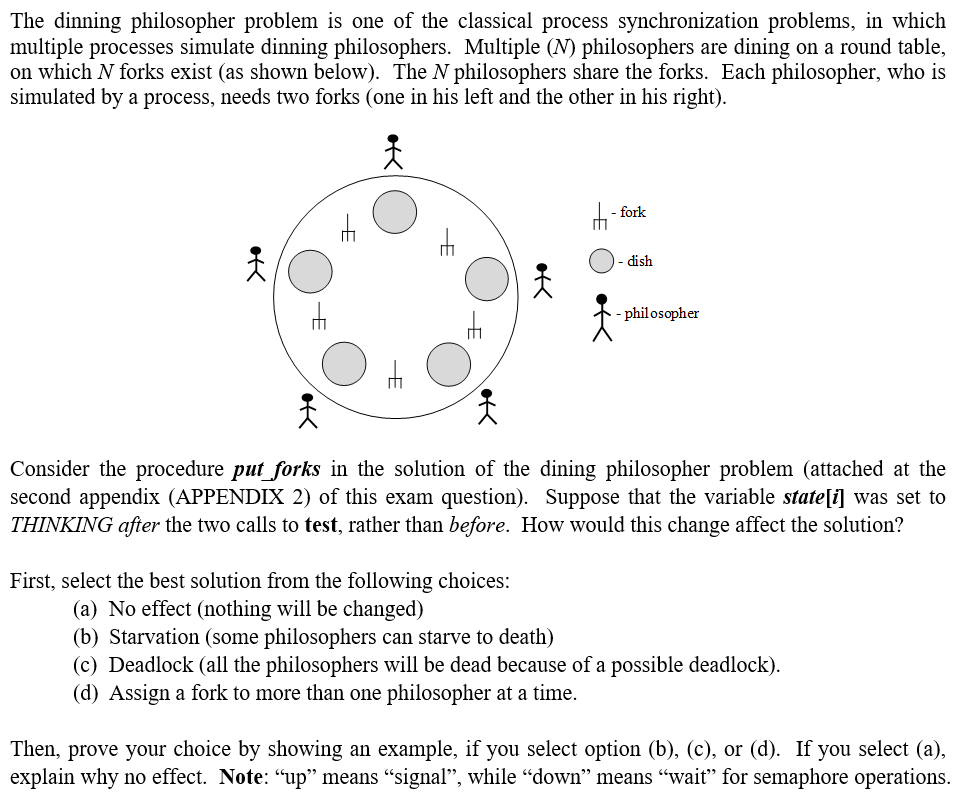
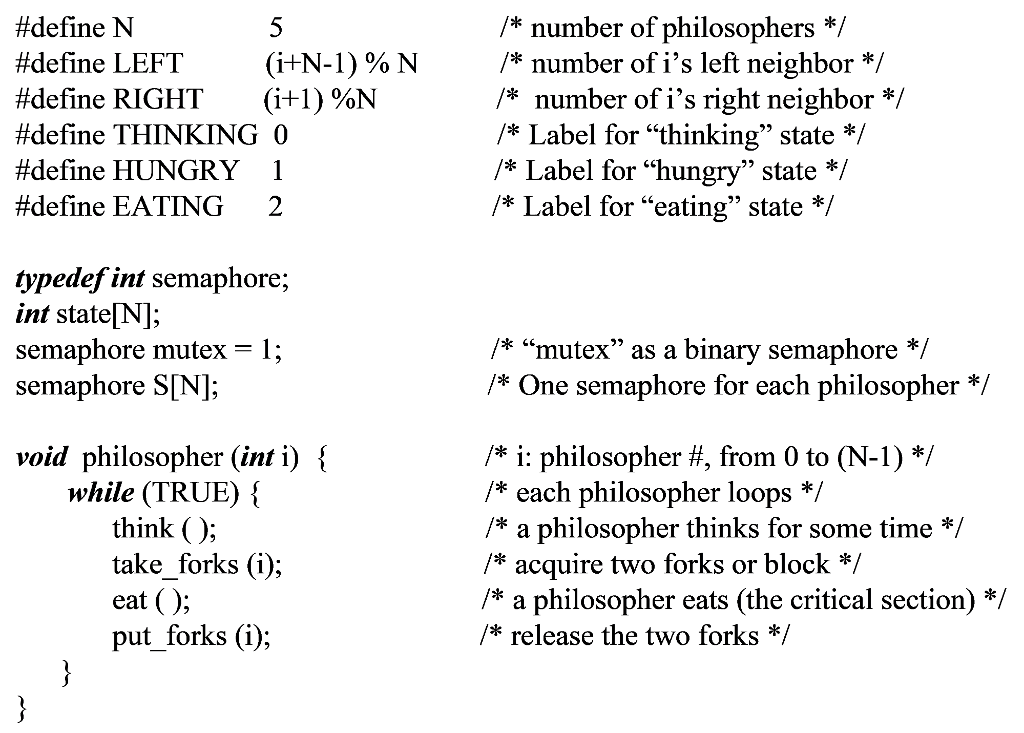
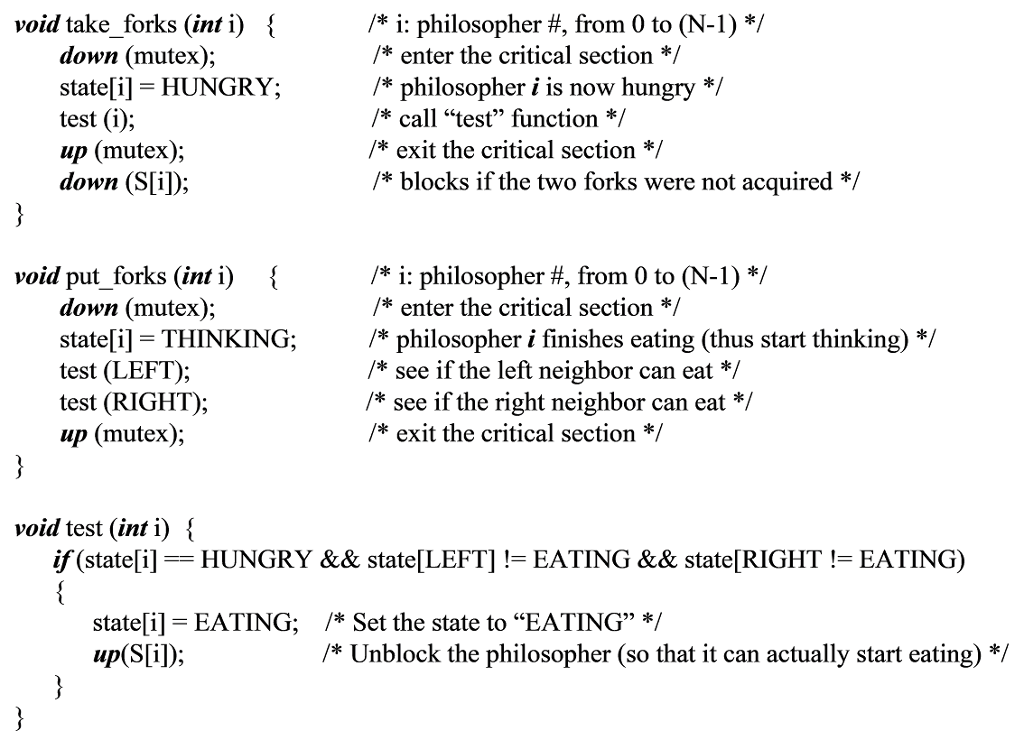
The dinning philosopher problem is one of the classical process synchronization problems, in which multiple processes simulate dinning philosophers. Multiple (N) philosophers are dining on a round table, on which N forks exist (as shown below). The N philosophers share the forks. Each philosopher, who is simulated by a process, needs two forks (one in his left and the other in his right) fork dish philosopher Consider the procedure put forks in the solution of the dining philosopher problem (attached at the second appendix (APPENDIX 2) of this exam question). Suppose that the variable state[i] was set to THINKING after the two calls to test, rather than before. How would this change affect the solution? First, select the best solution from the following choices (a) No effect (nothing will be changed) (b) Starvation (some philosophers can starve to death) (c) Deadlock (all the philosophers will be dead because of a possible deadlock) (d) Assign a fork to more than one philosopher at a time. Then, prove your choice by showing an example, if you select option (b), (c), or (d). If you select (a), explain why no effect. Note: "up" means "signal", while "down" means "wait" for semaphore operations The dinning philosopher problem is one of the classical process synchronization problems, in which multiple processes simulate dinning philosophers. Multiple (N) philosophers are dining on a round table, on which N forks exist (as shown below). The N philosophers share the forks. Each philosopher, who is simulated by a process, needs two forks (one in his left and the other in his right) fork dish philosopher Consider the procedure put forks in the solution of the dining philosopher problem (attached at the second appendix (APPENDIX 2) of this exam question). Suppose that the variable state[i] was set to THINKING after the two calls to test, rather than before. How would this change affect the solution? First, select the best solution from the following choices (a) No effect (nothing will be changed) (b) Starvation (some philosophers can starve to death) (c) Deadlock (all the philosophers will be dead because of a possible deadlock) (d) Assign a fork to more than one philosopher at a time. Then, prove your choice by showing an example, if you select option (b), (c), or (d). If you select (a), explain why no effect. Note: "up" means "signal", while "down" means "wait" for semaphore operations
Step by Step Solution
There are 3 Steps involved in it

Get step-by-step solutions from verified subject matter experts
 Study Help