







Question: The drop down options for the first question are as follows 1. $862, $1077, $754, $1400 2. Greater than/ less than or equal to 3.
The drop down options for the first question are as follows
1. $862, $1077, $754, $1400
2. Greater than/ less than or equal to
3. trading at par / trading at discount / trading at premium
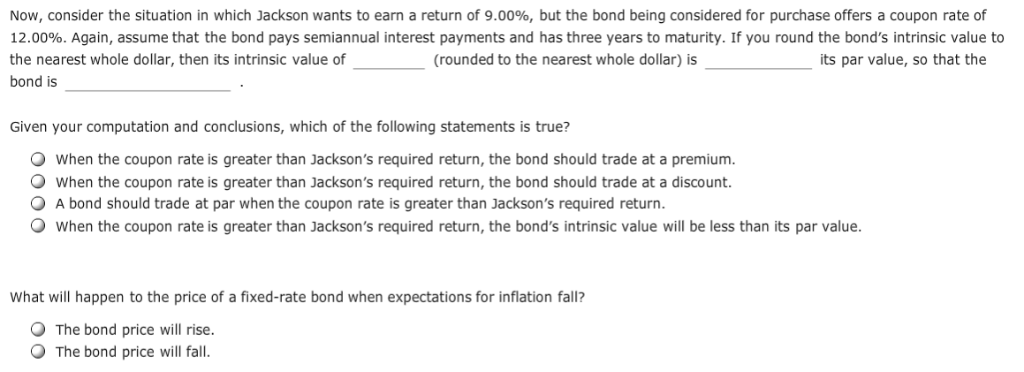
Now, consider the situation in which Jackson wants to earn a return of 9.00%, but the bond being considered for purchase offers a coupon rate of 12.00%. Again, assume that the bond pays semiannual interest payments and has three years to maturity. If you round the bond's intrinsic value to the nearest whole dollar, then its intrinsic value of (rounded to the nearest whole dollar) is its par value, so that the bond is Given your computation and conclusions, which of the following statements is true? O When the coupon rate is greater than Jackson's required return, the bond should trade at a premium. Owhen the coupon rate is greater than Jackson's required return, the bond should trade at a discount A bond should trade at par when the coupon rate is greater than Jackson's required return. OWhen the coupon rate is greater than Jackson's required return, the bond's intrinsic value will be less than its par value. What will happen to the price of a fixed-rate bond when expectations for inflation fall? The bond price will rise O The bond price will fall
Step by Step Solution
There are 3 Steps involved in it

Get step-by-step solutions from verified subject matter experts
 Study Help